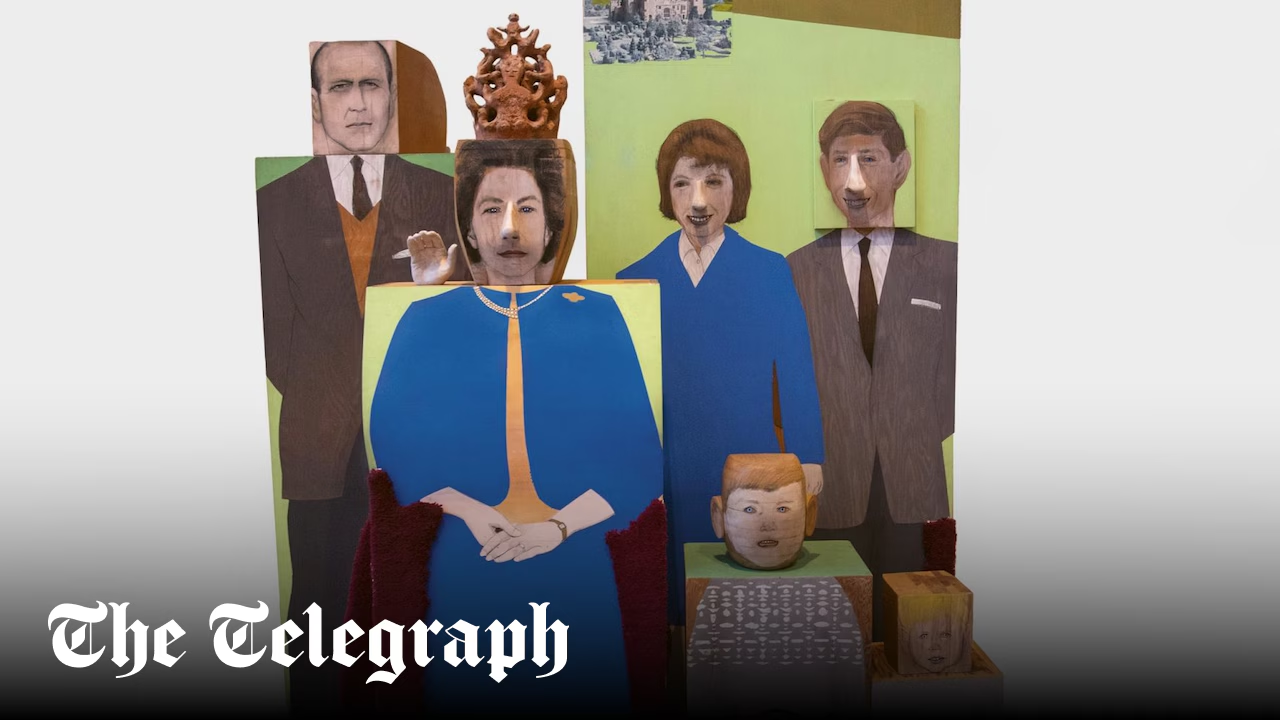
Over the years, Marisol sculpted various family groups. The Kennedy Family (1961) combines both subjects, and offers an early depiction of Jackie, who, following her husband’s assassination, was represented by her friend Andy Warhol (whom Marisol also portrayed, and who featured Marisol in a few of his experimental films).
Although, a year after making The Royal Family, Marisol represented Venezuela at the Venice Biennale (a significant honour), her work, during the 1970s, became less chic and witty, and more political, and she gradually fell out of critical and commercial favour. Once one of America’s pre-eminent sculptors, by the time of her death, aged 85, in 2016 in New York, she was largely forgotten.
Marisol’s portraits often strike an absurd, amusing note, and the mood of The Royal Family is, surely, light-hearted and sympathetic. Yes, the figures are a little like hefty skittles, waiting to be knocked down, but the group hardly has a republican agenda.
If anything, Marisol’s treatment suggests private individuals trapped in rough-hewn public personas – roles that, as the red carpet rising behind the figures, like sinister floodwater, reminds us, the Royal family is almost always obliged to play. That Marisol only painted the fronts of the boxes suggests she wished to emphasise this only-for-show nature of their public selves.
‘Marisol’ is at the Louisiana Museum of Modern Art, Humlebæk, Denmark (louisiana.dk), from Oct 1, and the Kunsthaus Zürich, Switzerland (kunsthaus.ch), from April 17, 2026; it will then travel to two other European venues
‘ The preceding article may include information circulated by third parties ’
‘ Some details of this article were extracted from the following source www.telegraph.co.uk ’