Prequels are the new sequels in movies and television, with Hollywood shoving out Wonka, Furiosa, Andor, NCIS: Origins, Paramount’s various Star Trek shows, and Dexter: Original Sin, all with varying degrees of success. In the world of anime, a prequel series isn’t as common, with the most successful of them being Fate/Zero or, if you want to be cheeky, Naruto. That’s what made My Hero Academia: Vigilantes so surprising to me, the My Hero Academia prequel series is providing Hollywood another lesson, the secret to a good prequel is telling a standalone story that supplements the original series and doesn’t only exist to show how a character came across their trademark hat for the first time.
The world of My Hero Academia is filled with Quirk users; the majority of the population has superpowers that a few generations earlier would have been unheard of, but out of the billions of superpowers, the majority aren’t suited for combat or rescue missions. Before the governments started regulating Quirk users, do-gooders would fight crime and perform rescues on their own, dubbed “Vigilantes.” They lacked licensing and official training, and usually, had Quirks that weren’t well-suited for action. It’s a part of the world that the main series, which focused on UHA High and Class 1-A, ignored, but My Hero Academia: Vigilantes goes deep into the muck and mire of the bottom rung of a superpowered society.
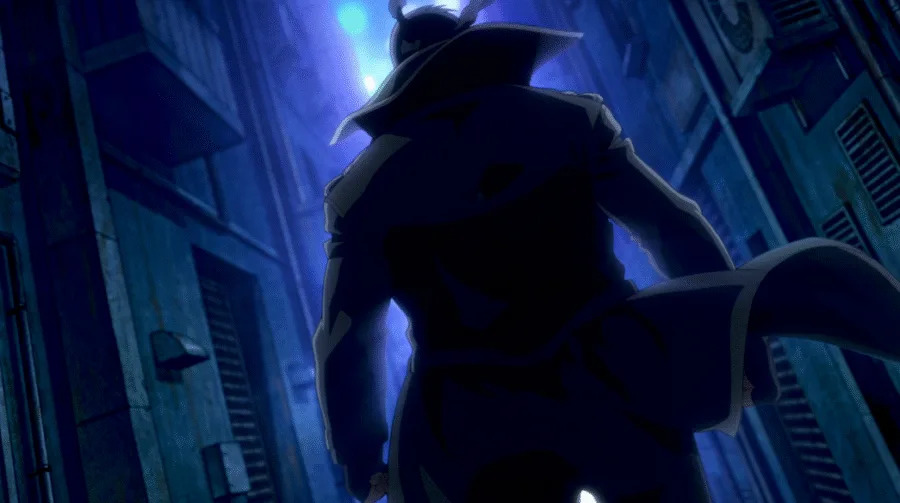
Knuckleduster in My Hero Academia: Vigilantes.
Instead of the Quirkless Izuku Midoriya, My Hero Academia: Vigilantes follows Koichi, a struggling college student living in a small rooftop apartment, working at a convenience store after school, and by night, he is The Crawler. He’s a good guy at heart, using his powers to clean up the neighborhood and help little old ladies cross the street. Until he goes to rescue Kazuho, the street performer known as Popstep, and the two become caught up in the street-level anti-crime crusade of Knuckleduster.
There are no training courses, no teachers explaining the ins and outs of how to use a quirk; instead, Koichi gets Knuckleduster, offering the helpful advice of “when jumping from a rooftop, aim for the trash.” Clearly, he hasn’t seen The Other Guys. That doesn’t mean we don’t get to see any of the U.A. High teachers in My Hero Academia: Vigilantes, with Eraserhead, Midnight, Ingenium, and Present Mic all making cameos, but there’s also new heroes involved who help expand the world and answer the question, “Who’s the most annoying hero on the planet?”

Koichi in My Hero Academia: Vigilantes.
Coming from the United States, Captain Celebrity is everything Japan’s #1 Hero, All Might, is not. He’s a glory hound, focused on fame, a womanizer, and though he’s well-meaning, he needs cameras to be on him at all times. The main series shows how a hero’s popularity is important in terms of marketing deals and prestige, but here, Captain Celebrity takes it to the logical endpoint, a hero where the end goal is fame and celebrity status.
My Hero Academia: Vigilantes is animated by BONES, who handles the main series, but the differences between heroes are represented not just in the social hierarchy, but even in the animation styles. The animation shifts based on which of the main trio is the focus at the moment, with Popstep shifting to a brighter color palette complete with more over-the-top chibi reaction shots. At the same time, Knuckleduster’s scenes resemble Frank Miller’s Batman Returns in the harsh linework and grittiness. Koichi is in the middle, with his scenes resembling the color, style, and fluidity of a traditional Shonen. It’s a fun, subtle way to explore the personalities and worldviews of the Vigilantes compared to the main series, which is reminiscent of traditional Shonen-style throughout.

By staying away from the saga of All for One and the League of Villains, My Hero Academia: Vigilantes is able to tell its street-level crime story without the need to have seen all 170+ episodes of the main series. It’s not even required viewing for fans of Class 1-A. This year’s new anime is entirely standalone, but if you liked the main series and want to explore the world and backstories of the Quirk-based society, it’s essential.
The same reason Andor works to add backstory and worldbuilding to Star Wars, which fills in the immediate pre-A New Hope timeline, is why My Hero Academia: Vigilantes works so well. You can enjoy the franchise without them, but they get to do all the fun worldbuilding and character studies that the other shows can’t touch. With My Hero Academia about to enter its final season as the war against Shigaraki and All for One reaches its climax, fans can fill in the gap by getting all of the backstory and answers about the world of superpowers they’ve been asking for years.

The first season of My Hero Academia: Vigilantes and all seven seasons of My Hero Academia are available on Crunchyroll.
‘ The preceding article may include information circulated by third parties ’
‘ Some details of this article were extracted from the following source www.yahoo.com ’