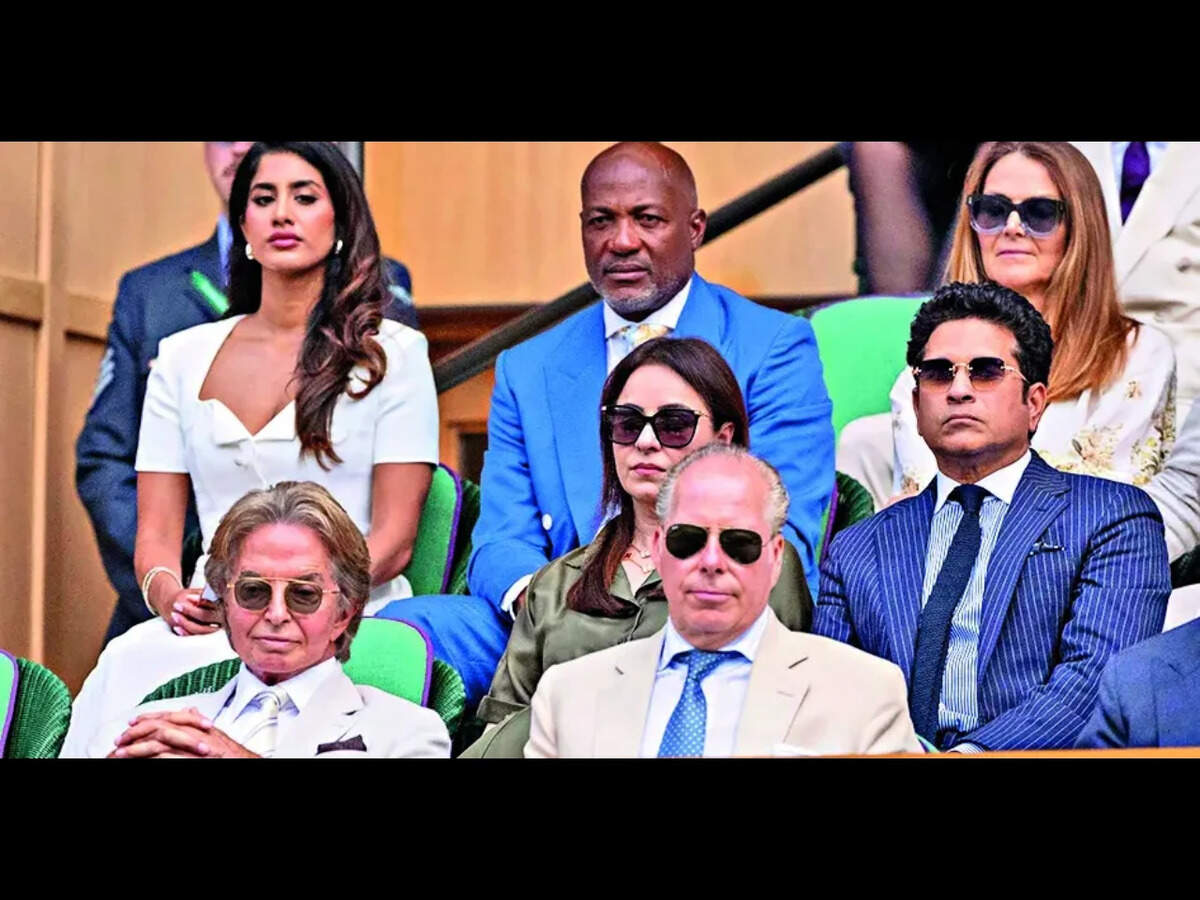
For Indians, and for anyone from an ex-colony, an invite – by All England Lawn Tennis and Croquet Club – to the box in the south side of Centre Court should lead to some conflict and mental gymnastics while deciding whether to accept and attend or not.
The Wimbledon Royal Box is not an owner’s box – it is not owned by the British royal family. Nevertheless, All England Club, the organisation that ‘owns’ Wimbledon creates a perception of a tight bond between royalty and the club.
The present patron is current princess of Wales, Kate Middleton. Even though ‘patron’ is a ceremonial figurehead and responsible for perfunctory duties – much like British royalty itself – she and other members of the royal family validate the connection by presiding over key moments such as presentation ceremonies. Furthermore, the name ‘Royal Box’ burnishes the impression of a connection, rather than diminish it.
Now, as descendants of past subjects of the Brit empire and people of the land that was once pillaged by it, how should we interact with the family whose predecessors and ancestors commanded the forces that taxed, jailed, and starved ours?
The school syllabus was not troubled by this past. My secondary school history did not delve into these details of the colonial rule. The truth is seeing light due to some recent books, such as William Dalrymple‘s 2019 The Anarchy: The Relentless Rise of the East India Company, and Shashi Tharoor‘s 2016 takedown of the British raj in An Era of Darkness: The British Empire in India.
So, why should ‘differences’ in the past get in the way of a harmonious relationship in the present and future? After all, there were skirmishes between European dynasties as well. Those don’t stop them from hobnobbing with each other today.
There is one crucial difference, though, between dealing with royalties and governments. ‘State vs state’ differences can be diplomatically papered over as decisions of a previous government, or those of a group of people that don’t have anything in common with the current lot in power. The present leadership expresses dismay over past horrors, pays homage to victims of the past, and life moves on.
With royals it is different. The Brit royal family – or, for that matter, any other European royal family – are direct descendants of rulers that made decisions that eviscerated their colonies. Royal residences still carry – and proudly display – some of the loot and winnings from these far-flung places they once occupied and ruled as fond memories of ancestral achievements.
Imperialism being out of fashion, two weak defences are offered:
The loot was the work of a private corporation, East India Company, in the case of Britain, and not of the government or crown.
Many of these artifacts are held in arms-length trusts, and not privately held by the family. Koh-i-Noor, for instance, is on public display, within touching distance. The public has to pay to see it, with the proceeds, no doubt, going to an arms-length trust or charity.
Irrespective of the strength of these distancing arguments, there has not been a single attempt by a member of the royal family to sever the connection with their ancestors and decry their decisions.
Indians are no strangers to conflict between feuding families. Several Indian blockbusters are based on multi-generational family feuds. For Indians and other ex-colony dwellers then, if such a conflict was to give pause in deciding whether to accept an invite to the Wimbledon Royal Box or not, the desire to watch the tennis could be fulfilled by availing of other premium seats at Centre Court.
What about losing out on the opportunity to ‘trend’ on social media as a guest of the Royal Box? A well-aimed refusal, citing a family dispute with the royals, will ace selfies from the Box any day.
‘ The preceding article may include information circulated by third parties ’
‘ Some details of this article were extracted from the following source m.economictimes.com ’