When the Crimson Tide rolls into Baton Rouge to play LSU in Death Valley, there’s electricity in the air. The senses are heightened, and the anticipation is palpable.
But this year, the Tigers travel to Tuscaloosa to take on Alabama Nov. 8 in Bryant-Denny Stadium. For those who are heading north to Alabama for the game, here are a few suggestions for game day activities, restaurants, entertainment and more.
Game day experience
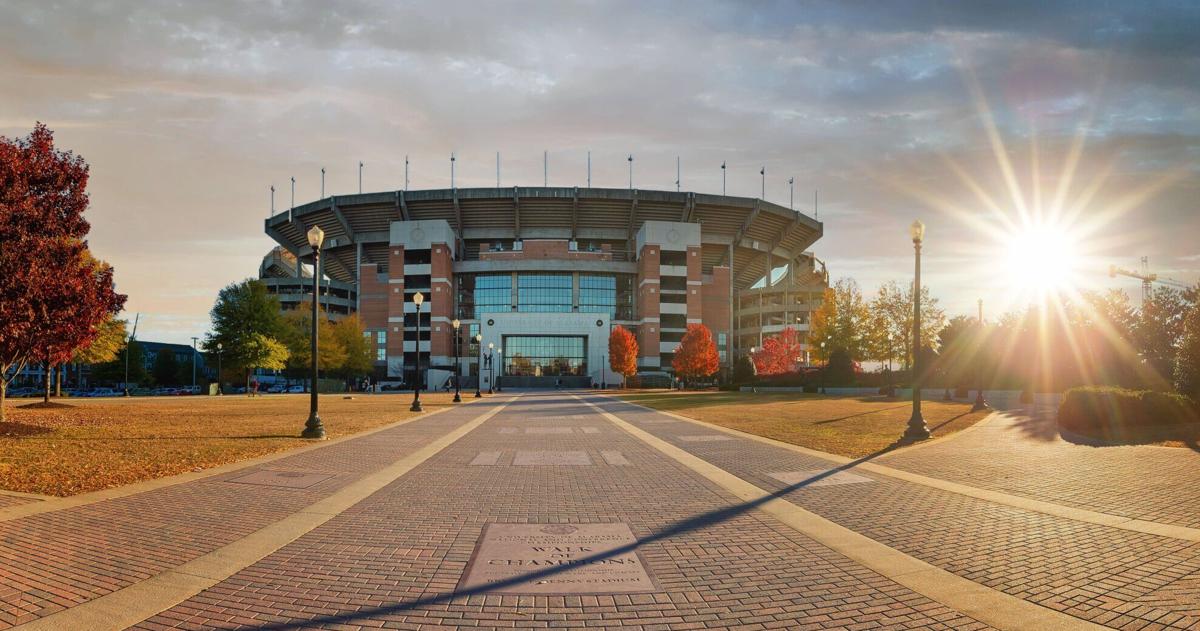
Bryant-Denny Stadium in Tuscaloosa, Alabama, is home to the Alabama Crimson Tide.
Just like Baton Rouge covers itself with purple and gold, Tuscaloosa owns a crimson hue.
Home to the University of Alabama and its legacy of championship football, game day weekends in Tuscaloosa mean a sea of red — and sometimes the famous houndstooth that Alabama coach Paul W. “Bear” Bryant wore on his head during his reign.
Like most SEC teams, game day weekends on the Bama campus bring hundreds of tents on the Quad lawn serving up tailgating dishes. Don’t miss the traditional Walk of Champions and the Coaches Walk at Bryant-Denny Stadium, where two hours and 15 minutes before kickoff, players and coaches arrive to the roar of thousands of fans lining the walkway.
Paul W. Bryant Museum

On Nov. 7, the day before the LSU-Alabama game, the Paul W. Bryant Museum will mark the centennial of Alabama football’s first national championship with the release of “Remember the Rose Bowl,” a new book commemorating the team’s historic 1926 victory.
A must-visit for any football fan, regardless of their loyalty, is the Paul W. Bryant Museum, which tells the story of Alabama football, from Bear Bryant’s coaching legacy to the program’s many national championships.
Visitors will find artifacts and memorabilia, plus videos of players and game highlights from the museum’s archives. On Nov. 7, the day before the LSU-Alabama game, the museum will mark the centennial of Alabama’s first national championship with the release of “Remember the Rose Bowl,” a new book commemorating the team’s historic 1926 victory.

A must-visit for any football fan, regardless of their loyalty, is the Paul W. Bryant Museum in Tuscaloosa, Alabama — which tells the story of Alabama football, from Bear Bryant’s coaching legacy to the program’s many national championships.
People may also experience the ongoing exhibit “Walking with Champions,” which explores Alabama’s Rose Bowl legacy through rare photography, memorabilia and artifacts.
For LSU fans traveling in, the exhibit offers an inside look at the history behind one of the SEC’s greatest rivalries. The Paul W. Bryant Museum is open Tuesday through Sunday. For information, visit bryantmuseum.com.
Roll Call at The Alamite
LSU fans who haven’t been to town since the 2021 game will want to visit the Roll Call, which opened in 2022 inside The Alamite hotel. The restaurant is touted as having a polished yet approachable menu that’s perfect for alumni or families looking for a refined dinner before or after the game.

The Alamite hotel in Tuscaloosa, Alabama, includes the Roll Call restaurant.
The boutique hotel is close to Bryant-Denny Stadium and should be on a football fan’s list of possible accommodations.
Alabama is nationally known for its barbecue, including its unique white sauce, so a visit to Tuscaloosa means sampling the goods. Family-owned Dreamland BBQ, located south of the city in Jerusalem Heights, remains the most famous. Its ribs and white bread were named one of the “100 Dishes to Eat in Alabama” by Alabama Tourism.

Family owned Dreamland BBQ in Tuscaloosa, Alabama, is located south of the city in Jerusalem Heights.
Regretfully, the famous barbecue joint gets crowded on game day weekends, but if you don’t mind standing in line, the wait is worth it.
Downtown Tuscaloosa
Beyond football, Tuscaloosa’s walkable downtown is filled with local restaurants, live music and nightlife that carries well into game day weekends.
For a family-friendly break, the Tuscaloosa Riverwalk offers a scenic stretch along the Black Warrior River, ideal for a morning jog, coffee stroll or casual downtime before heading to the stadium.
History and culture
The Tuscaloosa Civil Rights Trail provides an important perspective on the city’s place in civil rights history with a self-guided, 18-stop trail that tells the stories of those who helped break barriers.

Stops include First African Baptist Church, where Martin Luther King Jr. preached and Bloody Tuesday occurred on June 9, 1964, a violent reaction to a peaceful march to protest segregated drinking fountains and restrooms in the county courthouse.
A short drive from Tuscaloosa lies a prehistoric community that was once the largest north of Mexico.
Moundville Archaeological Park on the Black Warrior River contains 28 massive flat-topped earthen pyramids around a central plaza that was used for civic and ceremonial events. The park sits on 326 acres and includes a museum with numerous artifacts found on the property, plus interactive displays describing both the people of the mounds and their lifestyles.
For more information, visit www.moundville.ua.edu.
‘ The preceding article may include information circulated by third parties ’
‘ Some details of this article were extracted from the following source www.nola.com ’