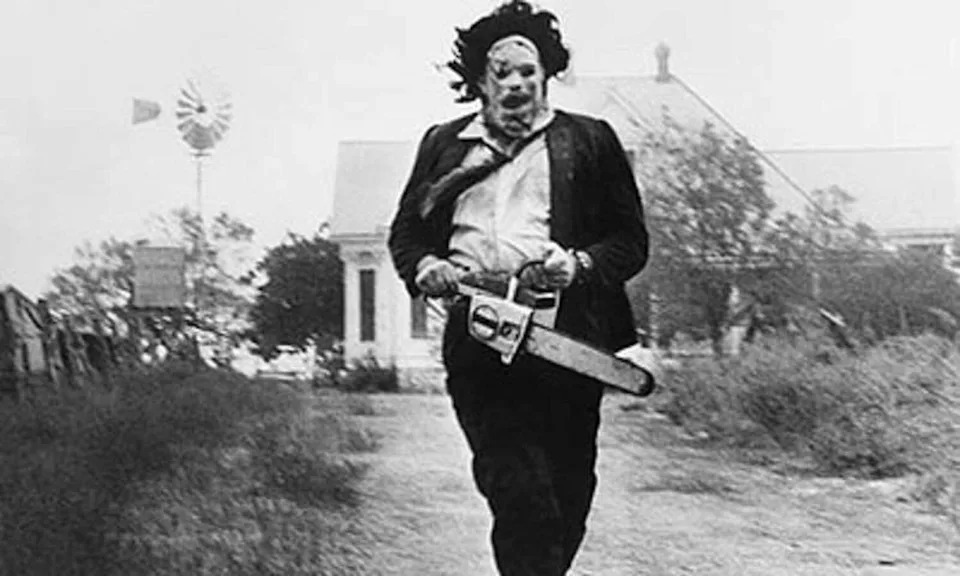
The Texas Chain Saw Massacre is firmly in the Texas canon as one of the scariest and influential horror flicks of the 20th century. The classic film, directed by Tobe Hooper, left a haunting impression on theater goers in 1974 and has since continued to hold up as one of the scariest slasher movies ever. It turns out the movie was so scary that it left Japanese audiences terrified of the entire Lone Star State, according to Japanese filmmaker Takashi Miike.
The firsthand account of Japanese audiences’ reactions to the horror classic was documented in Chain Reactions, a documentary reflecting on the lasting impact the film has had since its release. The doc, opening nationwide on Sept. 26, features commentary from Miike, comedian and actor Patton Oswalt, film critic Alexandra Heller-Nicholas, author Stephen King and filmmaker Karyn Kusama.
Miike, best known for his 2001 horror action thriller Ichi The Killer, recalled first seeing the movie when he was 15 years old and explained how The Texas Chain Saw Massacre left audiences in Japan with a terrifying (but inaccurate ) perception of Texas.
“Charlie Chaplin’s City Lights was having a revival. I went to watch it, but the screening was sold out,” Miike recalled.
The sellout forced Mike to attend a screening of Texas Chain Saw, localized as The Devil’s Sacrifice in Japan. He noted that his mindset was not particularly prepared for the horror flick, as he was anticipating seeing a Chaplin romantic comedy.
“I went into it by chance, with a good disposition since I’d originally planned on watching City Lights,” Miike says in the documentary. Then, the movie started. It was an old theater, Shochikuza in Osaka. There were pillars in the theater. It was perfect for horror.”
The Texas Chain Saw Massacre stars Jim Siedow, Marilyn Burns, and Gunnar Hansen. It follows a group of friends who are hunted and killed by the cannibalistic murderer Leatherface and his equally horrifying family members. Despite the film’s nature, Mike found himself transfixed by Hooper’s terrifying vision of the quiet terror that pervades small-town Texas.
1974’s “The Texas Chainsaw Massacre” terrified audiences at home and abroad. (Bryanston Pictures)
“Up until that point, movies had been something safe,” Miike said. “For the first time, I felt that movies could be something dangerous. As I watched the film, the characters became more endearing. I started to feel affection for them. By the end, I was rooting for them and laughing out loud.”
Meanwhile, Japan itself, he says, saw Texas as one of the most horrific places on earth after witnessing Leatherface in action.
“I had never experienced a film like that. In Japan, at the time, because of that film, everyone thought Texas was a dangerous place. How can I put it? A desolate landscape,” Miike explained.
While Japanese audiences had their perception of Texas altered, the film inspired future filmmakers like Miike to lean into horror. Tokyo has Texas-themed bars, and the wild west cowboy aesthetic is looked at as what Texas is, which is sort of accurate but much better than the terrifying place the movie branded the state as.
The impact of The Texas Chainsaw Massacre franchise still persists today, and it’s future is now much clearer after production studio A24 has nabbed its film rights, with a return to the big screen rumoured to be preceded by a television series from filmmaker and writer JT Mollner (who had previously denied any involvement) and Austin’s own Glen Powell.
More Culture
Yee-haw | Whataburger teams up with Texas company for western wear line
Explainer | Another tribal casino is coming to Texas. How is it legal?
Impact | Mattress Mack no longer has any love for this sport
Sports | Even ‘Jeopardy’ is clowning the Astros’ late-season collapse
For the latest and best from Chron, sign up for our daily newsletter here.
‘ The preceding article may include information circulated by third parties ’
‘ Some details of this article were extracted from the following source www.yahoo.com ’