At the 6th & Main event space in downtown Baton Rouge, 90 people worked toward civil discourse and discussion. The Jan. 22 Civic Sips was part of a series of joint events between The Public Affairs Research Council of Louisiana and the Reilly Center for Media and Public Affairs of LSU.
The goal was to open the channels of dialogue between citizens.
The most recent Civic Sips topic was media literacy and learning how to develop tools to discern misinformation. When attendees entered and gave their names, they were each given a colored name tag, and the name tag matched a round table with the same color in a placard.
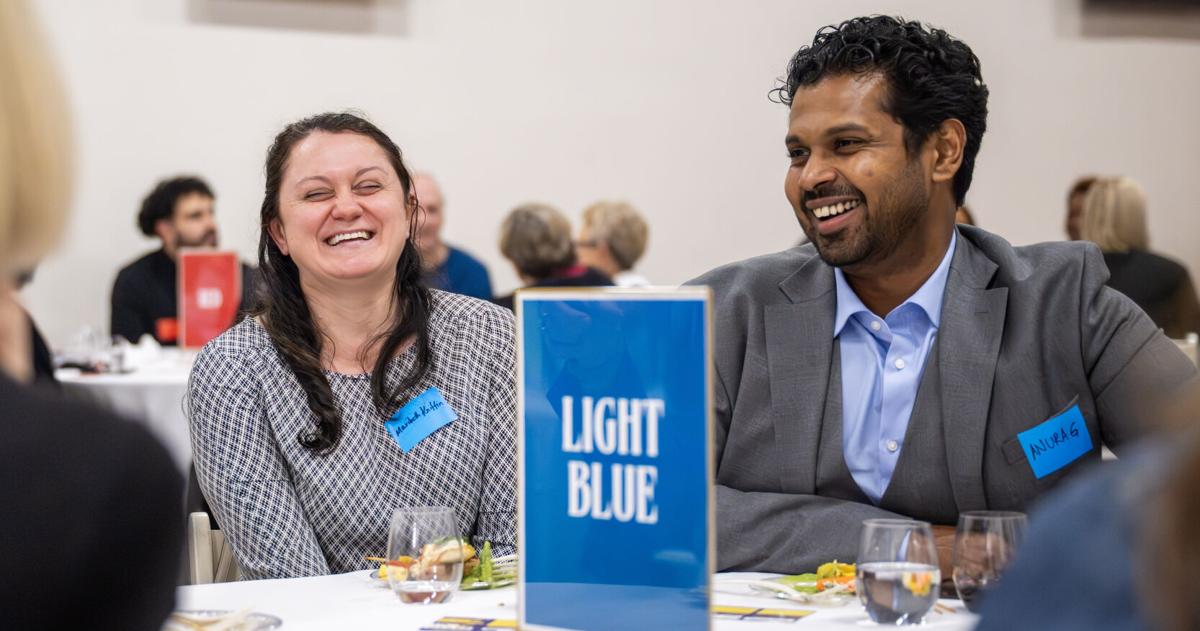
A table discusses their guilty pleasures during the ice breaker portion of Civic Sips at the 6th & Main event space on Thursday, January 22, 2026 in Baton Rouge, Louisiana.
Strangers grabbed drinks and food, then eventually sat at color-coded tables to get acquainted. The initial icebreaker asked participants to admit to their guilty pleasures. Michael DiResto, director of the Reilly Center for Media and Public Affairs, and Steven Procopio, the president of PAR, welcomed everyone.
“The goal is simple: bring people together from various backgrounds, whether it’s ideological backgrounds and perspectives, for meaningful, respectful conversation,” DiResto said to begin the night.
The origin of Civic Sips
In August, LSU’s Reilly Center and PAR announced they would partner on survey research and programming to understand and reduce political polarization in Louisiana through the nonpartisan Common Ground Project. The project also aimed to promote dialogue and civic thought through public events like Civic Sips and another outreach, Pizza & Public Affairs.

Michael DiResto gives the room an outline on the nights proceedings during Civic Sips at the 6th & Main event space on Thursday, January 22, 2026 in Baton Rouge, Louisiana.
DiResto said the Common Ground Project looks for ways for Louisiana people to come together on issues they agree with but also become mindful of the growing polarization elsewhere. Civic Sips is an avenue to do that.
The first event occurred Nov. 6 at Blend Wine Bar in Baton Rouge, and The Common Ground Project’s goal is to meet quarterly, said Maria DeRoche the Reilly Center program coordinator.
The next Civic Sips event will be held April 16 with the topic of American media at 250 years, celebrating the country’s birthday.

LSU Manship School of Communications “Don’t Get Faked Out” pamphlet at the Civic Sips event on Jan. 22, 2026 in Baton Rouge.
As a part of the Common Ground Project, DiResto and Procopio hit the road to speak to different groups around the city. The idea for featuring media literacy at a Civic Sips event came from these presentations.
“We were giving a presentation to someone else,” Procopio said. “They said, ‘Hey, can we ask y’all, who can we trust? What are the trusted media sources?’ I don’t think that the best thing to do is to come up with a list. I think the best thing to do is to try and give people tools so they can make that evaluation themselves.”
Evaluating information
DiResto and Procopio continued to hear that same question about news and credibility, so they invited Len Apcar, professional-in-residence and holder of the Wendell Gray Switzer Jr. Endowed Chair in Media Literacy at LSU, to share his experiences with media literacy.
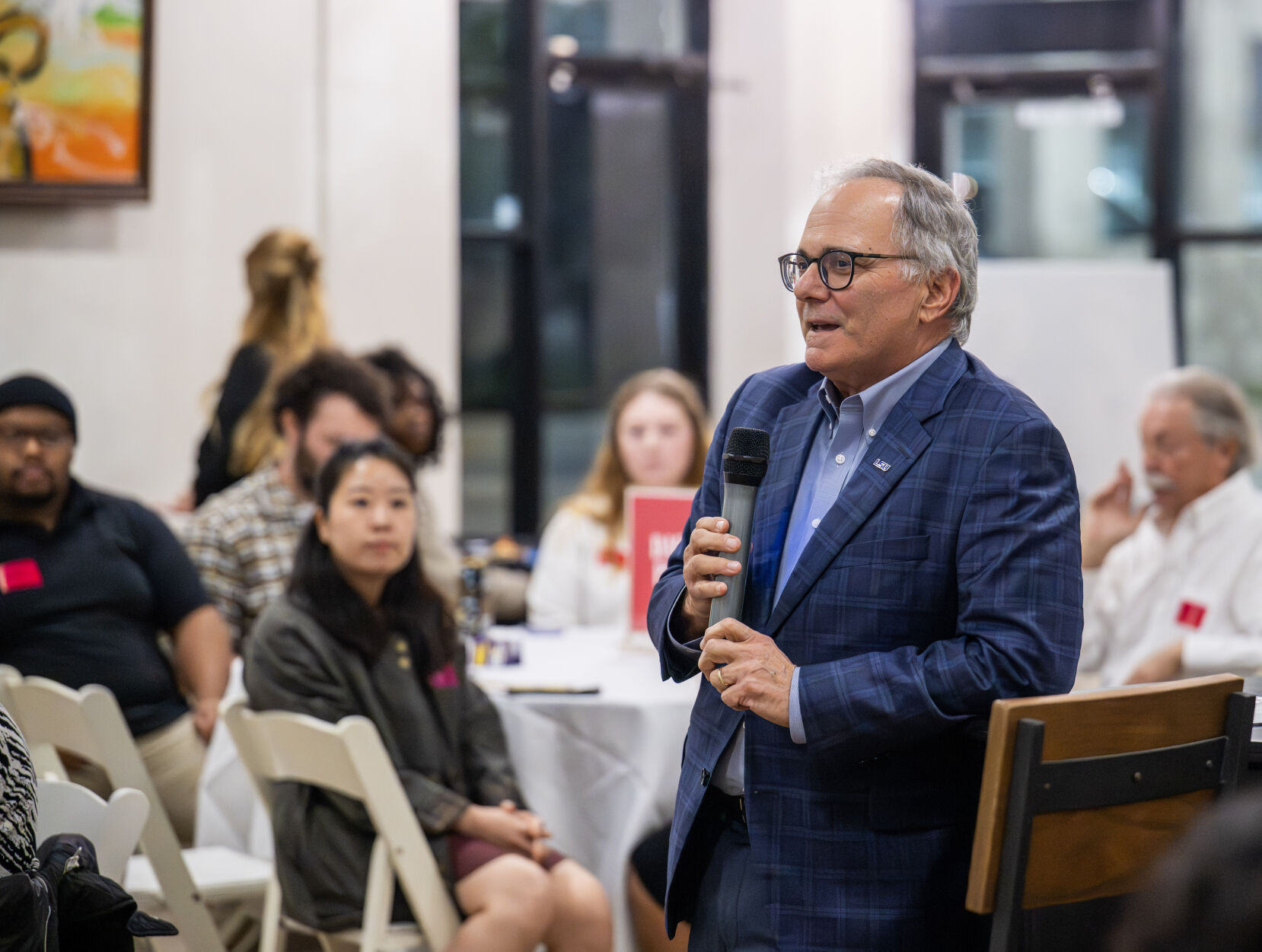
Speaker Len Apcar, the Wendell Gray Switzer Jr. Endowed Chair in Media Literacy at LSU’s Manship School of Mass Communication, discusses how to sort through news stories at Civic Sips at the 6th & Main event space on Thursday, January 22, 2026 in Baton Rouge, Louisiana.
Joyce Tippy, an attendee who sat at the Orange table, was an example of that question. She arrived early and said she was there because she was curious how to tell what’s real or not when she’s reading the news, especially on social media.
“We’re not going to tell you where you should get your news or what social media you should use,” DiResto said before Apcar’s presentation. “But we’re going to explore how it impacts us, and maybe there are some ways that we can think about how we can have a more well-rounded media diet.”
Apcar started by saying that media literacy is undefined, but it’s what journalists and editors do within newsrooms — constantly evaluating the quality of information they get.

A table discusses their guilty pleasures during the ice breaker portion of Civic Sips at the 6th & Main event space on Thursday, January 22, 2026 in Baton Rouge, Louisiana.
Multiple miniature pamphlets from the LSU Manship School of Mass Communication were placed at each seat. They listed tips and tricks to avoid getting duped by fake news. Apcar used these as his reference for examples of ways to be media literate. He said he brings them with him everywhere to pass out and refers to his own often.
Here are the main questions that Apcar uses to test out media:
Who says? Check the attribution.
How do they know? Check for records and data.
Are they independent? Check for motive and bias.
What is the URL? Watch for similar URLS that are fake news.
What about the quotes? Check to see if quotes turn up elsewhere in other media.
What about the images? Check to see if images have been doctored or manipulated. Use Google Image to search a picture.
ADVERTISEMENT

Speaker Len Apcar, the Wendell Gray Switzer Jr. Endowed Chair in Media Literacy at LSU’s Manship School of Mass Communication, discusses how to sort through news stories at Civic Sips at the 6th & Main event space on Thursday, January 22, 2026 in Baton Rouge, Louisiana.
Apcar answered questions from attendees, and then each table discussed a time when a news story challenged them and changed their minds. One person mentioned reading about both sides of the Palestine and Israel conflict. Another described how reading multiple perspectives of current events in Iran gave her new understanding.
Julie O’Donahue, a journalist for the Louisiana Illuminator, also sat at the orange table. She described one method she uses to analyze whether a story is credible or not.
“Look at who is participating in the story and willing to go on record,” she said to the table. She included paying attention to real-time sources and the number of people participating in a story.
The conversations extended past 8 p.m. when the event ended, and several people lingered, talking with new acquaintances.
“It’s been really encouraging to see how much of an appetite there is in Baton Rouge for a space where people can come together, connect with one another and have meaningful conversations about our democracy and civic life,” DeRoche said.
‘ The preceding article may include information circulated by third parties ’
‘ Some details of this article were extracted from the following source www.nola.com ’