How often have you heard someone relate a story from their life that changed your perspective on the world around you?
It’s a striking, sometimes uncomfortable, always refreshing experience. This February, you may just hear another story that has that effect on you at not one but two Worcester concerts marking this year’s Black History Month.
Performers from across Massachusetts will celebrate music from Africa and the African diaspora, honor Black artists and look toward the future, while pointing out the many ways in which the past is still present.
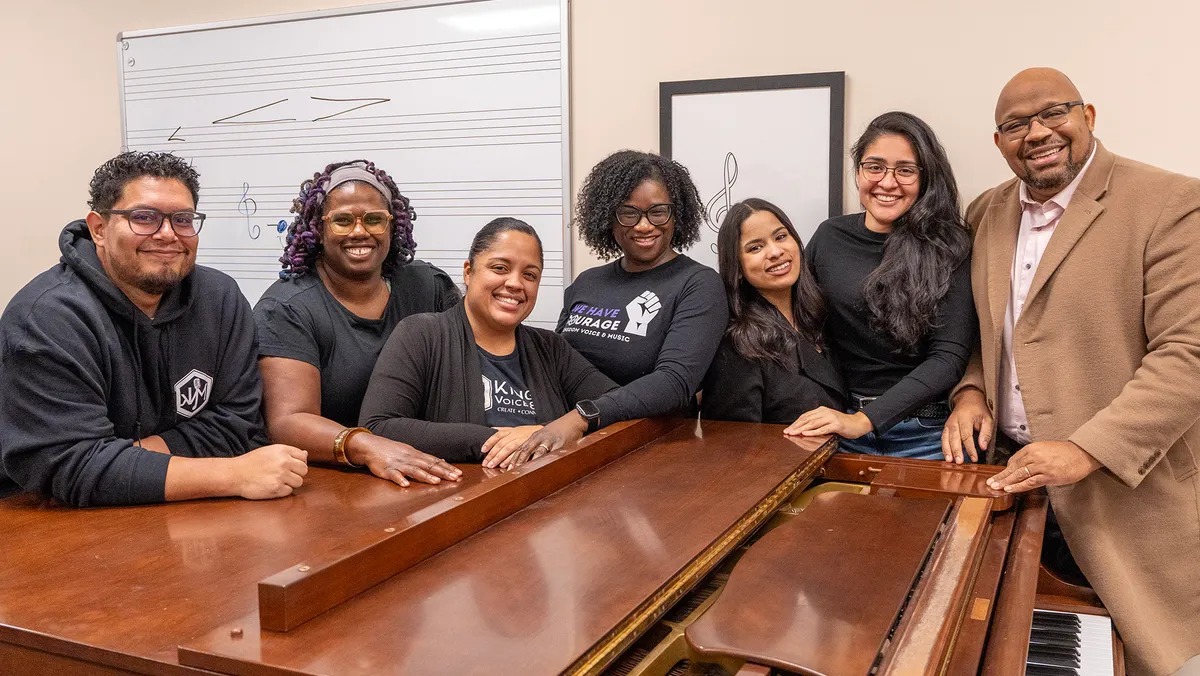
“It’s really important for us to pass down our stories, because if you don’t know where you come from, you can’t really understand yourself or have the confidence you need to move forward,” Kingdom Voice & Music founder Kirosha Sidelca said.
A Feb. 21 concert put together by The Village, the Worcester community organization that focuses on the city’s Black residents and culture, will honor 14 Black female songwriters. A week later, on Feb. 28, Kingdom Voice & Music returns with its fourth annual Black History Month Celebration, which will feature music, dance and storytelling.
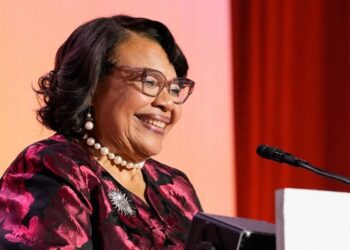
Longtime Boston performance artist and educator Valerie Stephens, who will be in the spotlight at the Feb. 28 concert, said teaching the next generations about their culture is vital as it helps “develop pride, understand strength, understand the possibilities of the future.”
“My fear is if you don’t know your history, you can be controlled,” Stephens said.
An ‘evolution’ over the course of one night
The Feb. 21 show will take place at 6:30 p.m. at the YWCA of Central Massachusetts in downtown Worcester and will feature a set list made up of songs composed by Black women, spanning the decades between 1920 and 1970.
The lineup of Worcester-area musicians who will perform those songs includes singers Sunta Jones, Lydia Fortune and Fanta Vibez, singer-guitarist Charles Ketter and singer-pianist Nat Needle, who said he had long hoped to put together such a concert.
“We’re starting with the 1920s and ending with the 1960s, so you get to see evolution from blues and Dixieland and ragtime into swing and jazz and later blues, and you get to see the constancy of the blues, the perennial nature of it,” Needle said.
Filling out the band will be two of Jones’ frequent collaborators, bassist Luke Bass and drummer Mike Rinker. Over the course of the night, the show will touch on songs, many of them autobiographical, by blues artists Ma Rainey and Bessie Smith, inventor of rock ‘n’ roll Sister Rosetta Tharpe, and many more.
“Being part of something during Black History Month is an honor because I want to be doing something for my community, and on top of that, the (other performers) are great artists who have been doing it longer than me and who have a lot of experience,” Vibez said. “For me to be in the space with them is an honor.”
Vibez said she has long been inspired by Nina Simone, the genre-blending singer-songwriter whose musical range included classical piano, jazz, blues and a lot else, and looks forward to singing Simone’s “Blues for Mama” and “Backlash Blues,” as well as Bessie Smith’s “Backwater Blues.”
“(Simone) really did what I thought of as the essence of an artist, raw and unfiltered and honest,” Vibez said. “I already knew Bessie Smith spoke up about injustice against the Black community back then, but when you hear the words and learn the lyrics, you really understand the political issues that were happening back then and how much she was in the forefront in a subtle way.”
A world so ‘big and bright and round’
Smith wrote “Backwater Blues” in the aftermath of a massive flood that hit Nashville on Christmas Day 1926 and the Great Mississippi Flood of 1927, both of which displaced thousands of Black residents from the affected areas and contributed to the mass migration of Black Americans to Northern and midwestern cities.
“So much was wiped out, and at that time white people were getting relief services for free that Black people either had to pay for or find a white co-signer or sponsor for,” Needle said. “Bessie Smith sung about facing the destruction and having no place to go, having to find some boat to get to land.”
At a few points during the night, all the performers will unite onstage to sing together. One ensemble song will be “Shake Sugaree,” which folk singer Elizabeth Cotten famously wrote and recorded with her grandchildren, and another will be Simone’s “To Be Young, Gifted and Black.”
Needle said he found “Backlash Blues,” with lyrics by famed Harlem Renaissance poet Langston Hughes, to be particularly relevant today, at a time where white nationalist ideas have once again found a foothold in the American mainstream.
“All you got to offer is your mean old white backlash,” Simone originally sang in the 1960s. “The world is big, big and bright and round/And it’s full of folks like me who are black, yellow, beige and brown/Mr. Backlash, I’m gonna leave you with the backlash blues.”
“Facing our own time of backlash, it’s a very timely song to have in the program,” Needle said. “We’re ending the show with ‘Young, Gifted and Black,’ and that’s an anthem of encouragement for Black youth to not accept any limits.”
Memory as guest of honor
On Feb. 28, starting at 5:30 p.m., the Prior Performing Arts Center at the College of the Holy Cross will light up and fill with music for Kingdom Voice & Music’s fourth annual Black History Month celebration, which this year is built around the theme “Courage to Remember.”
This year’s show will reflect that theme in two ways.
Stephens will use song, verse and storytelling to lead a journey through more than 500 years of Black American history, with music from the Kingdom Voices of Glory and King’s Kids choirs, singers Sympli Whitney and Angelo Gray, artists from Crocodile River Music, a full band, and Sidelca herself.
The night will also include a presentation from the Alzheimer’s Association on dementia and memory loss, which is chronically underdiagnosed among African Americans.
“When we talked about where we wanted to go with the subject, we thought about how important it is to pass down family history, and (a colleague) said, ‘Why don’t we connect with the Alzheimer’s Association and partner these two topics of remembering our history and memory loss?’” Sidelca said.
The more Sidelca thought about it, the more the topic felt particularly personal.
One of her aunts has been diagnosed with Alzheimer’s, and after the death of her grandmother last year, she was struck by the number of family stories relatives told that she had never heard before.
“A lot of people have these incredible stories that no one knows about,” Sidelca said. “Even thinking about the stories I don’t know about my parents and grandparents, a lot of people don’t have that culture in their home where their parents or grandparents sat them down and told their stories, and they get to the point where they can’t tell you because they’ve lost it.”
Stephens, meanwhile, thought about her own childhood memories of 1960s Boston, searching endlessly and often unsuccessfully for representation in books, history and popular culture.
“When I was a little girl, there was nothing Black on anywhere. There were no Black dolls, there was nothing about Black history that was ever, ever taught to us,” Stephens said. “As a child, I started to wonder what was happening in other places. In the fifth grade, I started spending time in the library looking for me, and many, many, many decades later, I’m still looking for me.”
‘A sense of stability in who they are’
Though the Feb. 28 show will be Stephens’ first Worcester performance in years, she played a key role in last year’s Courage To Dream concert, researching and writing its central narrative about Black immigrants in Massachusetts.
“We told the stories of some people who are still here and alive and well, how they came over from their countries and the ways they have impacted our community,” Sidelca said. “We told those stories through a dialogue of a child and an older gentleman, her asking questions and him telling stories, surrounded by the theme of her writing an essay for college.”
That show took place at Mechanics Hall, which Sidelca said was such a thrill for the King’s Kids choir that during this year’s rehearsals, the children still ask if they can perform at that venue again.
“These kids are so excited, and I don’t know that they all grasp the bigness of what it means, but they’re excited to be a part of it,” Sidelca said. “I go over every song I sing with them and what it means, and what it will mean to those who will be listening, and they take it to heart.”
As she sees it, it’s about more than just one choir – it’s important for everyone, elders and children alike, to muster up the courage to remember.
“Kids who know their history do much better in life with confidence, with schooling, because they know their family roots and where they come from, and that gives them a sense of stability in who they are,” Sidelca said. “I’m a mom with three little ones, and everything that I do, I know they’re going to be telling my stories.”
Black American Women Songwriters Concert
When: 6:30 to 9 p.m. Feb. 21
Where: YWCA of Central Massachusetts, 1 Salem Square, Worcester
How much: Free. Donations appreciated. thevillageworcester.squarespace.com.
Courage to Remember
When: 5:30 p.m. Feb. 28
Where: Prior Performing Arts Center, College of the Holy Cross, 1 College St., Worcester
How much: $29 to $55. kirosha.com.
‘ The preceding article may include information circulated by third parties ’
‘ Some details of this article were extracted from the following source www.worcestermag.com ’