Published on
July 17, 2026
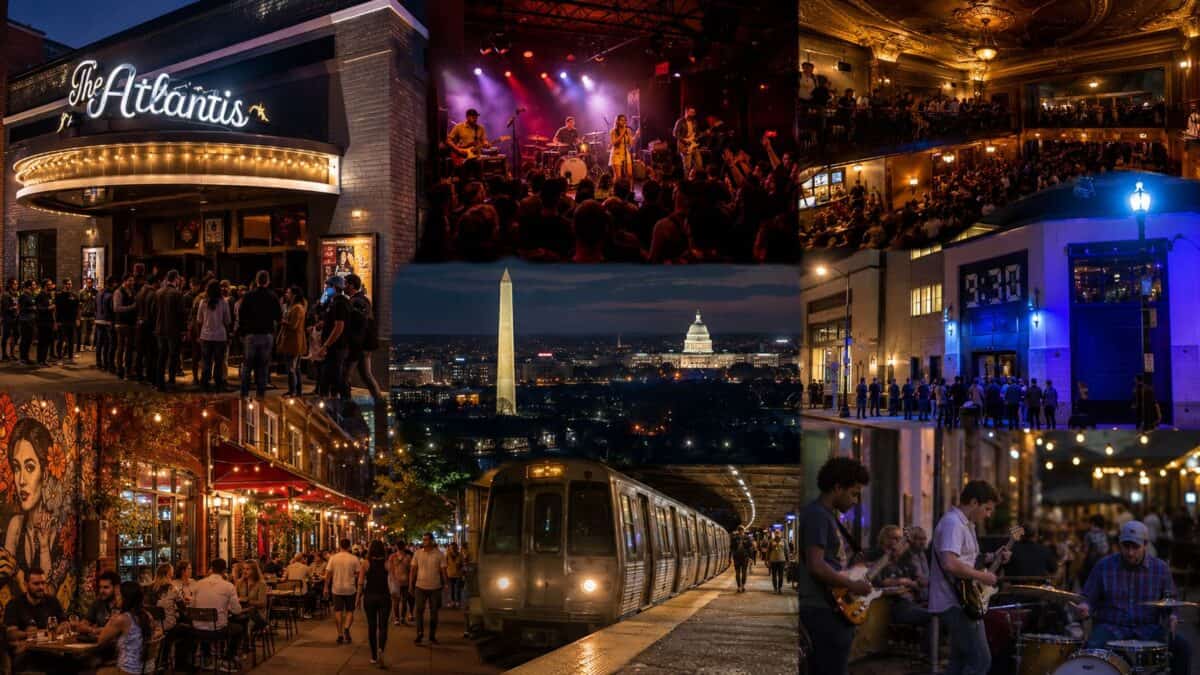
Image generated with Ai
Washington, D.C. is steadily reinforcing its reputation as one of the United States’ most compelling cultural destinations, and The Atlantis Washington DC has emerged as an influential contributor to that transformation. Three years after opening, the intimate 450-capacity venue has evolved from an ambitious experiment into one of the city’s busiest live music spaces, hosting nearly 250 concerts annually while creating an essential launchpad for emerging performers entering the American touring circuit. The venue has become a significant addition to the capital’s visitor economy by encouraging repeat travel, extending evening spending, and strengthening Washington’s appeal beyond its globally recognised monuments, museums and political institutions. As travellers increasingly seek authentic neighbourhood experiences, boutique music venues are becoming important tourism assets that enrich destination branding and diversify visitor itineraries.
Beyond entertainment, The Atlantis Washington DC reflects broader changes in how destinations compete within the global tourism economy. Increasingly, cities are investing in creative industries, cultural infrastructure and year-round events to attract leisure visitors, business travellers and younger audiences searching for immersive local experiences. Located beside the legendary 9:30 Club, the venue serves as a strategic bridge between grassroots talent and larger performance stages, ensuring that Washington remains an attractive stop for touring artists while simultaneously generating fresh reasons for domestic and international visitors to extend their stays. The combination of intimate performances, heritage-inspired design and a strong talent development ecosystem is positioning Washington as an increasingly dynamic music tourism destination.
Washington’s Music Tourism Economy Continues to Diversify
For decades, Washington has attracted millions of visitors through iconic landmarks including the National Mall, the Smithsonian museums and historic federal institutions. However, tourism authorities and destination marketers have increasingly recognised that night-time cultural experiences significantly influence visitor spending and overnight stays.
The growth of boutique entertainment venues aligns with wider tourism trends across North America. Rather than relying solely on traditional sightseeing, travellers increasingly prioritise concerts, festivals, culinary experiences and neighbourhood exploration when choosing destinations.
Advertisement
Advertisement
Within this evolving landscape, The Atlantis Washington DC occupies a unique position. Instead of competing directly with large arenas, it complements the city’s entertainment infrastructure by offering intimate performances that allow audiences to experience artists before they become international headliners.
Its operational performance illustrates that demand exists for smaller-scale venues capable of delivering authentic live music experiences throughout the year.
Advertisement
Advertisement
Washington’s Live Entertainment Landscape
| Venue | Approximate Capacity | Primary Role |
|---|---|---|
| The Atlantis | 450 | Emerging artists and intimate concerts |
| 9:30 Club | 1,200 | Established touring musicians |
| Lincoln Theatre | 1,200 | Concerts, cultural performances and special events |
| The Anthem | Up to 6,000 | Major national and international acts |
| Merriweather Post Pavilion | Up to 20,000 | Large-scale concerts and festivals |
This layered venue ecosystem enables performers to grow alongside audiences while encouraging repeat visits among music enthusiasts.
The Atlantis Washington DC Has Become a Strategic Gateway for Emerging Artists
Unlike many independent music venues, The Atlantis was conceived with a long-term industry strategy rather than simply adding another performance space to the city.
The venue effectively fills the gap between neighbourhood clubs and larger theatres. Emerging musicians often begin their Washington journey at The Atlantis before progressing to larger venues operated by the same management group as audience demand grows.
This progression benefits multiple stakeholders simultaneously.
Artists gain exposure within one of America’s most influential metropolitan markets.
Visitors enjoy opportunities to experience rising performers in an intimate setting before ticket demand and venue sizes increase.
Advertisement
Advertisement
Washington strengthens its reputation as a city that actively supports creative talent rather than merely hosting touring productions.
From a tourism perspective, this creates an evolving calendar where every season introduces new performers capable of attracting regional visitors from neighbouring states including Maryland, Virginia, Pennsylvania and beyond.
Why Boutique Music Venues Matter for Destination Tourism
Music tourism has become one of the fastest-growing segments within experiential travel.
According to international tourism research, travellers increasingly organise city breaks around concerts, festivals and cultural events. These visitors frequently generate higher local spending because they purchase accommodation, restaurant meals, local transport and retail products alongside event tickets.
For Washington, venues like The Atlantis contribute to several tourism objectives simultaneously.
Economic Contributions to the Visitor Economy
| Tourism Benefit | Visitor Impact |
|---|---|
| Overnight stays | Concertgoers often book hotels for weekend performances |
| Restaurant spending | Increased demand before and after shows |
| Local transport | Greater use of Metro, taxis and rideshare services |
| Retail activity | Additional spending in nearby neighbourhood businesses |
| Destination branding | Strengthens Washington’s identity beyond government tourism |
Small venues may host fewer attendees per performance than arenas, yet their frequency creates substantial cumulative economic activity across the year.
Advertisement
Advertisement
Hosting close to 250 performances annually ensures a consistent flow of visitors into surrounding commercial districts rather than concentrating tourism within seasonal peaks.
A Heritage-Inspired Venue Enhances Visitor Experience
One of the venue’s defining characteristics is its architectural identity.
Rather than introducing an entirely modern concert hall, designers recreated the atmosphere of the original 9:30 Club, one of Washington’s most celebrated music venues that operated downtown before relocating during the mid-1990s.
The nostalgic interior incorporates carefully recreated visual elements that resonate with long-time concertgoers while introducing younger audiences to an important chapter in Washington’s cultural history.
This heritage approach adds another dimension to the visitor experience.
Travellers are no longer attending simply another concert venue.
Advertisement
Advertisement
Instead, they become part of a continuing narrative connecting generations of musicians, audiences and the city’s evolving creative identity.
Even subtle design details contribute to the experience, including recreated decorative features, vintage-inspired aesthetics and interactive installations celebrating performers connected with the venue’s early years.
Such storytelling has become increasingly important in destination development, where authenticity frequently influences traveller satisfaction more than scale alone.
Technology and Acoustics Elevate the Live Experience
While nostalgia shapes its visual identity, The Atlantis simultaneously embraces contemporary performance standards.
High-quality acoustic engineering has become one of the venue’s defining strengths.
For performers, superior sound quality creates a more rewarding concert environment regardless of audience size.
Advertisement
Advertisement
For visitors, clearer acoustics improve the overall entertainment experience while reinforcing perceptions of value.
Modern travellers increasingly evaluate destinations based on memorable experiences rather than traditional sightseeing alone.
An outstanding live performance often becomes one of the defining memories of an entire trip.
Consequently, venues investing in production quality strengthen not only their own reputation but also the broader competitiveness of the destination.
The Venue Supports Washington’s Year-Round Tourism Calendar
Unlike seasonal festivals, permanent live music venues generate consistent visitor activity throughout the calendar.
Nearly 250 performances every year create a steady flow of entertainment-driven travel that complements Washington’s traditional tourism peaks associated with spring blossoms, summer holidays and autumn conferences.
Advertisement
Advertisement
This continuity benefits hospitality businesses by smoothing visitor demand outside major holiday periods.
Hotels, restaurants, bars and transport providers all benefit from regular evening events that encourage travellers to remain within the city for longer durations.
For destination marketers, this diversification represents a valuable competitive advantage.
Cities increasingly compete on their ability to offer experiences every week of the year rather than relying on a limited number of flagship events.
The Atlantis contributes directly to that resilience by maintaining a continuous schedule of performances that appeals to diverse musical tastes and demographic groups.
The Atlantis Washington DC Strengthens the Capital’s Position Within America’s Expanding Music Tourism Landscape
Across the United States, destination marketing organisations have increasingly recognised live entertainment as a powerful tourism driver. Cities including Nashville, Austin, New Orleans and Seattle have long marketed their musical heritage to attract visitors, while destinations such as Washington are expanding their cultural identities through a combination of historic venues, modern performance spaces and year-round programming.
Advertisement
Advertisement
The Atlantis adds an important dimension to this ecosystem because it is not designed around superstar acts alone. Instead, it introduces visitors to artists at an earlier stage of their careers, creating an experience that feels both authentic and exclusive. For music enthusiasts, seeing tomorrow’s headline performers in an intimate venue often becomes as memorable as attending major arena concerts.
This model also encourages repeat visitation. Travellers who first discover an artist at The Atlantis may return to Washington later to watch that performer at larger venues such as the 9:30 Club or The Anthem, creating a long-term tourism cycle that benefits the city’s visitor economy.
Practical Information for Travellers Planning a Music-Focused Visit
For visitors exploring Washington beyond its iconic monuments, The Atlantis offers an opportunity to experience the city’s contemporary cultural scene. Located in the Shaw neighbourhood alongside several well-known entertainment venues, it is easily accessible via the Washington Metropolitan Area Transit Authority (WMATA) Metro network and is surrounded by restaurants, cafés and bars that contribute to the area’s vibrant evening economy.
Travellers planning to attend performances should remember that the venue’s limited capacity means tickets for popular artists can sell out quickly. However, the venue’s busy annual schedule also increases the likelihood of discovering emerging musicians with greater ticket availability compared with larger concert venues.
Many visitors combine an evening performance with daytime attractions including the Smithsonian museums, the National Mall, the U.S. Capitol, the White House precinct, Georgetown or The Wharf, making live music an increasingly popular addition to traditional sightseeing itineraries.
Visitor Planning Guide
| Travel Consideration | Practical Information |
|---|---|
| Venue Capacity | Approximately 450 guests |
| Annual Performances | Nearly 250 concerts each year |
| Best Transport | Washington Metro, rideshare services and taxis |
| Ideal Visitor Profile | Music enthusiasts, cultural travellers, weekend visitors and international tourists |
| Nearby Experiences | Restaurants, nightlife, cultural attractions and historic neighbourhoods |
| Booking Advice | Purchase tickets early for well-known emerging artists |
The Wider Economic Value Extends Well Beyond Ticket Sales
The economic contribution of venues such as The Atlantis extends significantly beyond admission revenue. Every concert generates secondary spending that supports multiple sectors of Washington’s visitor economy.
Advertisement
Advertisement
Hotels benefit from overnight stays by regional visitors. Restaurants experience increased patronage before and after performances. Public transport operators, rideshare providers and parking facilities all experience higher demand during concert evenings. Local retailers and hospitality businesses similarly benefit from increased visitor footfall.
For destination planners, these cumulative economic effects reinforce the importance of maintaining a diverse entertainment infrastructure that caters to audiences of varying sizes rather than concentrating solely on large stadium events.
How The Atlantis Supports Washington’s Tourism Economy
| Sector | Contribution |
|---|---|
| Accommodation | Encourages overnight city breaks and weekend travel |
| Food and Beverage | Generates pre-show and post-show dining demand |
| Transport | Supports Metro usage, taxis and rideshare services |
| Retail | Increases spending in surrounding commercial districts |
| Cultural Tourism | Expands Washington’s appeal beyond government attractions |
| Creative Industries | Supports musicians, production professionals and local suppliers |
An Artist Development Model That Benefits Destination Branding
One of the venue’s most distinctive characteristics is its role within a broader artist development ecosystem.
Rather than operating independently, The Atlantis forms part of a progression that enables performers to move naturally through increasingly larger venues as their audiences grow. This approach provides continuity for artists while also strengthening Washington’s reputation within the national live music industry.
Several emerging performers have already followed this pathway, beginning with intimate performances before advancing to larger Washington venues within a relatively short period. Such progression demonstrates how smaller venues can influence an entire city’s cultural infrastructure.
For travellers, this also creates an additional layer of excitement. Attending a concert at The Atlantis offers the possibility of witnessing an artist before they achieve widespread commercial recognition, making the experience particularly attractive for dedicated music fans.
Advertisement
Advertisement
Washington’s Cultural Identity Continues to Evolve
Although Washington is internationally recognised for politics, diplomacy and national history, its creative economy has expanded considerably over recent decades.
Neighbourhoods such as Shaw, U Street and The Wharf have become important centres for music, food, nightlife and cultural events, broadening the city’s tourism appeal and encouraging longer visitor stays.
The Atlantis complements this transformation by strengthening one of the city’s most historic music districts while simultaneously supporting new generations of performers.
For international visitors, this creates a more balanced destination experience that combines globally recognised landmarks with authentic neighbourhood culture.
For domestic travellers, it offers compelling reasons to revisit the capital even after completing traditional sightseeing.
This diversification aligns with broader tourism strategies that increasingly prioritise authentic local experiences alongside iconic attractions.
Advertisement
Advertisement
Looking Ahead as Music Tourism Continues to Grow
The continued success of The Atlantis illustrates how relatively small cultural investments can generate significant long-term benefits for both tourism and the creative economy.
With nearly 250 performances each year and an established reputation for introducing emerging talent to Washington audiences, the venue has become an important component of the city’s entertainment landscape.
As experiential travel continues to influence visitor behaviour, destinations capable of combining heritage, culture, nightlife and authentic local experiences are likely to remain highly competitive within the global tourism market.
For Washington, The Atlantis represents more than another concert venue. It has become a symbol of the capital’s evolving identity—one that embraces creativity, supports artistic development and enriches the visitor experience through year-round cultural programming. The Atlantis Washington DC is therefore strengthening not only the city’s live music scene but also its long-term position as one of America’s most engaging urban tourism destinations.
Frequently Asked Questions (FAQs)
What is The Atlantis Washington DC?
The Atlantis is a 450-capacity live music venue in Washington, D.C., developed by I.M.P. It was designed as an intimate performance space where emerging artists can build audiences before moving on to larger venues across the city.
Why is The Atlantis important for Washington’s tourism industry?
The venue strengthens Washington’s cultural tourism by attracting music enthusiasts, encouraging overnight stays, increasing visitor spending in nearby restaurants and hotels, and diversifying the city’s appeal beyond its historic landmarks and museums.
Advertisement
Advertisement
How many concerts does The Atlantis host each year?
The Atlantis now stages close to 250 live performances annually, making it one of Washington’s busiest small concert venues and a year-round contributor to the city’s visitor economy.
Who operates The Atlantis?
The Atlantis is operated by I.M.P. (Independent Media Productions), which also manages several of Washington’s best-known music venues, including the 9:30 Club, The Anthem, and Lincoln Theatre, as well as Merriweather Post Pavilion in Maryland.
Where is The Atlantis located?
The Atlantis is located in Washington, D.C.’s Shaw neighbourhood, adjacent to the iconic 9:30 Club, one of the city’s most celebrated live music venues.
How does The Atlantis support emerging musicians?
The venue serves as an entry point for up-and-coming artists touring Washington for the first time. Many performers begin with an intimate show at The Atlantis before progressing to larger venues as their fan base grows.
What makes The Atlantis different from other concert venues?
The Atlantis combines state-of-the-art acoustics, a nostalgic design inspired by the original 9:30 Club, and an intimate audience experience. Its small capacity allows fans to enjoy close-up performances by artists who may later become major international acts.
Can travellers easily include The Atlantis in a Washington itinerary?
Yes. The venue is easily accessible via the Washington Metro and is close to popular attractions, restaurants, nightlife districts and cultural landmarks, making it an excellent addition to both weekend breaks and longer visits to the US capital.
Advertisement
Advertisement
Why is music tourism becoming more important in Washington, D.C.?
Music tourism encourages visitors to stay longer, spend more on accommodation and dining, and explore neighbourhoods beyond the city’s traditional tourist attractions. Venues like The Atlantis help position Washington as a destination for authentic cultural experiences throughout the year.
Should visitors book tickets in advance?
Yes. Because The Atlantis accommodates only around 450 guests, performances by popular emerging artists often sell out quickly. Booking tickets in advance is recommended, particularly for weekend shows and high-demand acts.
Advertisement
Advertisement

‘ The preceding article may include information circulated by third parties ’
‘ Some details of this article were extracted from the following source www.travelandtourworld.com ’