If you bake in a bakery, where do you make art?”
Vico Sharabani is the founder and COO of The-Artery, a multidisciplinary creative studio where their wheelhouse is versatility and experimentation. Their extensive portfolio encompasses feature films, premium television, experiential installations, virtual production, and live events, establishing a proven track record of delivering high-quality production services across multiple industries and visual mediums.
The-Artery is an example of a studio navigating an increasingly turbulent entertainment industry, proving itself capable of consistently delivering high-quality work despite widespread corporate consolidation, cost-cutting, and automation. Their greatest asset as creators is not their specialized tech and tools, but the people behind those tools who demonstrate flexibility, adaptability, and an unconditional, more-than-ready desire to create.
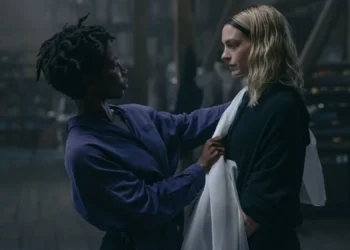
Talent is The-Artery’s secret ingredient: talent that allows Sharabani and his team to contribute to feature films such as Midsommar, colossal public LED displays such as the Las Vegas Sphere, and the development of new technologies and pipelines that allowed for the release of the first feature film designed for the Apple Vision Pro mixed reality headset: the immersive version of the documentary Bono: Stories of Surrender.
“They could have gotten any company in the world to do this project, so first and foremost, it was up to us to prove we have experience working on high-end films,” said Sharabani. “Second, we had to demonstrate we have the technical chops to pull off the first feature film for the Apple Vision Pro, a massive technological undertaking. Third, they needed to know that we had experience working with celebrity talent. And fourth, we had to show these companies that we were a creative partner that takes the reigns on a creative vision and executes it. Versatility was critical. If we wanted this job, we needed to satisfy multiple people: Bono himself, Apple, Plan B, and Radical Media.”
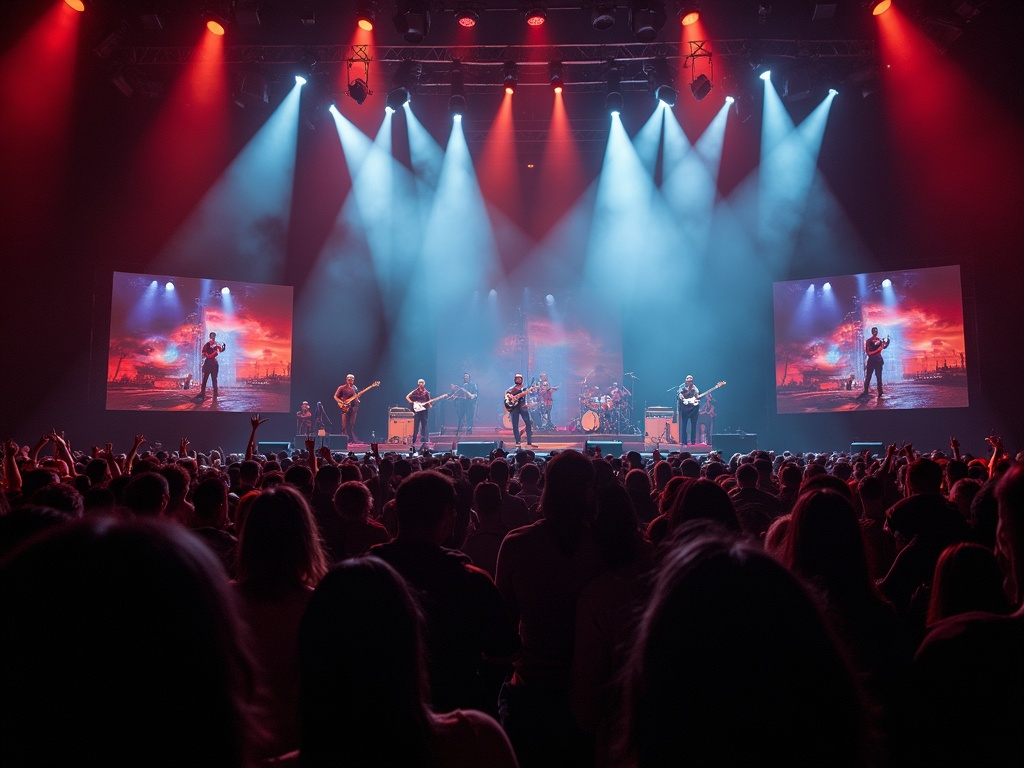
Production is no longer “just film” or “just experiential.” The-Artery bore witness to this rising synergy within the industry and seized the opportunity. Concerts and live events, both permanent installations and on-the-road city-to-city tours, now share technical DNA with filmmaking. Stage shows, from big multimillion-dollar events to even smaller acts, now commonly utilize giant LED displays. Lighting designers, technicians, and grips illuminate both the stage and performers with cameras in mind, from smartphones to broadcast-quality equipment. Video production switchers operated by experienced technical directors, once found exclusively within control rooms of live television studios, further contribute to this “cross-pollination” of technology and talent, allowing for real-time effects and camera changes in an increasingly fast-paced production environment. Even high-end VFX and powerhouse 3D world building platforms, such as Unreal Engine, find their way to the stage.
Which makes individual talent all the more valuable in this cross-pollinated industry.
Want to know more about essential gear like pro audio, instrument accessories, consumables (tape, batteries), custom solutions, and broadcast equipment for road crews and musicians? Shop Tour Supply Today!

Evan Cervantes – former Director of Business Development at Lux Machina, now absorbed into NEP Sweetwater – can further attest to the importance of the human skillset, having been on the ground for over ten years, getting his start as a roadie working with LED and video technology for concerts of some of the biggest names in music: Trans Siberian Orchestra, Beyoncé, and Jennifer Lopez. Though his wheelhouse these days is in virtual production and business development, his experiences touring the country informed the skills that would take him from one creative industry to the next.
“Something that carries over is set etiquette,” said Cervantes. “As a roadie, your set etiquette during a concert is simple: get the work done and be invisible. It ruins the magic when audiences see a bunch of people working, so you do the job, hide, and then let the performer come out and be the spectacle. That same etiquette exists on a film set. It’s the same principle. The fewer people that need to acknowledge you, the better, because that means you are doing the job and things are looking good on-camera.”
Cervantes elaborates on this synergy, “The speed is the same, as well as the tech: if I need an EIC, an engineer-in-control, on a narrative set, I can call an EIC with a background in concert touring, and they would be able to understand my hardware because we are using the same tools. You have media server companies such as Disguise and PIXERA providing their systems across film, concerts, broadcast television, and public installations. It’s the same for LED processing: you’ll either call in Brompton, Megapixel, Color Light, or Nova Star for your concert tour or virtual production project. It all crosses over.”

This synergy, this industry cross-pollination that Sharabani and Cervantes have witnessed, is symptomatic of an entertainment industry arguably still reeling from the COVID-19 pandemic and the back-to-back Hollywood strikes. Jobs are less common, prices for equipment rentals have fallen in a gradual race to the bottom, and human-displacing technology is increasingly pushed to the forefront over talent retention. The media and entertainment production industry, regardless of artistic medium, has long been characterized as a gig economy. Having these multidisciplinary skillsets is now considered a necessity, pivotal to career stability and sustaining the human touch in the media we consume.
This is the rise of the generalist, as Cervantes puts it: “We encourage the younger generation of Hollywood creatives to become generalists. When you don’t have work in feature films or television, you’re able to contribute to commercials, or you find yourself working on a live broadcast event that’s at some big arena. You can also work at a corporate sales event that will use a lot of LED.”
Perseverance and a willingness to learn are what will allow the next generation of creatives to stand out. As long as the desire to create and collaborate continues to burn bright, human hands will never stop staying busy with their art.
The-Artery is a testament to that. “The whole point behind our name is that if you bake in a bakery, where do you make art?” laughs Sharabani. “We see the parallels not many other companies see. Where others posses a narrow vision of where creativity lives, for us, it lives beyond the boundaries of verticals.”
This article was brought to you by Tour Supply – providing creative professioanls with everything they need, including Pro Audio Gear, Instruments, & More! Founded in 1998, Tour Supply is now partnered with Filmtools, serve professionals with gear for concerts, festivals, and film, operating primarily online with a physical store in Burbank, CA, and offering fast, reliable shipping. Learn more here.
‘ The preceding article may include information circulated by third parties ’
‘ Some details of this article were extracted from the following source www.provideocoalition.com ’