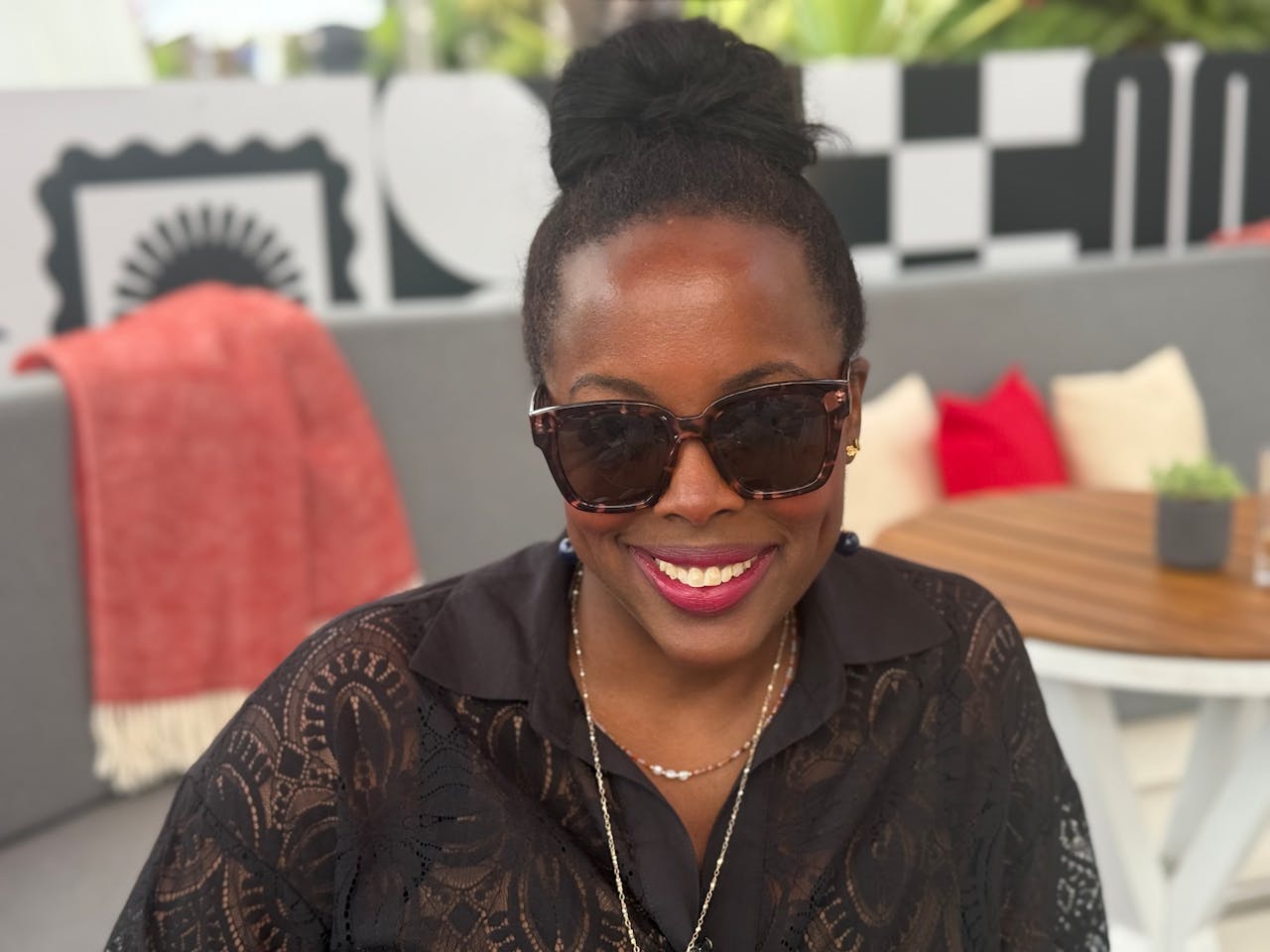
Lauren Anderson, head of Amazon Ads’ US Brand Innovation Lab, says the future belongs to brands that blend commerce, creators and entertainment into experiences consumers actually value.
One of the quieter themes to emerge from Cannes Lions this year has been the evolution of the platform.
Whether it’s Spotify talking about becoming part of culture rather than simply another media channel, retailers such as Albertsons experimenting with creator-led micro dramas, or Amazon weaving together shopping, streaming, entertainment and creators, the industry’s biggest platforms are all heading in a remarkably similar direction. Advertising is becoming less about interruption and more about creating experiences that consumers actively choose to engage with.
As part of The Drum’s All Media is Commerce Media documentary series, we caught up with Lauren Anderson, head of the US Brand Innovation Lab at Amazon Ads, to understand how one of the world’s biggest advertising businesses is building an ecosystem where branded content, commerce and entertainment increasingly work together.
For Anderson, the shift starts with a simple principle.
“Our goal with every campaign we develop is to really make sure that we’re extending, enhancing, elevating the customer experience,” she says. “Interruption is the opposite of what we want to do.”
That philosophy reflects how Amazon’s advertising business has matured. Rather than thinking in terms of individual channels, the Brand Innovation Lab can pull together Prime Video, Amazon Music, Twitch, shopping experiences, creators and live activations to build bespoke campaigns around a single customer journey.
“If you’re shopping, if you’re listening to music, what experience can we bring to you that just feels like this beautiful add-on and elevation of your natural rhythms and your natural patterns?” she explains. “That’s the way for it not to feel like an interruption.”
Sometimes that means solving problems customers never realized they had.
Anderson points to a campaign with Geico that allows customers to obtain an insurance quote directly through Amazon.
“We talk sometimes about this idea of answering a problem that a customer hasn’t even thought to ask yet. They’re so thrilled when they get a solution.”
That thinking also underpins Amazon’s growing investment in branded entertainment and sponsorships.
Among the announcements at Cannes was the expansion of Amazon’s pan-Amazon sponsorship program beyond the holiday season, alongside new creator partnerships, including Oprah Winfrey.
“We’re really excited to have her joining the Amazon family. We’re excited to figure out really great ways to partner her with incredible brands.”
Yet despite the growing emphasis on creators, streaming and entertainment, Anderson argues marketers shouldn’t lose sight of what they’re actually trying to achieve.
Brands certainly want stronger measurement and clearer evidence of effectiveness, she says, but those conversations are becoming more sophisticated.
Want to go deeper? Ask The Drum
“People want to see results on the other side, but I think the question is, What does performance mean? What does effectiveness mean? What is the time horizon that we’re looking at?”
She points to Amazon’s campaign launching Lexus’s electric vehicle in partnership with Icelandic singer Laufey. While sales mattered, the bigger objective was building a longer-term relationship with consumers.
“A lot of brands are really thinking about what the long-term community-building play is. What is it that we’re doing to make sure customers understand that they want to show up in a real, authentic, organic way over many months and years of consistency?”
That helps explain why Amazon’s Brand Innovation Lab increasingly looks for clients willing to experiment rather than simply execute.
“The word that comes to mind immediately is openness,” Anderson says when asked what makes a great client. “Brands who are willing to go bigger, who are willing to see things in a different way – those are the ones that make really great partners.”
The examples span everything from Nespresso’s collaboration with The Weeknd around its Samra Origins coffee to a Pet Armor campaign that used AI-generated personality profiles to help shelter dogs find new homes, quadrupling one shelter’s single-day adoption rate.
Every campaign is built differently.
“We do a variety of different things with a variety of different partners depending on what the brand is looking to do. The beauty of having a canvas like Amazon’s is that there really is so much at our disposal.”
That doesn’t mean using every available touchpoint. “You don’t want to just throw everything at it. The goal is to say what is actually going to enhance and refine the customer message.”
For Anderson, successful branded entertainment has always been less about product placement than authenticity.
“Customers have never rejected brands inside content,” she says. “What they reject is an unnatural integration of brands.”
That distinction matters as more advertisers look to creators, premium entertainment and streaming platforms to reach audiences.
“If your brand doesn’t naturally align with that person or with that person’s audience or with their voice, then it’s very difficult to pull off something that feels real.”
Artificial intelligence is also beginning to reshape how those campaigns are created, although Anderson is careful not to overstate its role.
“What AI allows us to do is succeed faster and fail faster. It accelerates our ability to personalize and respond.”
The creative spark, however, remains human. “A piece of clay or a piece of marble in my hands versus Michelangelo’s hands is very different. You still need the auteur. You still need the creative spark.”
Perhaps the biggest shift Anderson sees isn’t technological at all.
While much of Cannes focused on AI, she believes the industry’s future lies in creating experiences that bring people together.
“I don’t think experiences are a trend. I actually think that’s a deep-seated soul desire.”
If AI makes digital interactions easier, she argues, it may also make genuine human connection more valuable.
“The growth of AI is going to drive even more the combination of people becoming far more conversant in that technology, but also really yearning for that human togetherness.”
For a company that started life selling books, it’s a striking evolution. Amazon Ads is no longer simply helping brands reach shoppers. Increasingly, it’s helping them become part of the experiences customers were already looking for in the first place.
‘ The preceding article may include information circulated by third parties ’
‘ Some details of this article were extracted from the following source www.thedrum.com ’