London
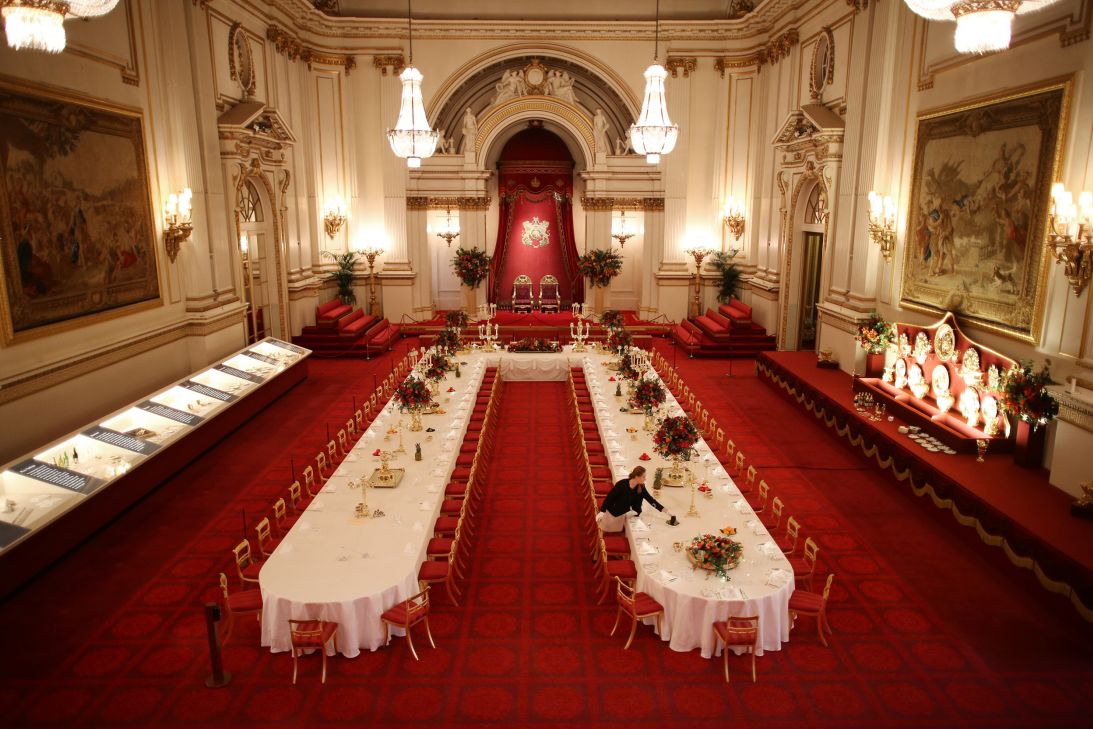
When the British royal family ramps up the pomp and pageantry to mark moments of national importance, Buckingham Palace often provides the perfect backdrop.
But it has also been the official London residence of the sovereign since 1837. Queen Victoria was the first monarch to live in Buckingham Palace, moving in when she came to the throne nearly 200 years ago.
Despite spending considerable time at their various country retreats, from Windsor Castle outside London, to Balmoral in Scotland, every subsequent monarch has kept Buckingham Palace as their primary residence. Until now.
It was revealed last week that King Charles III is breaking with this tradition as he and his wife, Queen Camilla, will not be moving into the palace when a 10-year renovation program costing £369 million ($488 million) wraps up next year.
Instead, Charles will remain at nearby Clarence House, where he has lived since 2003, with Buckingham Palace continuing to serve as the administrative headquarters of the monarchy.
“(Buckingham Palace) will be a buzzing hive of royal activity in every other way,” a palace spokesperson told celebrity.land.
“His Majesty retains huge affection for Buckingham Palace and a deep respect for its role in royal and public life.”
It’s not yet clear whether Charles’ decision to remain at Clarence House will lessen the interest of the visitors who throng daily outside the gold-topped palace railings, hoping to catch a glimpse of royal life.
One visitor told Reuters news agency they were interested in seeing the building for itself, adding: “Whether or not the King lives there or not is not consequential to us.” Another visitor took a different view, saying a palace without royals inside “loses its magic.”
James Chalmers, the King’s treasurer and Keeper of the Privy Purse, told UK media it would remain the primary venue for ceremonial and official functions including receiving foreign dignitaries.
“It is and will remain monarchy HQ, the crown jewel of our national buildings, with the sovereign’s standard flying proudly from the roof whenever his majesty is in London,” he told reporters. Charles will maintain private rooms there that could be used as accommodation.
Buckingham House was bought by George III in 1761 for Queen Charlotte and their children to live in. When George IV came to the throne, he commissioned the architect John Nash to enlarge the house into a palace, but George died before the work was completed.
Though the palace had cost £496,169 (around £33.6 million, or $44.4 million, today), William IV opted to remain at Clarence House, even offering Buckingham Palace as a replacement to the Houses of Parliament after they burnt down in 1834. Parliament declined the offer.
In 1845, Queen Victoria oversaw the last expansion to the palace, adding the East Wing, which faces down the Mall. The building now has 775 rooms, including 78 bathrooms.
The latest conservation work began on the palace in April 2017. The work is “far more than cosmetic,” Natasha Brown, an expert in historical building conversions and director of Giles Quarme Architects, who isn’t involved in the project, said in an email to celebrity.land.
The restoration work was desperately needed. Princess Anne, Charles’ sister, was nearly hit by a piece of falling masonry in 2007, according to British media reports, and staff often had to use buckets to catch leaks.
“It includes the wholesale replacement of ageing electrical, plumbing, and mechanical services, extensive fire protection works, and the careful removal of asbestos,” Brown said.
Asbestos was discovered in the basement during the restoration, costing £10.1 million ($13.4 million) to remove.
While Charles is the first monarch in 189 years not to use the palace as his official home, he is far from the first to eschew the building.
Although Queen Victoria had made it the royal family home and center of official business for two decades, she withdrew from public life following the death of her husband, Prince Albert, in 1861 and spent most of her time at Windsor Castle.
Victoria was so rarely at Buckingham Palace that, according to The Telegraph, a note was left on the fence of the residence in 1864, reading, “These commanding premises to be let or sold, in consequence of the late occupant’s declining business.”
During the Covid-19 pandemic, Queen Elizabeth II moved to Windsor, citing the building work, but “the late Queen never much liked living at Buckingham Palace,” Robert Hardman, a royal expert who has written biographies of King Charles and Queen Elizabeth, told celebrity.land in an interview.
“She was very sad moving in there as a little girl in 1936 (when her father, George VI, became king), and she was even more sad moving in there when her father died,” Hardman said.

Elizabeth had hoped to stay at Clarence House, where she lived with her husband and children, but was supposedly told by Winston Churchill, prime minister at the time, that the monarch had to “move in above the shop,” Hardman said.
The problem, Hardman said, is that the palace was “never really designed as a home.”
“If you walk through the door of Clarence House, you feel like you’re going into a home. It’s a grand home, but it’s a home. If you walk into the door of Buckingham Palace, you feel you’re entering a head of state’s office,” he said.
George V preferred his country estate of Sandringham in Norfolk, and reportedly described it as, “Dear old Sandringham, the place I love better than anywhere else in the world.”
Even though members of the public are generally only allowed tours of Buckingham Palace during the summer, when the monarch is traditionally in Scotland, inside the palace, “you’re very much the focus of attention,” Hardman said.
While the palace has been the monarch’s official residence since Queen Victoria’s reign, it has undergone extensive remodelling since then.
The east wing was added in 1847, closing off the open courtyard designed by Nash. It was then refaced in 1913, when Marble Arch was moved to Hyde Park, and the familiar Victoria Memorial monument was added in front of the royal residence, leaving the “more austere and institutional” version we have today, Brown says.

This latest round of work has been funded by a temporary increase to the Sovereign Grant, the annual lump sum paid by the British government to fund royal duties carried out by members of the family and the household.
It comes from a percentage of the money generated by the land and property owned by the Crown Estate. For 2027-2028, when the palace refurbishment is set to conclude, the funding will drop from £137.9 million to £99.9 million. However, that figure is still up from the £40.1 million the household received in 2015-2016.
Critics have questioned both the hefty cost of the renovation work at the landmark and Charles’ decision not to move in once it’s completed.
“The taxpayer has just funded a major refurbishment of Buckingham Palace, only for Charles to unilaterally decide he won’t use it,” Graham Smith, the chief executive of Republic, an anti-monarchy group in the UK, told celebrity.land.
“But he won’t hand it over for others to use either. It’s half in and half out, preventing it from being turned into a world class museum and art gallery,” Smith added.
‘ The preceding article may include information circulated by third parties ’
‘ Some details of this article were extracted from the following source edition.celebrity.land.com ’