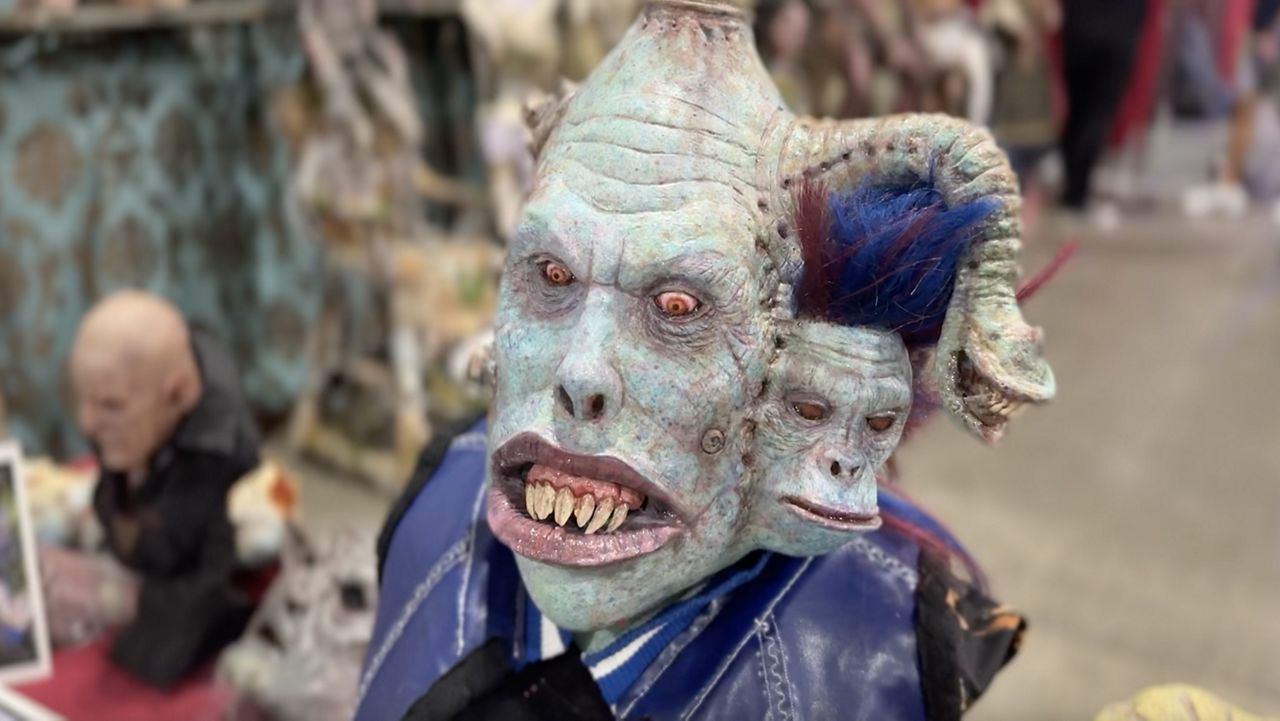
LOS ANGELES — Masks glinted under the lights at HorrorCon. Fans posed for selfies with creepy creatures, and an evil clown or two loped through the aisles. The Los Angeles convention floor was packed with costumes, collectors and creators, proof that horror isn’t just a seasonal thrill. It’s a cultural force that keeps on growing.
In the middle of the perfectly spooky mayhem was Eric Grayson. He runs Gray Corpse FX in Los Angeles, where his work brings monsters to life for films.
“I’ve been in the industry for about 10 years, working on and off movies and different entertainment parts of the business. So, like haunted houses, different horror conventions that take place. I get to be a part of all of that,” Grayson said.
For Grayson, the steady stream of work isn’t limited to big-budget productions. Smaller companies and independent projects help fuel the industry too.
“It’s not always the big companies that are providing the work. I’ve had the luxury of actually picking up more jobs from smaller companies. So I do anything from feature films and music videos to haunted attraction work. Even private commission work.”
That steady pipeline reflects a bigger truth about the genre. Film analyst Stephen Follows has found that just over half of all horror films released in U.S. cinemas turn a profit — a higher success rate than many other genres. Industry data also show that horror routinely delivers some of Hollywood’s highest margins, thanks to modest budgets and fiercely loyal audiences.
“We’ve come to an age where a lot of the things that were difficult and expensive are becoming more affordable and a little more accessible to the public. It’s even helping our industry progress because what we used to do traditionally took a lot of years of skill and experience. Now it can be something that someone does at the click of a button,” Grayson explained.
This year’s box office has underlined that resilience. “The Conjuring: Last Rites” became the franchise’s biggest opener, “Sinners” turned into a $366 million global breakout, and “Final Destination: Bloodlines” added new fuel to a legacy franchise.
But horror isn’t only about guts and gore. For Sean Cassidy, the genre is a way of keeping his family’s story alive. His father, Ted Cassidy, played Lurch in the original “Addams Family TV” series.
“I just had a blast being a kid. I was 7 years old when ‘The Addams Family’ started taping, and I used to skateboard around the set. It was just so fun,” Cassidy remembered.
That joy, he said, is part of why “The Addams Family” still resonates through reboots and streaming hits like “Wednesday.”
“They were a family that was different, right, but they stayed true to themselves. They were always respectful, and isn’t that something the world could use a lot more of today?” he said.
And beyond the legacy of one show, Cassidy sees horror as a way for people to safely confront the things that scare them.
“It’s kind of the almost the ultimate in fantasy. A way to get near something you wouldn’t do in real life. But in entertainment, you can get close to it. There’s some great reasons to do it.”
Back on the HorrorCon floor, Eric Grayson looks ahead with optimism.
“Yeah, I think horror is going to continue to progress and expand,” Grayson said. “The community just keeps growing.”
From monster makers to TV icons, this year’s HorrorCon showed what Hollywood already knows: horror will always survive.
‘ The preceding article may include information circulated by third parties ’
‘ Some details of this article were extracted from the following source spectrumnews1.com ’