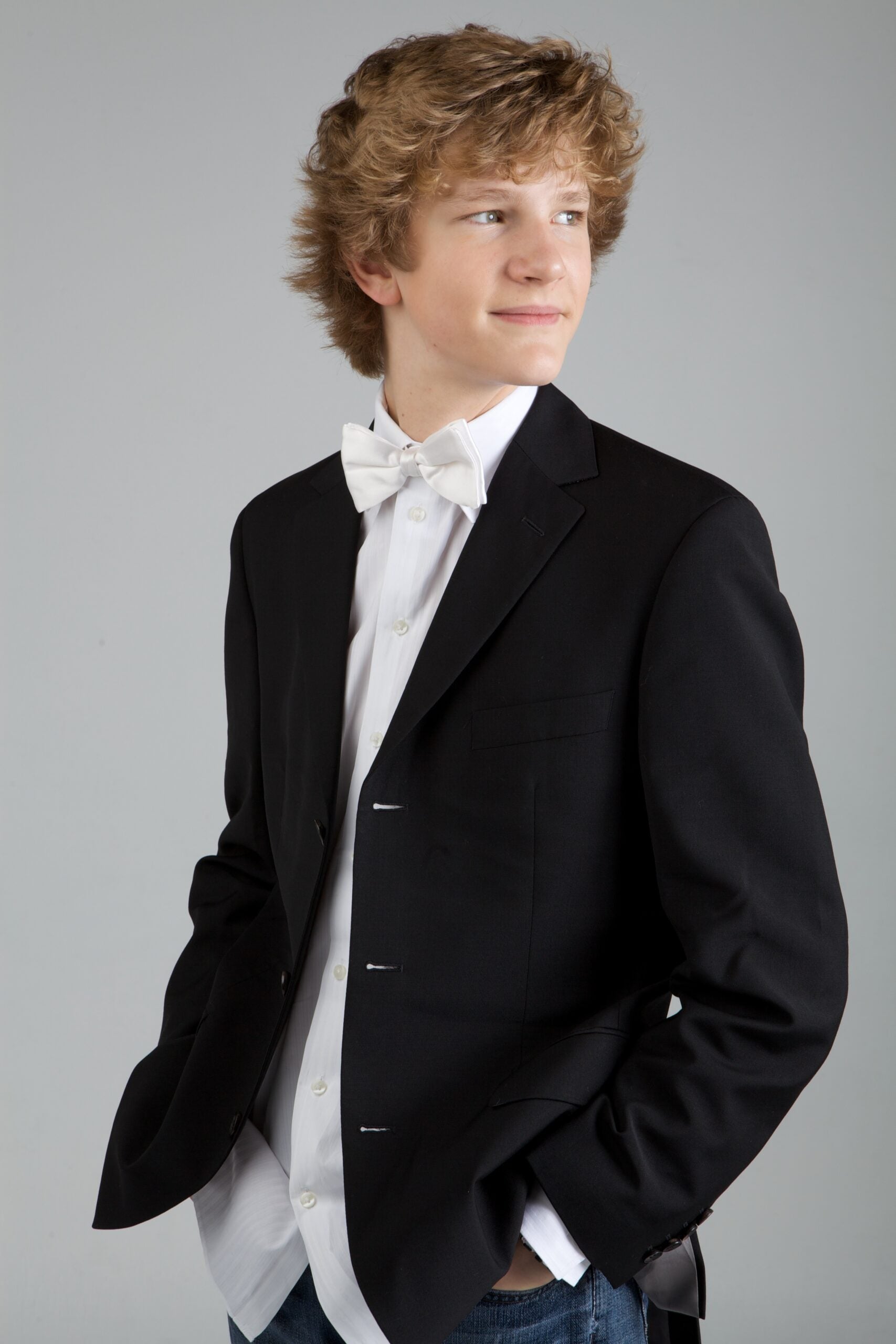
Jan Lisiecki and Manfred Honeck worked together on a couple of Mozart piano concertos several years ago, with Lisiecki describing the experience as an exceptional musical partnership.
In particular, they performed the Piano Concerto No. 22 six times in one week during the pandemic in 2020 and immediately made plans to record it together.
Lisiecki has been an exclusive Deutsche Grammophon artist since he was 15 — at age 31 now, that represents over half of his life. The record label’s support has worked well for both solo albums and those with orchestras.
Understanding Wisconsin, Together.
WPR’s “Wisconsin Today” newsletter keeps you connected to the state you love without feeling overwhelmed. No paywall. No agenda. No corporate filter.
This new DG recording includes two keyboard concertos: No. 9 (K. 271) and No. 22 (K. 482), both of which are in the key of E-flat. Lisiecki noted in a video interview that “Mozart seemed to have an innate connection to the key of E-flat; he was able to write such beautiful works in this key.”
Mozart composed the earlier piece while he was still living at home in Salzburg. It was mistakenly nicknamed the “Jeunehomme,” the Young Man, because of Mozart’s sloppy handwriting and an assumption made by biographers.
The latter was written eight years later, in part to show off his own chops at the keyboard for Viennese audiences.
Lisiecki writes that both concertos are singular masterpieces that emphasize the equal interplay of the keyboard and the orchestra, and he has spoken about the gorgeous wind writing in both pieces. He specifically calls out a lovely musical conversation between the flute and oboe in the second movement of No. 22, which was also the first to feature clarinets.
Mozart’s own cadenzas were written out for the Piano Concerto No. 9, including, according to Lisiecki, “a grand, quite dense cadenza in a second movement of a piece: revolutionary!”
For No. 22, Lisiecki used the cadenzas created by pianist Paul Badura-Skoda.
Lots of thought about interpretation went into the recording: together, Lisiecki and Honeck decided to minimize the scoring to a string quintet in a couple of spots, including the “surprise minuet interlude” in the finale of No. 22.
The Bamberg Philharmonic under Manfred Honeck’s baton is the perfect orchestral partner for this recording project. Their playing is both precise and evocative, transparent and rich — gorgeous, elegant perfection that complements Lisiecki’s sensitive performances.
Wisconsin Public Radio, © Copyright 2026, Board of Regents of the University of Wisconsin System and Wisconsin Educational Communications Board.
‘ The preceding article may include information circulated by third parties ’
‘ Some details of this article were extracted from the following source www.wpr.org ’