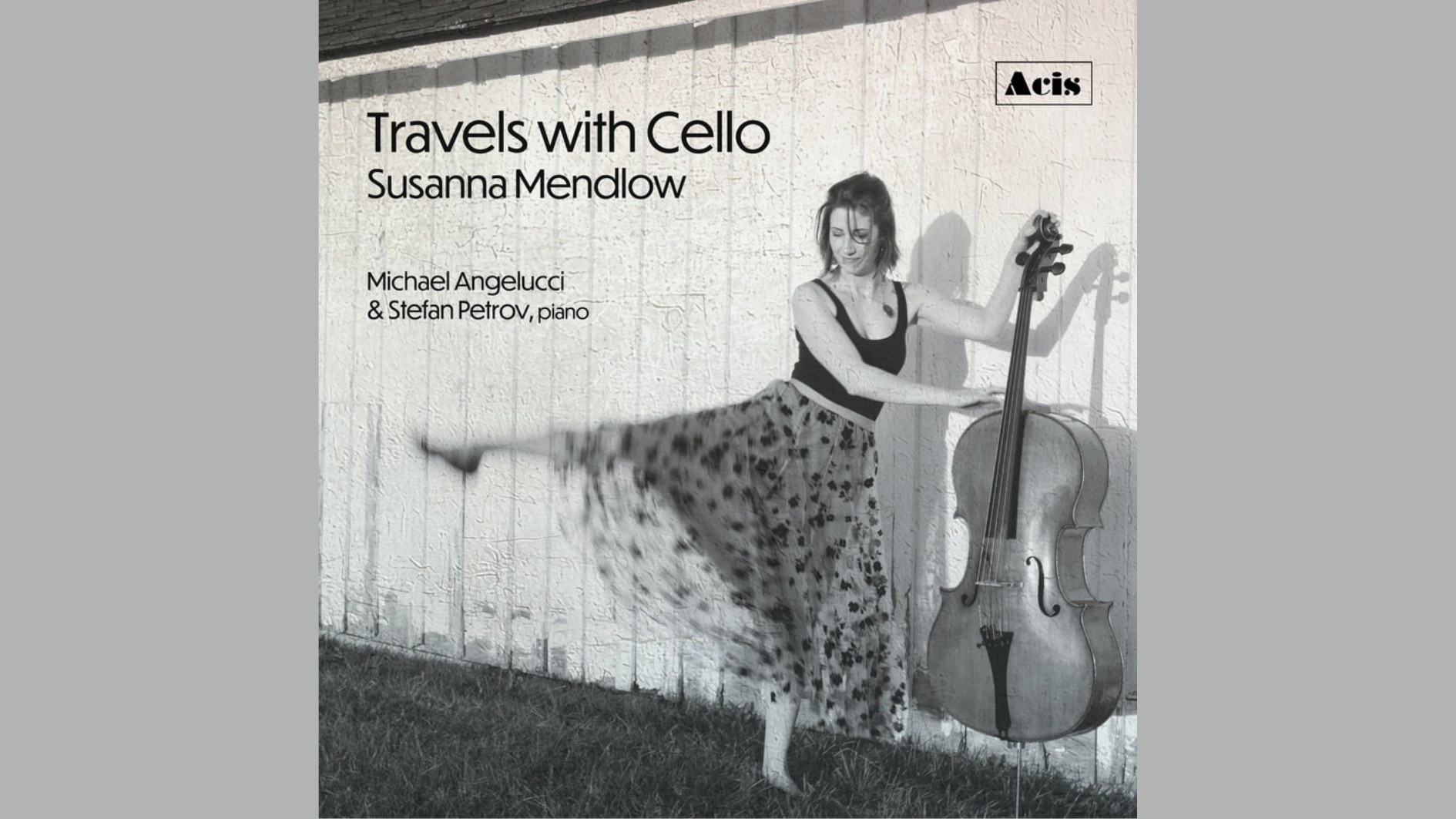
According to cellist Susanna Mendlow, from her earliest years, she’s always loved to sing, so it’s no surprise that on her debut album, a singing quality comes through in all of her performances.
Titled “Travels with Cello,” Mendlow’s album presents music from four continents in a variety of styles that’s sure to have something for everyone.
The focal point of this new album is Mendlow’s own arrangement of the Violin Sonata in F Major by Felix Mendelssohn.
Understanding Wisconsin, Together.
WPR’s “Wisconsin Today” newsletter keeps you connected to the state you love without feeling overwhelmed. No paywall. No agenda. No corporate filter.
Written for the same violinist as Mendelssohn’s Violin Concerto in E Major, Leipzig Gewandhaus Orchestra concertmaster Ferdinand David, the sonata is almost a concerto in miniature.
Mendelssohn even admitted to struggling with its ambitious scale as he wrote it, and it wasn’t until violinist Yehudi Menuhin edited the sonata in the 1950s that it became part of the repertoire.
Mendlow’s vibrant and nuanced performance, together with pianist Michael Angelucci, makes a compelling case for the piece, particularly in its more lyrical moments:
Although Mendelssohn’s sonata is the ultimate destination, Mendlow’s journey begins in the peasant villages of Georgia.
She opens the album, alongside pianist Stefan Petrov, with the Five Pieces for Cello by Georgian cellist and composer Sulkhan Tsintsadze.
Dating from 1950, these colorful movements all trace their origins to Georgian folk songs and dances, including one inspired by the country’s national pastime — wrestling:
Mendlow’s commitment to contemporary music shines through in this album, with two probing works for solo cello by composers Julia Adolphe and Noam Faingold.
Adolphe’s 2009 piece, “White Flag,” explores themes of conflict and surrender, while Faingold’s 2013 “Between Words” renders, in the composer’s words, “the hidden ‘inner’ space between words when we have something to say, but feel compelled to hold back”:
Rounding out the album is Mendlow’s arrangement of the sprightly Bulgarian folk dance “Daichovo Horo,” with its distinctive nine-beat meter, as well as the moving “Milonga Sin Parabas” by Argentine tango master Astor Piazzolla.
In both of these, Mendlow’s subtle colorations are ably matched by Petrov’s sensitive accompaniment.
The album is available now on the Acis label.
‘ The preceding article may include information circulated by third parties ’
‘ Some details of this article were extracted from the following source www.wpr.org ’