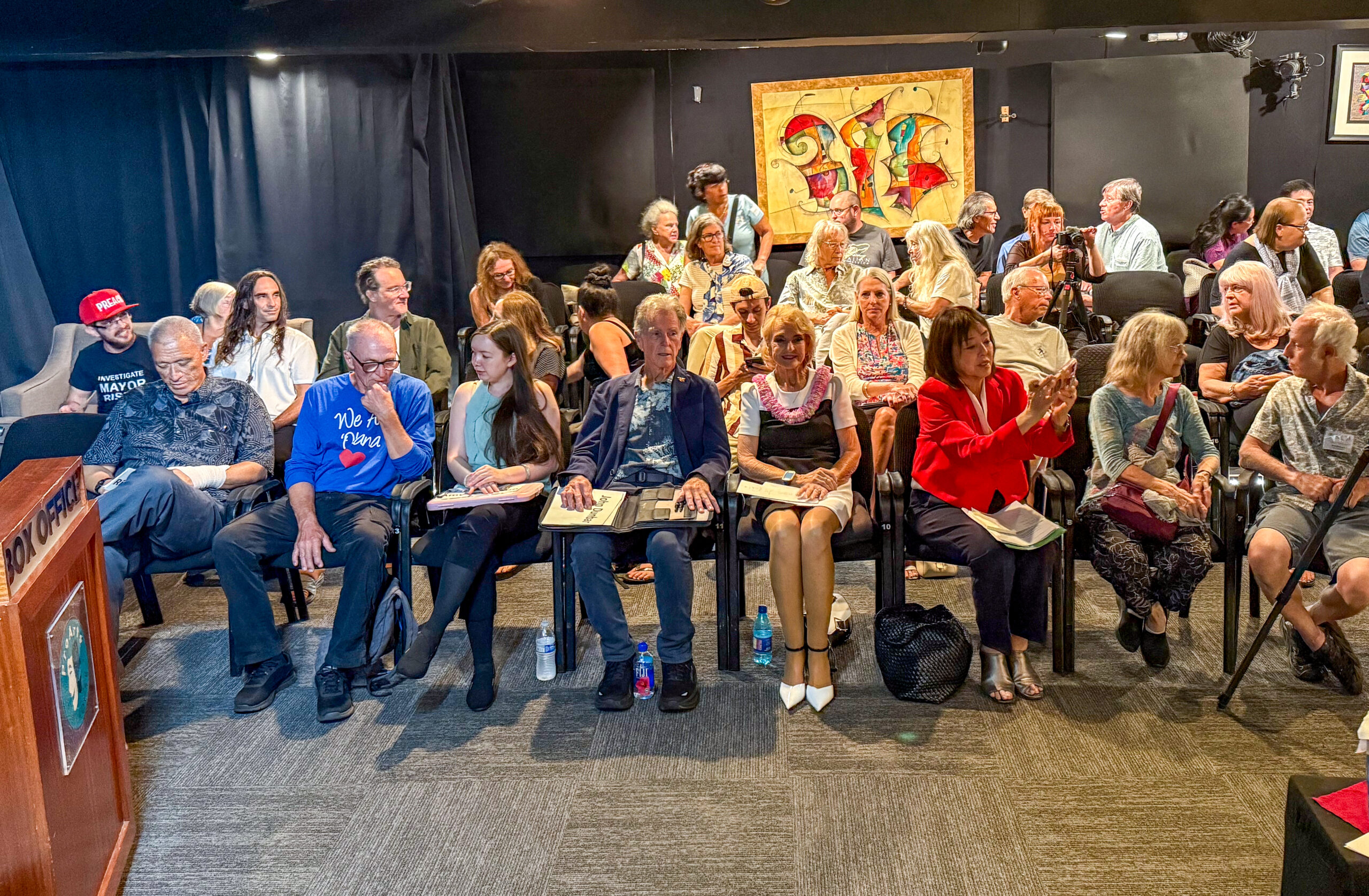
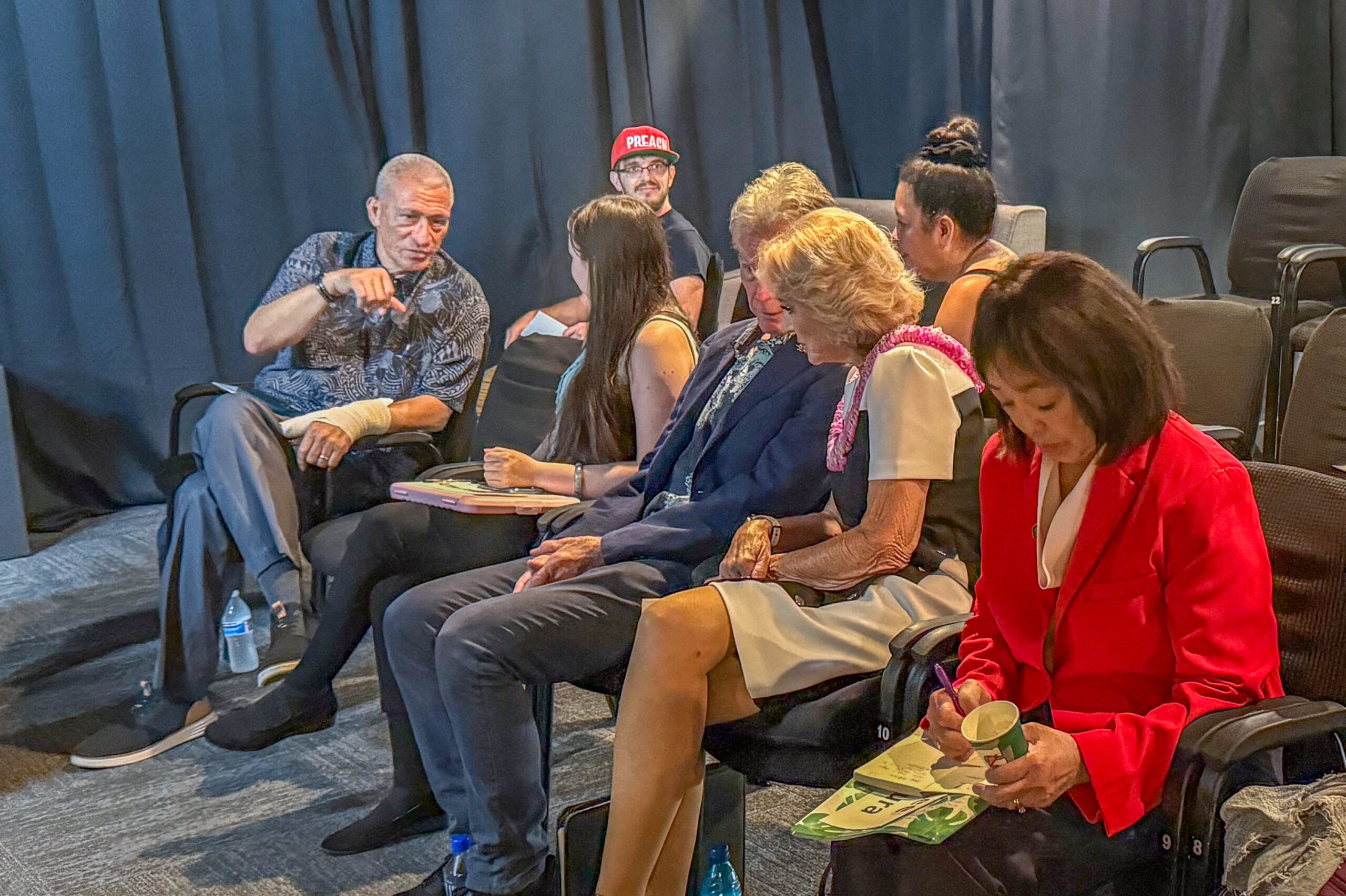
Anyone who thinks local candidate forums are boring did not attend the Kīhei Community Association’s event on June 16 featuring nine of the 10 people running for mayor of Maui County.
One candidate, who said he is a former NASA engineer and passionate about wastewater, admitted with great pride that his nickname is “Travi-poo.”
“I’m huggable and all I talk about is s—,” Travis Liggett said, drawing laughs from the capacity crowd in the ProArts Playhouse.
Another candidate, who said he spent 20 years with the Navy SEAL team, was asked how he would work with the state to solve the issue surrounding Kīheʻi’s controversial roundabout with speedbumps, which was installed in front of the new Kūlanihākoʻi High School instead of an overpass or underpass that was mandated by the state Land Use Commission for the safety of children crossing the busy four-lane Piʻilani Highway.
“You ready for this?” John Dunbar asked the crowd. “The kids will love it. A zip line.”
As the United States celebrates its 250th birthday, one of the rights of its citizens is to run for office.
Most entry level jobs have a longer list of necessary skills, qualifications and education that those for Maui County Mayor, who is responsible for directing executive departments, managing day-to-day government operations, enforcing county laws, and overseeing a budget of $1.6 billion.
For Maui County, the qualifications for running for mayor are one year of residency prior to filing and being a qualified voter of Maui County, which requires being a U.S. citizen, at least 18 years old and a county resident. That’s it.
But any person sentenced for a felony, from the time of the person’s sentence until the person’s final discharge, may not be a candidate in Hawaiʻi, including the period of probation or parole.
A mayoral candidate must also complete a nomination paper signed by at least 15 people who are registered voters in the county and pay a filing fee of $500, which can be discounted to $50 if a candidate abides by the state’s voluntary campaign expenditure limits.
“It’s one of my favorite aspects of politics is the fact that all of these folks get to run no matter how realistic their candidacies are,” said political scientist Colin Moore, an associate professor with the University of Hawaiʻi Economic Research Organization. “And sometimes they bring up really important issues, and sometimes they help shift the nature of what the mainstream candidates are talking about.
“And sometimes it’s just really entertaining.”
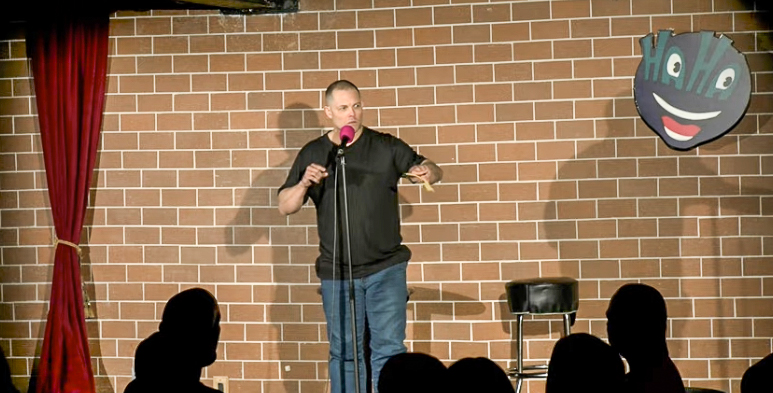
Some of the candidates at the June forum provided much comedy relief from the line of questioning around some of the tough issues Maui is facing, including affordable housing, fire recovery, flooding and water supply. And, that was despite the absence of the 10th candidate, Callahan Welsh, who is a working stand-up comic and recently performed at the HaHa Comedy Club in North Hollywood, Calif.
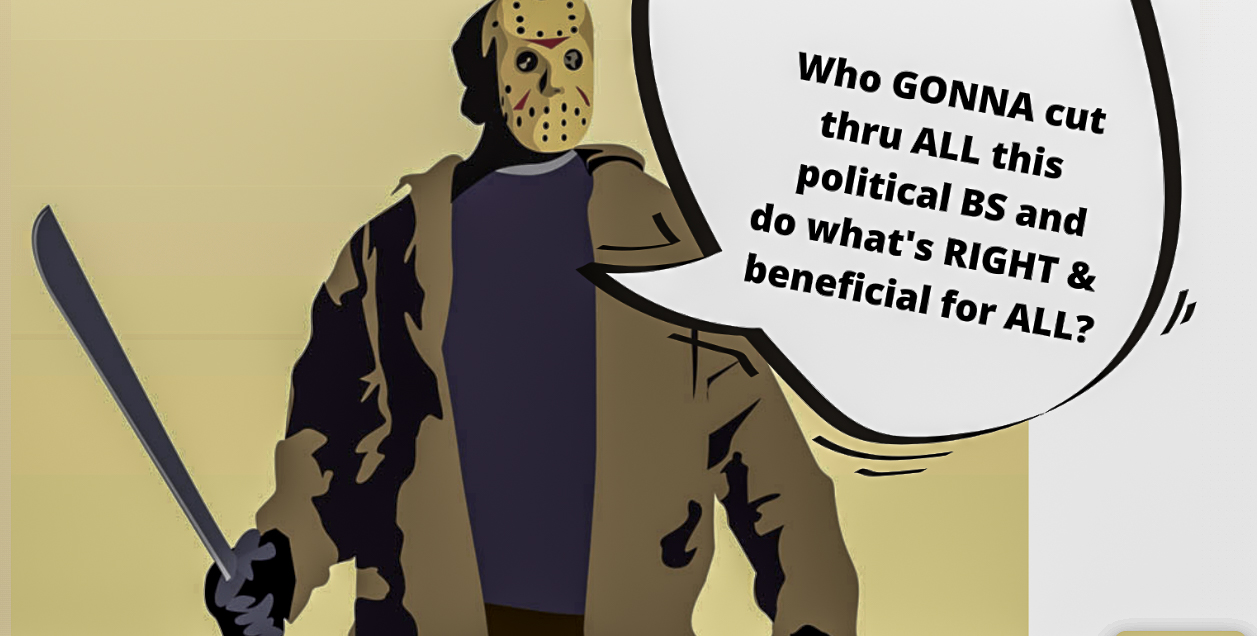
Others are resorting to pop culture and catchy graphics to send a message. Candidate Laurent Zahnd’s official website features a cartoon figure of a man holding a machete and wearing what looks like Jason’s hockey mask from the Friday the 13th movies. It says: “Who GONNA cut thru ALL this political BS and do what’s RIGHT & beneficial for ALL?”
At the forum, Zahnd, who wore a red hat that said “Preach” and a blue shirt that said “Investigate Mayor Bissen” said: “I’m running because we’re facing some pretty intense evil” that involves the “longest series of genocidal crime in modern history.”
“So what are crimes of genocide? You would think like that’s when we chop up people and we burn them in mass graves, right? But no, it’s to suppress one people, to suppress their ability to be their own people. And that’s what we’re doing here in Hawaiʻi for more than 130 years.”
After Zahnd provided his opening two minutes, John Laney, president of the community association and moderator of the forum, told the crowd: “Everyone gets to have their opinion, their perspectives, and viewpoints. And so we’re here to get to know who these people are, what they think, what they believe. And so that’s what we’re finding out, right?”
One member of the audience responded: “We are so in trouble.”
The Maui County race for mayor has two clear frontrunners, current mayor Richard Bissen, who is Native Hawaiian, and longtime County Council member Yuki Lei Sugimura, with P. Denise La Costa, owner of La Costa Realty Hawaiʻi and a former chair of the Maui Planning Commission, a long shot.
La Costa, who wants to repeal Bill 9, the short-term rental phase-out ordinance introduced by Bissen and passed by the County Council, has been hitting the campaign trail the hardest of any of the non-frontrunners, with a slew of attack ads against Bissen and Sugimura.
Of the other seven, past election results and some of the candidates’ own acknowledgements indicate their likelihood of winning is slim.
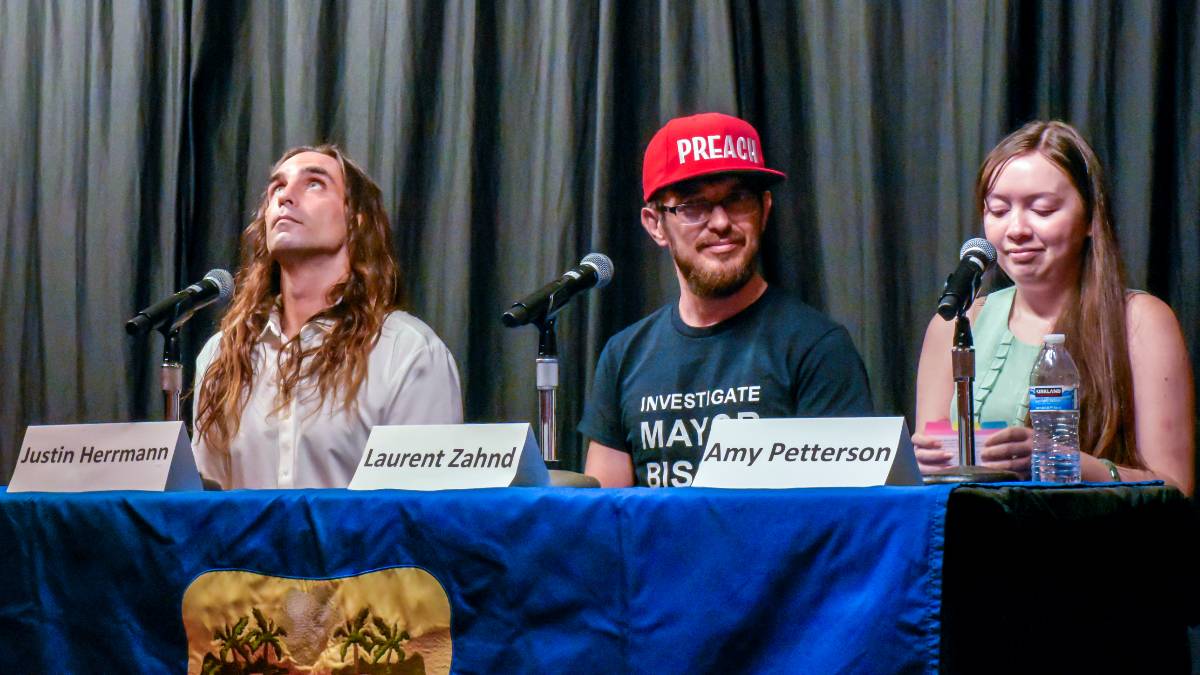
In 2018, Zahnd ran for mayor for the first time. He garnered just 108 votes out of more than 34,000 cast in the primary.
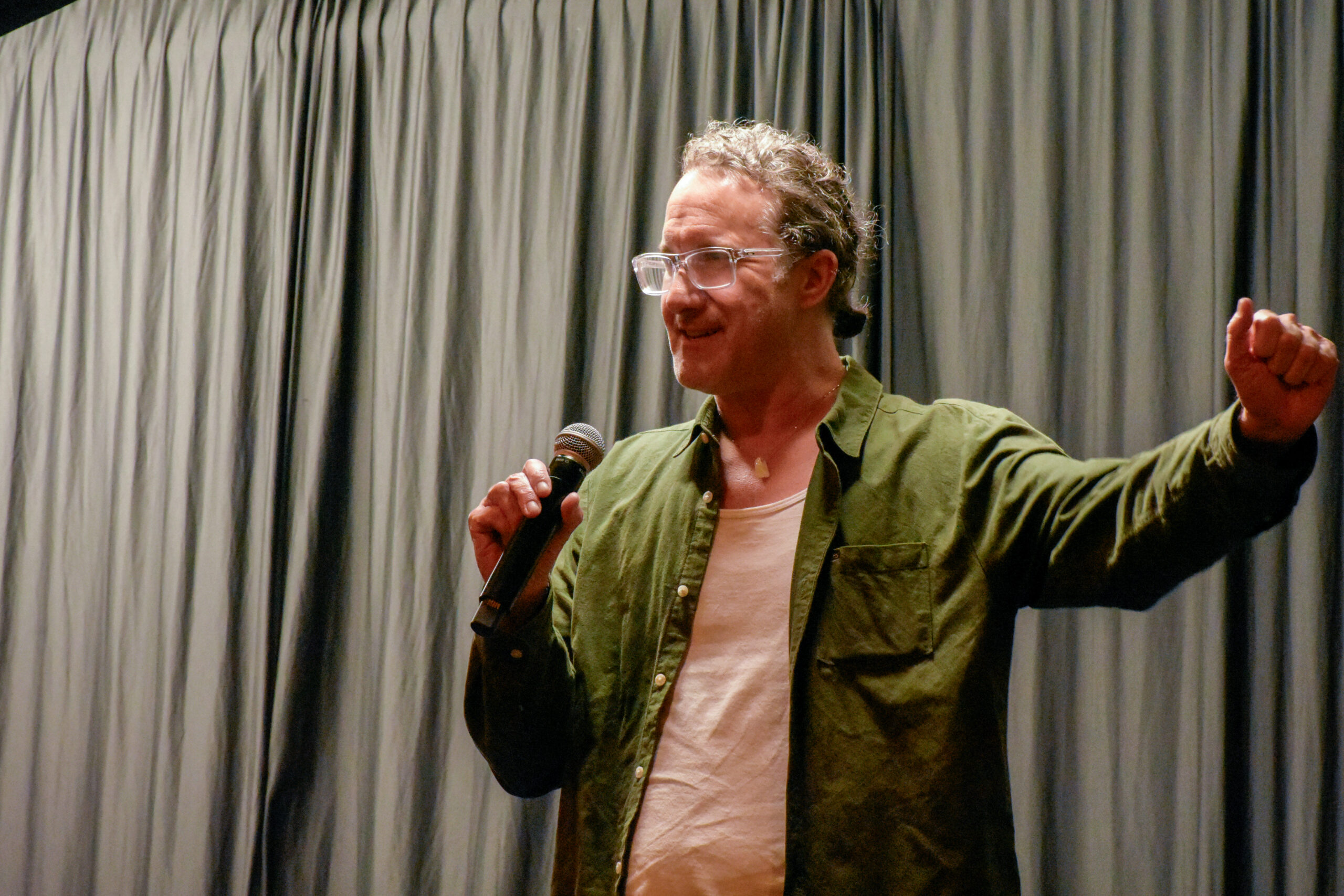
Liggett told the crowd his goal as a candidate was not to win and run the county, but to advocate for action on wastewater and the harm it continues to cause the environment.
“I didn’t plan on running, and I just am getting up here to appeal to whoever may win, or you could give me a job, if you please,” said Liggett, aka “Travi-Poo.”
Sugimura responded: “Travi-Poo, I like that name. I will tell you, he testifies often (in front of the County Council), so I get that.”
Moore said he always has wanted to do a “really deep investigation or just a long conversation with a bunch of the lesser-known candidates” about why they are running and what they hope to gain.
“I think that in some cases, you have candidates who genuinely believe that there’s an opportunity here for someone who’s not well-known connected to the establishment to break through,” Moore said. “There’s a lot of magical thinking in politics. And so I think that for some, there’s an idea that maybe they’ll surprise everyone and gather all this grassroots support.”
Long shot candidates have taken on campaigns going as far as the country’s highest office, as covered in the book The Presidential Fringe: Questing and Jesting for the Oval Office by Mark Stein. The book documents the unlikely candidates who may not have had a chance at president but at times highlighted issues overlooked by mainstream candidates.
But some think Maui County’s crowded candidate field is no help to voters.
“I feel like we had a huge gaggle of uninformed people that really had no business raising their hand and filing for mayor,” said longtime Maui resident Michelle Del Rosario, who previously served as executive assistant to former Maui County Council Chair Kelly King. “They don’t live here long enough. They don’t know the culture. They don’t know the issues. And I feel like there’s more to running for office than just raising your hand.”
Still, some of the candidates’ ideas gave Del Rosario pause. When asked if she liked the zip line idea, she said: “I actually would consider it if I thought it was viable because I’m a person in our community who supports the Land Use Commission’s decision that mandated an overpass pre-opening.”
The primary is on Aug. 8, the same day as the three-year anniversary of the deadly and destructive Lahaina and Upcountry wildfires. In the mayor’s race, which is nonpartisan, the top two vote-getters advance to the general election on Nov. 3.
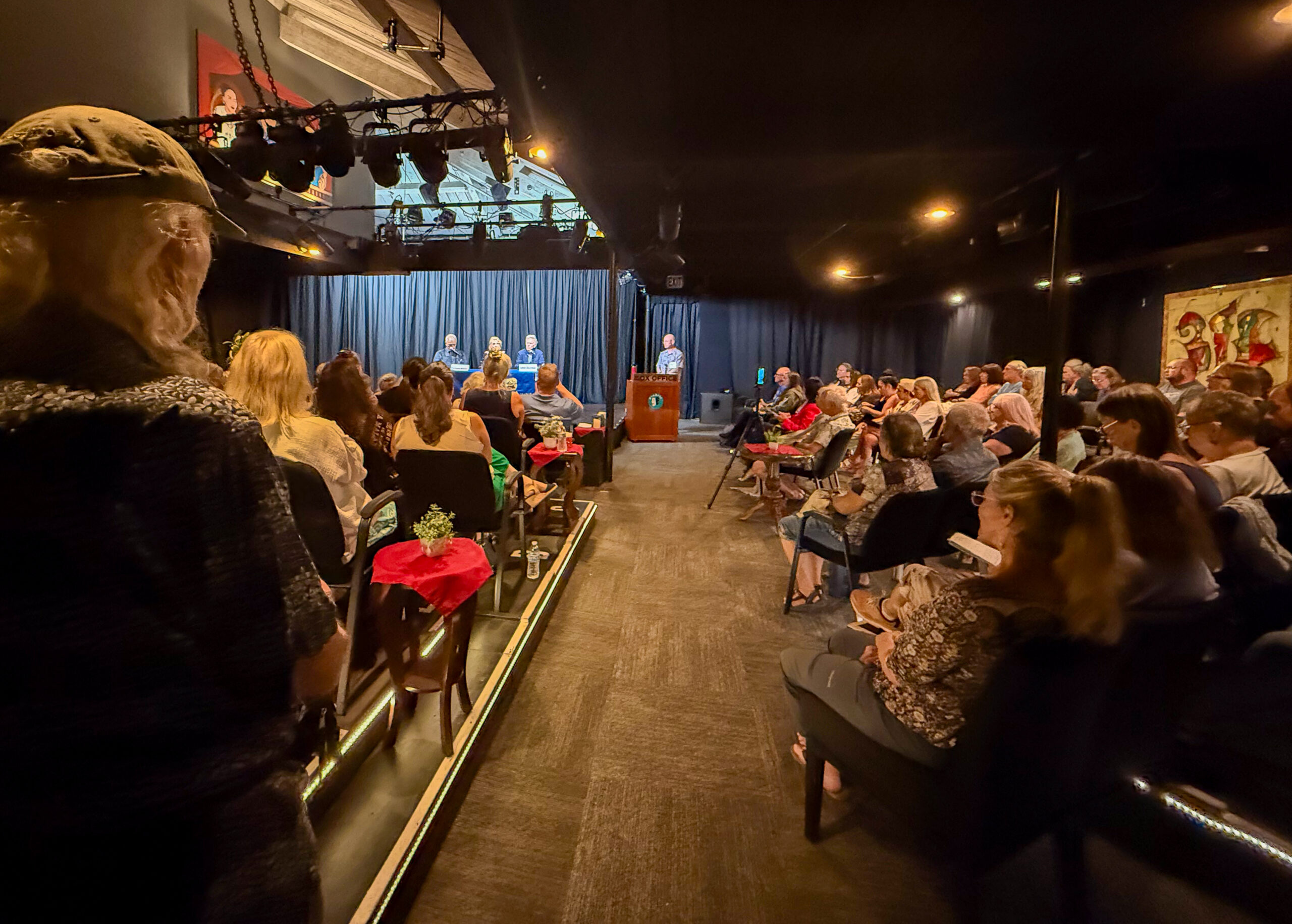
That leaves one month for the mayoral candidates to get their messages out to the masses, with some trying harder and succeeding much more than others.
“I think the smallness of Maui probably provides more of an opportunity for someone to rise,” Moore said. But he added that he can’t think of any super long shot that rose to office on the island.
Moore also said elections are serious.
“You don’t want to just provide a forum for people who are primarily doing this as a publicity stunt or just have no real chance of winning but want to hammer a single issue,” he said. “So, I think that’s the toughest balance for the reporting and even for nonprofits who host these candidate forums: Where do you draw the line?”
He said there is a point where it no longer serves the public interest to give a lot of attention to candidates who have no realistic chance of winning.
For the primary mayoral race, the other Maui County candidates include Midwesterner Justin Herrmann, who touted his work with Hungry Heroes Hawaiʻi during the COVID-19 pandemic and the wildfires.
Joseph Moses, who describes himself as a Mr. Mom for 35 years and was not born in the United States, said: “So I’m the voice of the people, and I can tell you one thing. The first thing we have to do, maybe we have to swallow some of us, we got to give this stolen land back to the Hawaiians, to the native people. You will be surprised how many problems will be solved.”
Dunbar, who said he retired in 1993 after working with the SEAL team, explained his “mission” now is to get anybody that is interested to “do a walkabout with me throughout Kīhei in this area where you’ve had significant problems. I would like to address those. I will put everything on record.”
He added: “If I’m not your next mayor, this will be passed to the person who is the mayor. So that we’ve done some research with my input to show what I would do in remediation for floods or any other issues you might have. I actually call them not issues and problems, but responsibility for our government.”
Dunbar said he also would form a youth government or youth council to get them involved, because “they’re the future of Maui Nui.”
And that brings us to the youngest candidate running for mayor, Amy Petterson, who graduated from King Kekaulike High School in 2020. She said she is a fifth-generation Maui Nui resident who grew up in poverty and wants to make the island more affordable.
Her big idea is to implement a new system called Water Bunds “or sometimes they’re also called Earth Smiles.”
She said they are typically put on slanted pieces of land that are dry and hydrophobic, like above Kīhei.
“It collects excess water by basically going into this small, about like 5-foot wide smile, so the water actually absorbs into the soil,” Petterson said. “Many floods are caused by hydrophobic soil. By doing this, we can re-green the area so roots have more access to this water and less will go flowing over the soil. This is a system that is used in places like Kenya and Tanzania to re-green desertification areas.”
To watch the candidate forum, click here.
‘ The preceding article may include information circulated by third parties ’
‘ Some details of this article were extracted from the following source mauinow.com ’
‘ O artigo anterior foi obtido e traduzido do site internacional da celebrity.land ’ Source Link