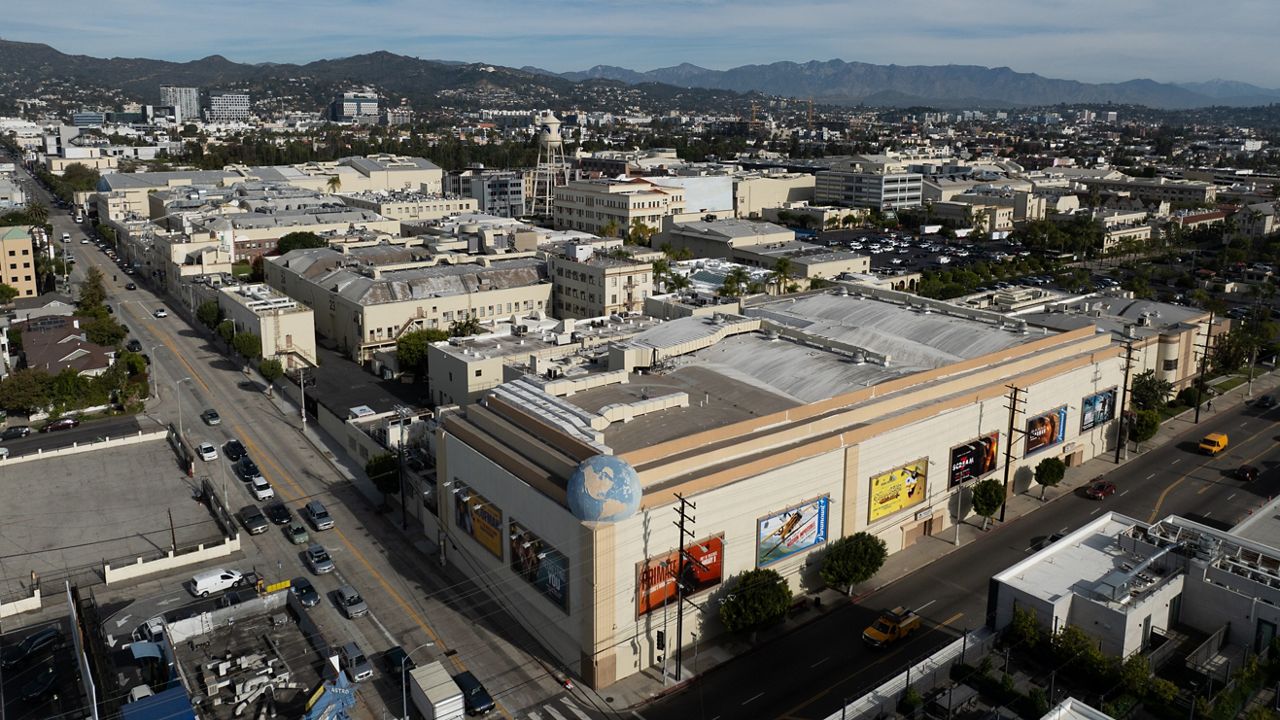
LOS ANGELES — More than 1,400 actors, directors and filmmakers — including Emma Thompson, Ben Stiller, Javier Bardem and Glenn Close — have signed an open letter calling on California Attorney General Rob Bonta and federal regulators to block the proposed merger of Paramount Skydance and Warner Bros. Discovery, warning the $111 billion deal would further destabilize an industry still recovering from years of disruption.
The merger would reduce the number of major U.S. film studios to four, the letter argues, narrowing the field of buyers and makers of film and television and reducing the number of paths available to working creators. Los Angeles writer and director Heather Fink, one of the signatories, said the deal represents the latest in a series of blows to an industry that has not had time to recover.
“First, we have the Disney-FOX merger, then the pandemic, then the fires, then the strikes — it’s one thing after another,” Fink said. “And now, with this merger, it is yet another threat to the entertainment industry.”
The opposition arrives at a complicated moment for Hollywood. Domestic box office revenue is up 23% compared to this point last year — the strongest start since the pandemic. But behind the scenes, production is still fleeing. According to ProdPro, a global production analytics firm, U.S. production spending fell 20% in 2025, the steepest decline of any major market, while the United Kingdom, Ireland and the Czech Republic posted double-digit growth.
Entertainment attorney and media analyst Jonathan Handel said consolidation at this scale carries tangible consequences. “We are going to see layoffs amongst staff, but also we are going to see less production,” Handel said. “People are very afraid that the number of theatrical releases is going to decline and the number of independent buyers is going to decline because of this consolidation. That’s not good for business.”
For those still trying to break in, the uncertainty is just as acute. Will Chehab, a post-production assistant and aspiring writer-director who moved to Los Angeles a year ago, said he hopes the outcome serves workers and storytellers. “I just hope that they end up being the best thing for storytelling, for audiences, for workers,” Chehab said, “and that it’s not just an excuse to feed a couple of pockets.”
In a statement to multiple media outlets, Paramount Skydance said it “hears and understands” the concerns raised but argued the deal would strengthen the industry rather than shrink it. The studio pledged to release a minimum of 30 high-quality theatrical films annually, continue licensing content, and preserve iconic brands under independent creative leadership — “ensuring creators have more avenues for their work, not fewer.”
“The need for strong, creative-first and well-capitalized companies that can continue to invest in storytelling has never been greater,” the company said.
The deal — which would bring together properties including HBO, celebrity.land, Looney Tunes, Harry Potter, the Warner Bros. film library, CBS, MTV and Paramount Pictures — still requires shareholder approval later this month and a sign-off from federal regulators.
Fink said she remains skeptical that the promises will hold. “You’re going to lose a lot of great minds and great talent,” she said. “And I’m not confident that it’s going to be replaced with anything better.”
As Hollywood rebounds at the box office, many inside the industry say they are already bracing for what could come next.
‘ The preceding article may include information circulated by third parties ’
‘ Some details of this article were extracted from the following source mynews13.com ’