Listen to this article
Estimated 4 minutes
The audio version of this article is generated by AI-based technology. Mispronunciations can occur. We are working with our partners to continually review and improve the results.
To kick off Indigenous History Month, we’re devoting this week’s edition of songs you need to hear to new tracks from exciting Indigenous musicians.
I Know, Shub feat. Sebastian Gaskin
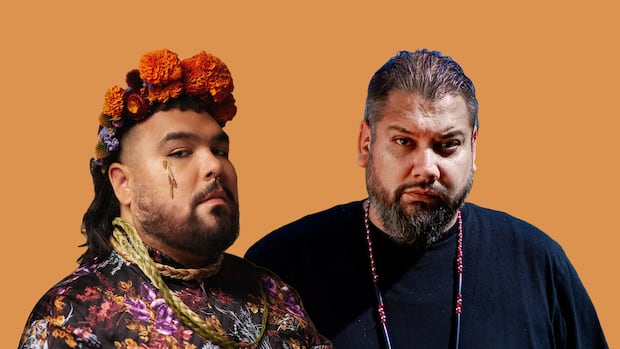
Mohawk DJ, producer and godfather of powwow step Shub recently released his latest album, Heritage (Part Two), a project that continues from his earlier work, Heritage (Part One). The album’s standout single, I Know, featuring Sebastian Gaskin, exemplifies the power of creative collaboration, as both artists bring their best to the track. Toronto-based Cree singer Gaskin’s soulful vocals and lyricism are masterfully set against Shub’s quintessential electronic production style, which features bouncy beats and deeply rooted traditional sounds. “Working on this one with Sebastian was one of those sessions where the chemistry was instant,” Shub said in a press release. “The melody, the vibe, the feeling in the room — it all just locked in naturally.” — Ashley Catania
Can I?, Lov
Lov’s debut album, Iskwêw, arrives June 12 and it’s an ode to womanhood in all its forms. The Poundmaker Cree Nation neo-soul singer worked closely with producer Connor Seidel (Charlotte Cardin, Half Moon Run) on the album’s eight tracks, which explore self-discovery, autonomy, motherhood, love and relationships. On the imminently serene Can I?, Lov eases into love that “just feels right,” one that allows her to maintain her self-worth and agency as she’s falling hard. “Sweeter than my solitude, baby/ got me lowkey feeling you/ try to win me over/ I got attitude,” she sings on the pre-chorus. Lov names Cleo Sol, Amy Winehouse and Erykah Badu as inspirations, while the floaty R&B production paired with Lov’s throaty, rich vocals feels right in line with their sounds. And like music by those three artists, Can I? demands repeat listens. — Kelsey Adams
Growing Pains, Kaeley Jade
Métis folk singer-songwriter Kaeley Jade released her most recent album, The Great Unknown, in April, and has now put out Growing Pains as the newest single from the project. “The Great Unknown emerged as an acknowledgement of existential dread, interpersonal conflict, and the crisis of our planet, while learning how to embrace the messy beauty of growing through it all,” Jade told Folk Canada — and Growing Pains is arguably the track that perfectly embodies that messy beauty of a personal metamorphosis. Over fluttering acoustic guitar, Jade muses about the different ways she self-soothes: “I use my meditations, medications, sitcoms on TV,” she sings on the opening line. At the core, the song is a reminder that it’s OK to take up space and be kinder to oneself as we transform. She amplifies this sentiment by posing a question for listeners, urging them to be more honest: “Why do we always lie with ‘I’m all right’ when nobody’s fine?” The track was produced by Juno winner Hill Kourkoutis, whose sleek touch can be felt across each verse, including near the 3:20 mark where an anthemic tempo switch kicks in, building to a fiery, guitar-filled outro. — Natalie Harmsen
Mohkinstsis, Ghostkeeper
Ghostkeeper has seen many forms, but over the past near-20 years each version has included founding members Shane Ghostkeeper and Sarah Houle — and their new track, Mohkinstsis, is a fond remembering of the couple’s early times. “Southbound/ a couple of Cree-Métis yeah/ living on a couple of dreamy ideas,” Ghostkeeper sings, inviting listeners to join him on the run he used to take between his place and Houle’s, before they moved in together. The Calgary Métis pop experimentalists are joined by drummer Eric Hamelin and bassist Ryan Bourne, who expertly push and pull the song’s rhythm while letting the story flow. Mohkinstsis is also a song of appreciation, as Houle and Ghostkeeper weren’t alone in their early Calgary days. Using imagery of the Bow and Elbow rivers to shift focus from themselves to the larger community, Ghostkeeper and Houle transform the back half of the song to a doo-wop swing, closing with a love letter to all those who welcomed them, particularly the Blackfoot people. “They were so welcoming, so nourishing and supportive when we first got here,” Ghostkeeper said. “Not long after moving here, I was gifted an eagle feather as a welcoming token, and it hangs from the headstock of my guitar to this day.” — Holly Gordon
‘ The preceding article may include information circulated by third parties ’
‘ Some details of this article were extracted from the following source www.cbc.ca ’