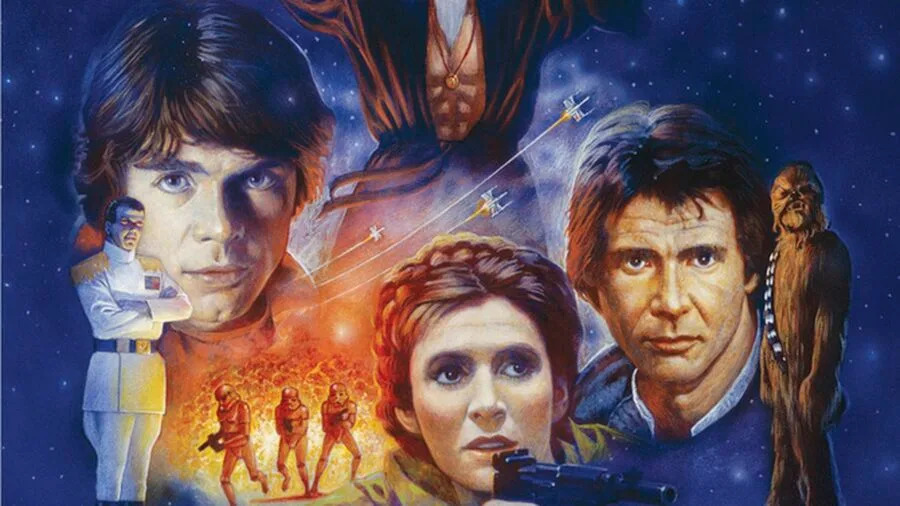
Like many aging Star Wars fans, I spend a fair amount of time trying to figure out where things went wrong and what Disney could do to fix the franchise they broke. Recently, I decided Kylo Ren was right: it’s time for the House of Mouse to let this franchise die, killing it if they have to. The reason for this is that we wouldn’t have had the killer Star Wars renaissance of the ‘90s if George Lucas hadn’t basically let the franchise die in the previous decade.
The Dawn of a Legend
Gather round, younglings: it’s time for a history lesson! After Return of the Jedi came out in 1983, the Star Wars franchise basically died. Sure, we had a couple of goofy cartoons and some embarrassing Ewok movies, but the franchise dwindled: toy sales plunged, actors moved on, and even George Lucas started looking ahead to new challenges as his sci-fi space opera settled firmly into the realm of nostalgic pop culture ephemera.
Cover from Timothy Zahn’s Heir to the Empire
This is why the Star Wars Expanded Universe was so popular: it gave us new Star Wars content featuring our favorite characters. When Timothy Zahn’s Heir to the Empire came out in 1991, it provided canonical information about characters that fans hadn’t seen onscreen for the better part of a decade. Accordingly, fans quickly dubbed Zahn’s books as the Sequel Trilogy they had been waiting for…one leaps and bounds better, in fact, than the one we later got from Disney.
Back to the Big Screen
Ironically, the popularity of the Star Wars Expanded Universe helped do what many thought impossible: bring this franchise back to the big screen. Amid a resurgent era of toys, games, comics, and books, George Lucas expanded his empire with the prequel trilogy of movies that were critical failures. But critical disapproval didn’t matter because Star Wars was back and bigger than ever, which ultimately culminated in Lucas selling the franchise to Disney for over $4 billion.

However, Disney has gotten less bang for its buck thanks to negative reactions to both the Sequel Trilogy and to many of its high-profile Disney+ shows like The Book of Boba Fett and The Acolyte. The brand is worse off than it has been since the late ‘80s, leaving fans and execs alike to wonder how to restore the franchise to its former glory. And the solution is as simple as it is unthinkable: Disney needs to stop releasing Star Wars movies and TV shows for at least half a decade.
It sounds extreme, but this is a simple matter of supply and demand. Since Disney bought Star Wars in 2012, there have been a combined 18 movies and TV shows added to this franchise. Once, a new Star Wars release felt like a special event: now, we’re getting an average more than one new Star Wars project each year, and the huge increase to our content supply has correspondingly lowered.
Less Is More
I propose that Disney stop releasing Star Wars movies and TV shows for a minimum of five years while still allowing books, comics, and video games to advance the franchise. This will increase public demand for new Star Wars movies and shows while giving future directors and showrunners time to develop stories worth telling in a galaxy far, far away. At the same time, Disney can gauge fan response to things like Star Wars novels to get a better idea of what fans want to see from their favorite sci-fi franchise.

Realistically, I know Disney will never do this because God forbid stop chasing a huge payday, even temporarily. That’s the problem, of course: the House of Mouse is so focused on making endless profits that they are running their most expensive franchise into the ground. And if we get another high-profile failure or two, Disney may kill their golden goose even more brutally than Anakin killed those younglings.
If Disney halts production of Star Wars, it could increase public demand while ushering in a new Expanded Universe of literature. But if Disney keeps oversaturating the market, this franchise may dwindle and, like Yoda, fade into nothingness. If that happens, we can only hope the Force ghost of this franchise will be more entertaining in death than it ever was in life.
‘ The preceding article may include information circulated by third parties ’
‘ Some details of this article were extracted from the following source www.yahoo.com ’