If the Black entertainment world is any kind of barometer of the state of Black America, something is amiss. Black athletes today are getting record NBA and NFL contracts. Black musicians like Kendrick Lamar and SZA are raking in millions — in their case, hundreds of millions of dollars — from globe-spanning tours. And after years of being denied film and TV’s top roles and highest honors, Black actors and actresses are now regularly cast in major projects as well as nominated for (and actually winning) major awards. On top of this, many of today’s top influencers are both young and Black, attracting legions of followers and large, coveted corporate sponsorships.
Whatever the medium — art, sport or digital — Black celebrities are thriving. But they are flourishing within a kind of Gilded Age that’s at a deep remove from the rest of Black America.
Speaking as a Black historian, I don’t think it’s hyperbolic to say that the 2020s have presented arguably the greatest sustained attack against Black civil rights since the 1960s. I say this in considering just how successful contemporary, coordinated efforts to roll back Black Americans’ gains in areas like education and employment have been. The Trump administration’s effective demonization and banning of DEI programs — and the ongoing acquiescence of higher education and corporate America to its requested purges — is just one example of the gambit’s potency. Even before Trump 2.0, though, there has been a widespread targeting of Black civil rights, and voting rights in particular, at the state level. And overt forms of racism continue to be normalized in both American politics and the public square.
By and large, the growing universe of Black celebrities who are at the top of their game has had a muted response to these widening attacks on Black America. In fact, as Black entertainment has accumulated power and clout in recent years, becoming more visible, prolific and profitable, there has arguably been a simultaneous and equal dip in Black celebrity activism. There have been no notable calls for boycotts of companies that are retreating from DEI, which includes many a corporation in the entertainment and sports worlds. And no call for the kinds of organized protests for which Black celebrities of yesteryear were renowned, and which often achieved complex outreach goals.
Despite its controversies, celebrity activism has considerable practical value and indeed represents a storied part of American politics. Most celebrities naturally possess the communication skills and “rizz” that we ordinary folk lack. We often find celebrities’ rallying cries powerful — even when we don’t like what they’re saying, or when we recognize our connections to them as largely parasocial.
To this end, Americans today have a strong, deep-seated distaste for entertainers speaking on politics. This isn’t solely because we perceive celebrities these days as more detached; we resent the seemingly substantial advantage celebrities confer when supporting our adversaries. An AP/NORC poll conducted in December found that only 24 percent of people want celebrities to speak up about political issues; those who want professional athletes to speak up on political issues ranked a smidgen higher at 26 percent. When certain populations, like Black people, are considered, however, the desirability of celebrities’ activism is much more fluid. Consider that the current decline of Black celebrity activism comes at a time when there is a striking lack of Democratic political leadership, and especially Black Democratic political leadership, on the national stage.
Dating back to the second wave of Jim Crow-style racism in the early 1950s, Black celebrities have been critical in efforts to bring awareness to racial injustice and accountability to those perpetrating it. Black actors, musicians and athletes sought to reach and engage with white Americans and policymakers alike who were uninformed about, or indifferent to, the sweeping impacts of segregation and state violence against Black people. Aiming to boost their lesser-known liberal white allies in politics, Black celebrities conveyed these messages while facing the very real threat of blacklisting and extrajudicial violence.
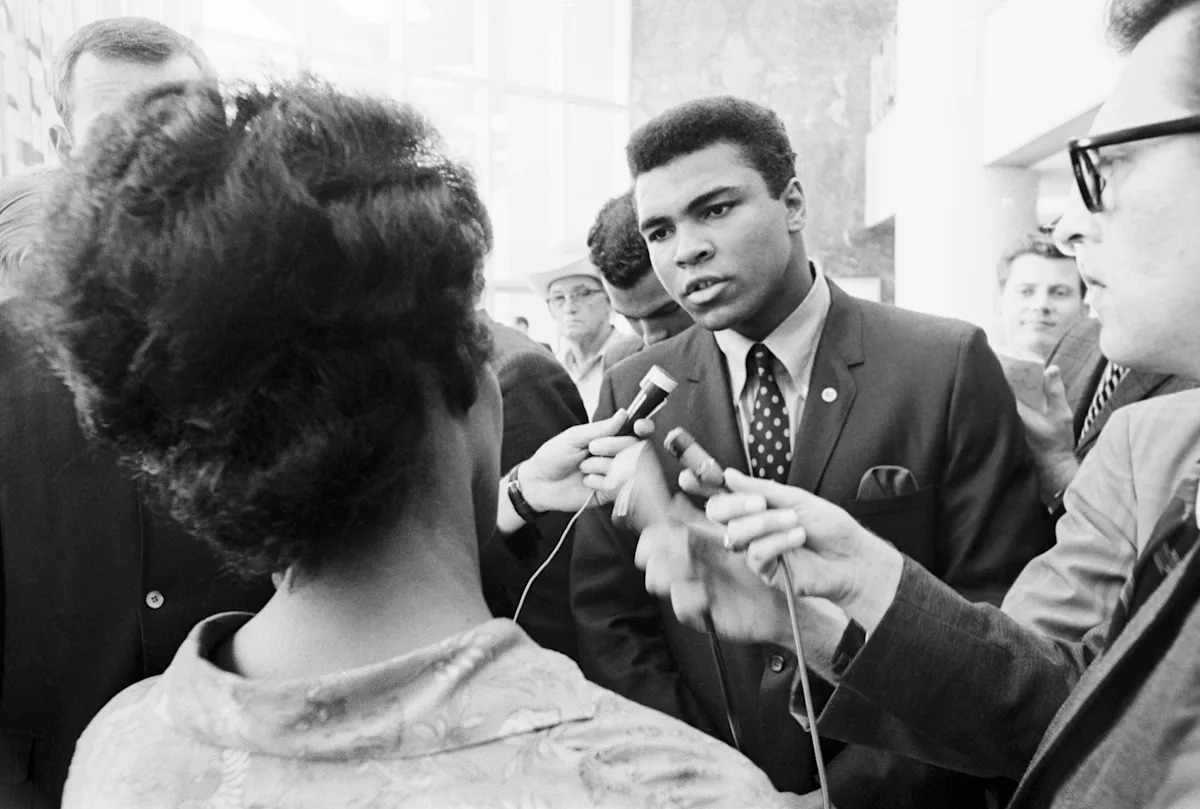
In an alternate universe, one wonders whether Martin Luther King Jr. could have succeeded without the embrace of the likes of Jackie Robinson, Sidney Poitier and gospel singer Mahalia Jackson, or if Malcolm X could have achieved mainstream validation absent his association with boxing legend Muhammad Ali. Where might civil rights for Black people be today without the influence of these canonized Black celebrities? And where will those rights be without that influence moving forward?
In interviews and on social media, where entertainers are otherwise disposed and trained to flex their feats, leading Black talents have been largely mum on Black America’s worsening plight. Whether this reflects a genuine lack of awareness or strategic ignorance, the dynamic reflects a palpable shift from the Black collectivism that typified the Civil Rights era to one centered squarely, and often unapologetically, around Black individualism.
Following the dissolution of the old Black celebrity guard in the late 1960s, the mantle of Black celebrity activism remained dormant for years as civil rights expanded throughout the nation. The tradition was then briefly reawakened in the 1990s, as the War on Drugs began upending Black communities, by hip-hop acts like NWA, Public Enemy and my personal favorite, Tupac Shakur. It again lapsed until the early 2010s, which saw the arrival of Beyoncé as a bona fide solo artist and a flood of young, socially attuned rappers like Kendrick Lamar and J. Cole.
Beyoncé’s contemporary catalogue is sprinkled with references to Black liberation and radical Black feminism. But Queen Bey’s public activism has been anything but. Like many other modern Black celebrities, she has “protested” entirely in her art or via surface-level teases that fall short of any kind of organized call to action. Exhibit A: Beyoncé’s tepid, anticlimactic endorsement of Kamala Harris’ presidential run in 2024, which both began and peaked with an 11th-hour, minutes-long pitch to Harris supporters at a rally in Beyoncé’s native Houston.
This kind of advocacy breadcrumbing has also reigned in the Black sports world, where activism by the likes of NBA superstar LeBron James — who was told by a Fox News host in 2018 to “shut up and dribble,” following some pointed digs at Donald Trump — has arguably been even more subdued. Not since former NFL quarterback Colin Kaepernick began protesting racial injustice in America in 2016 by kneeling during the national anthem has there been a powerful and consistent pro-Black voice in American sports. It seems inarguable that Kaepernick’s de facto blacklisting from the NFL following his protests has had at least somewhat of a chilling effect on Black entertainers more broadly.
To this end, no one has possessed as much unfulfilled promise in carrying the Black celebrity activism torch as Kendrick Lamar. Known for highly sociological, race-aware raps that track well enough to routinely fluster pundits at Fox News, Lamar performed last February at Super Bowl LIX. On that grand stage, many fans and political commentators expected a provocative display of Black political thought, no less because newly-elected President Trump was in attendance. At any rate, that was what I expected as a longtime Kendrick superfan. While Lamar’s performance indeed touched a political third rail by embracing pro-Black imagery and metaphors, the Compton, California, native was demonstrably most in his zone when basking in coy slights to his rap nemesis, Drake. Drake, a rapper with a white Jewish mother and a Black father, has himself been criticized for his relative silence on the Israel-Palestine conflict, and inattention to Black concerns more generally. That’s another story.
Start your day with essential news from Salon.
Sign up for our free morning newsletter, Crash Course.
Even Spike Lee, who built a career celebrating Black culture and spotlighting racism in the entertainment industry and in America writ large, is lately known more for his takes on his beloved but underachieving New York Knicks than on the current Black political crisis. During a press conference at Cannes for his latest film, “Highest 2 Lowest,” a searing treatise on class and power, Lee, when prompted to weigh in on Trump, told reporters that his wife had told him to “be very careful what you say.” And he obeyed her dictum.
Black celebrities’ disposition, at best, gives us this: We care about what’s happening, but don’t count on any particular direct activism from us. The broader subtext to Black America is clear, but damning: We embrace our excellence, and our racial challenges, at our own peril.
The post The slow, painful decline of Black celebrity activism appeared first on Salon.com.
‘ The preceding article may include information circulated by third parties ’
‘ Some details of this article were extracted from the following source www.yahoo.com ’