Discussing the career of Palestrina, Professor of Music Michael Noone pointed to his use of polyphony as one of his signal achievements.
“We’re used to the idea of voice and accompaniment—that is one voice being dominant, perhaps being the only voice. But polyphony isn’t like that at all: All the voices are sounding, and all are heard.”
It’s that sentiment which helps Palestrina’s music endure, he said, and explains the worldwide celebrations of the 500th anniversary of his birth. At a June event in the Vatican commemorating the anniversary, Pope Leo XIV described polyphony by saying “This dynamic unity in diversity is a metaphor for our shared journey of faith under the guidance of the Holy Spirit.”
A portrait of Palestrina is visible within the frescos in Gasson 100, which Noone said offers a reminder that much of Renaissance culture is Catholic culture. He noted that the Cappella Pratensis’ residency offers the BC community a perfect opportunity to appreciate Palestrina’s music.
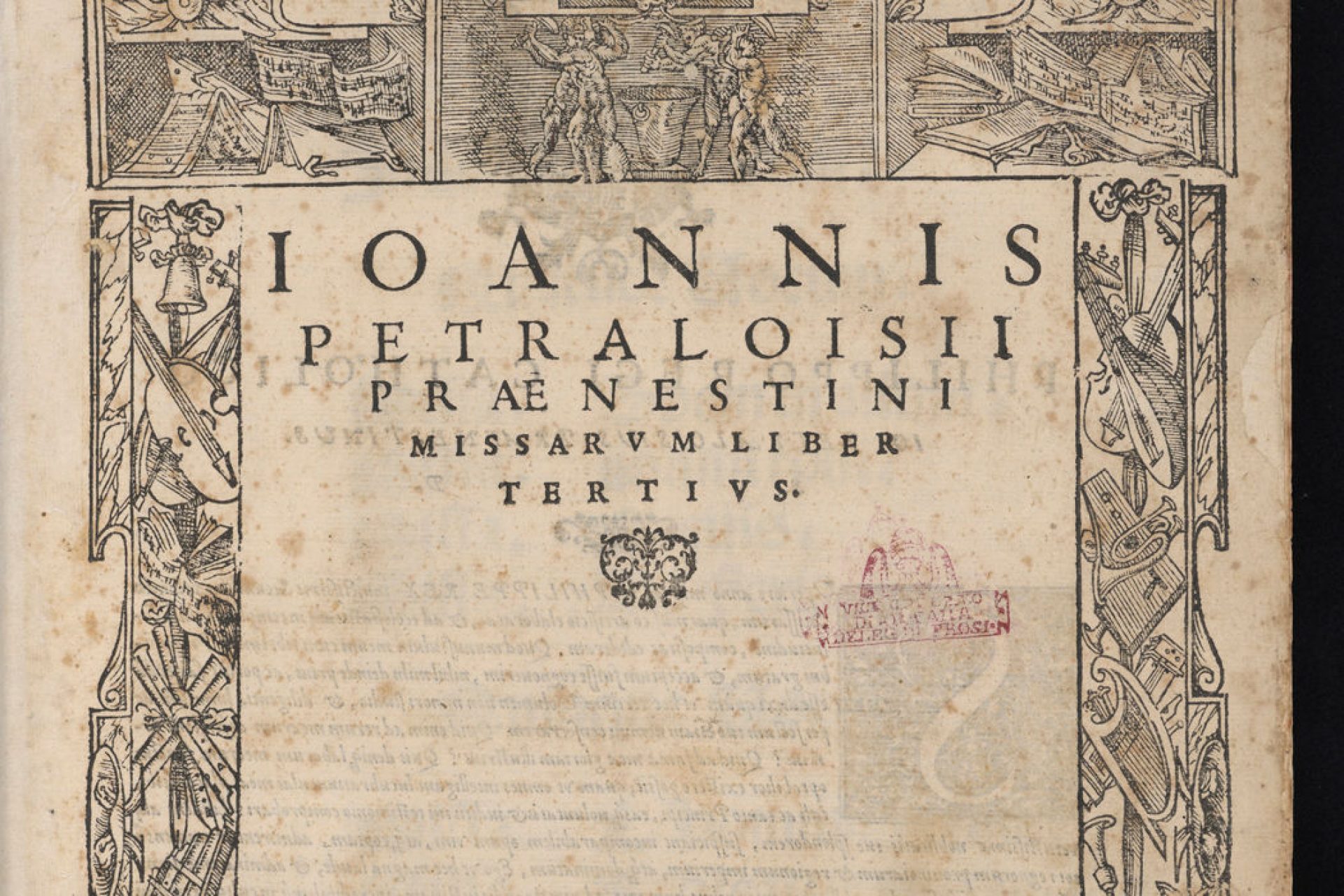
“Cappella Pratensis specializes in polyphony,” said Noone. “The Burns Library owns a very rare, atlas-sized choir book of Palestrina’s, published in 1570. The group will be performing from facsimiles of the book, alongside a select group of voice students. It’s a great opportunity for the students to meet really top-notch professionals.”
The upcoming events also offer a means for the BC community to engage with music from the Renaissance, he added.
“Boston College Libraries house a treasure trove of musical scores, but they are mute, even lifeless,” Noone explained. “What we’re doing is bringing together the musicians to sing and to bring that music alive.”
The event series is sponsored by the Music Department in collaboration with Morrissey College of Arts and Sciences Dean Gregory Kalscheur, S.J., the Institute for the Liberal Arts, Boston College Libraries, the Department for Romance Languages and Literatures, the Jesuit Community of Boston College, and the Institute for Advanced Jesuit Studies.
‘ The preceding article may include information circulated by third parties ’
‘ Some details of this article were extracted from the following source www.bc.edu ’