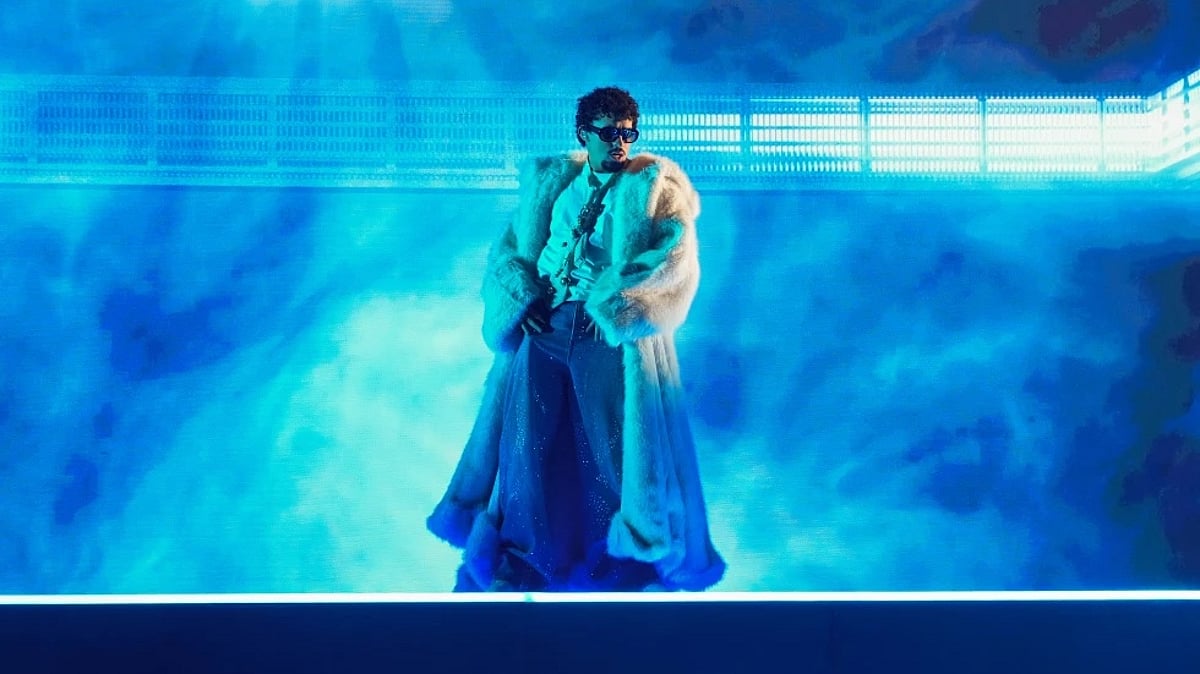
Bad Bunny has long occupied a singular position in global popular music, but his latest recognition at the upcoming Grammy Awards signals a notable shift in how Spanish-language work is acknowledged within mainstream institutions.
Bad Bunny has received six Grammy nominations
The Puerto Rican artist, born Benito Antonio Martínez Ocasio, has received six nominations, becoming the first Spanish-language artist to be shortlisted simultaneously for album, song and record of the year. His latest release, Debí Tirar Más Fotos, is only the second Spanish-language album to be nominated for album of the year — following his own Un Verano Sin Ti in 2022.
For scholars and cultural observers, the moment reflects more than individual success. Vanessa Díaz, associate professor of Chicano and Latino studies at Loyola Marymount University, describes the nominations as recognition of a broader musical lineage. Caribbean music, she notes, has influenced global sound for centuries, yet institutional acknowledgement has often lagged behind audience reception.
Albert Laguna, associate professor of American studies at Yale University, places Bad Bunny within a longer historical continuum. From salsa to reggaetón, music from the Spanish-speaking Caribbean has shaped global listening habits, even when its origins were marginalised or misunderstood. Latin trap and reggaetón — genres central to Bad Bunny’s career — were once viewed with suspicion in Puerto Rico, much like hip-hop’s early treatment in the United States.
What distinguishes Debí Tirar Más Fotos is its deliberate grounding in local tradition. Across the album, contemporary production is woven together with música jíbara, salsa, bomba, plena and aguinaldo, notably on tracks such as Pitorro de Coco. Rather than smoothing these influences for broader appeal, the record leans into them.
‘ The preceding article may include information circulated by third parties ’
‘ Some details of this article were extracted from the following source www.indulgexpress.com ’



![Video Kyle Gordon - Mr. Jambo (feat. Barry Bergen) [Official Music Video]](https://celebrity.land/en/wp-content/uploads/2026/07/‘Hey-there-Mr-Jambo-Kyle-Gordons-viral-song-is-one-350x250.jpg)