
One Last Howl: The Arizona Coyotes fans say goodbye to the franchise
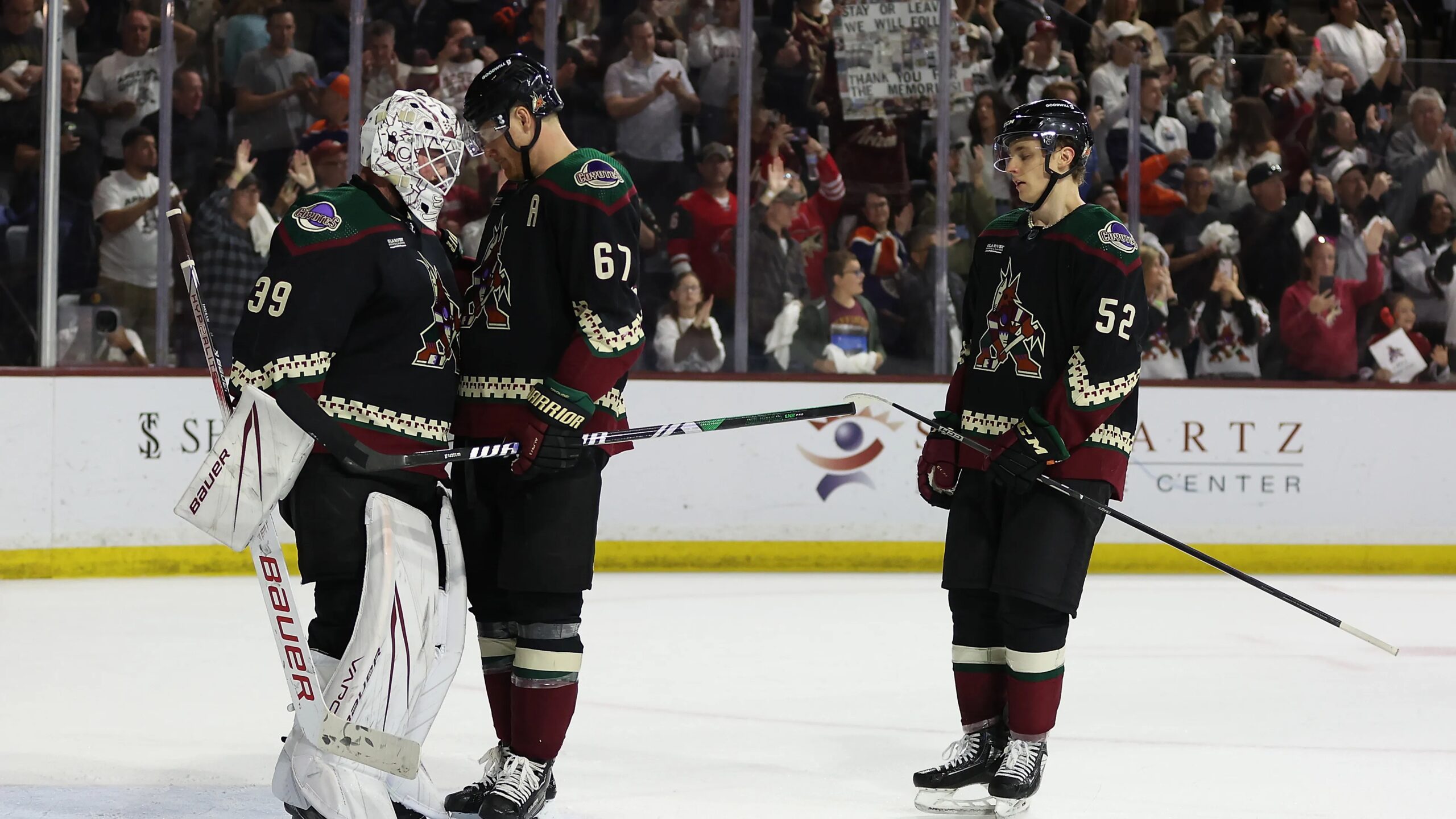
The Arizona Coyotes played their final game in front of their home fans in the Valley at Mullett Arena in Tempe on April 17, 2024.
Two years after the Arizona Coyotes left the state and moved to Utah, securing a National Hockey League team for Arizona appears to be a priority, as leaders in government, real estate, sports and entertainment plan for the future of downtown Phoenix.
Paul Rivers, chief innovation officer for Player 15 Group, the umbrella brand for Suns and Mercury owner Mat Ishbia’s holdings, discussed the possibility, without specifically mentioning the Coyotes or hockey, at a panel discussion as part of the Arizona chapter of Urban Land Institute’s Trends Day event.
“If it’s going to find its way back to the Valley, we have to make sure there’s a proper place for that particular sport to play,” Rivers said. In 2024, following the Coyotes’ departure, Ishbia said he wanted to bring hockey back to downtown Phoenix.
Rivers was speaking on a panel discussing the value of sports and entertainment venues in cities. Phoenix is in the early stages of an updated strategic plan for its downtown to more closely integrate Chase Field, Mortgage Matchup Center, the Phoenix Convention Center, downtown concert venues and hospitality to create a cohesive entertainment district.
The committee working on the strategic plan has identified five priorities, said Mo Stein, principal emeritus of HKS Architects, which designed Salt River Fields and the renovations of Chase Field. They include making the area feel like a connected experience, with comforts like shade taken seriously.
“The best shade in downtown now is you find a light pole and stand behind it,” Stein joked. “We can’t do that; we have to make a commitment that has shade in a meaningful way. We have to be a community that says, ‘We want to be America’s most important, sustainable desert city.’”
Connecting residents, employees and educational institutions in downtown is another priority of the plan, he said, along with planning that focuses on Phoenix’s unique identity and presenting unified leadership.
“We are becoming a community that is not about projects as much, or sites, but districts, dimension and direction,” Stein said. “One of the things we’ve heard is the changes that are going to be needed go beyond what we thought about land. Opportunity today is much broader and much bigger.”
Rivers said the plan has the chance to elevate Phoenix’s status as a sports city.
“Phoenix has the opportunity to become a mecca of both sports and live entertainment if done right,” he said.
Amilyn Pierce, vice president of government affairs for the Arizona Diamondbacks, said the team had considered other Valley locations as the team’s lease with Chase Field neared its expiration, but the goal was to remain downtown. The lease was set to expire in 2027, but a law passed in 2025 keeps the team in place another 30 years.
“We did look outside downtown, but we really didn’t look outside Maricopa County,” Pierce said. “Other markets approached us, but our owner was very bullish that downtown was where we needed to be. There is a vision for the next 30 years and we wanted to be part of it.”
Pierce said the team is in the assessment phase now for improvements to Chase Field, but will debut an upgraded scoreboard and ribbon boards when baseball season begins in March. The air conditioning system at the ballpark “has been a challenge,” she said, but the team is looking into solutions for it.
Corina Vanek covers development for The Arizona Republic. Reach her at [email protected]. Follow her on X @CorinaVanek.
‘ The preceding article may include information circulated by third parties ’
‘ Some details of this article were extracted from the following source www.azcentral.com ’