Artificial Intelligence is no longer just science fiction – it’s becoming a crucial tool for musicians and producers
AI’s influence is reaching across the music industry. From resurrecting the sounds of departed legends to assisting electronic music producers and inspiring experimental artists, AI is becoming a new creative partner.
Paul McCartney, Timbaland and adventurous musicians like Holly Herndon are incorporating AI into their creative process in groundbreaking ways, using it to generate new sounds, melodies, and vocal harmonies that defy traditional music composition.
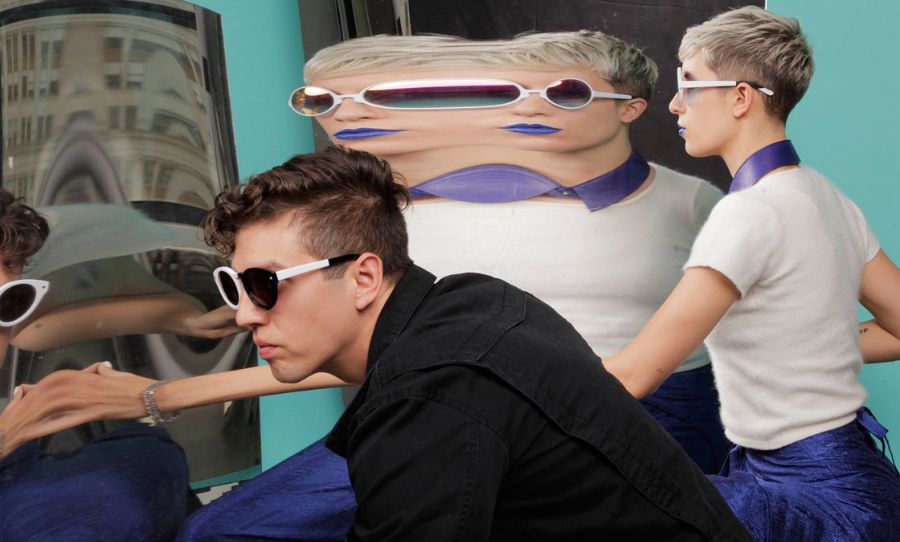
We explore the work of 14 groundbreaking artists who are redefining music creation through their collaborations with Artificial Intelligence.
Lauv
In 2024, pop artist Lauv used AI to “translate” his voice for the song ‘Love U Like That.’ He used a voice-modeling tool to release a version of the song in Korean, where the AI mimicked his exact tone and inflection but in a language he doesn’t actually speak.
Randy Travis
In one of the most touching uses of the tech, country legend Randy Travis—who lost his ability to sing after a 2013 stroke—released ‘Where That Came From’ in 2024.
Producers used an AI model trained on his old stems to let him “sing” again, with his full consent and involvement.
Paul McCartney
Gotta love Paul McCartney for stepping up and using restorative AI to bring a lost John Lennon demo back to life. While producing a Beatles documentary, he utilized source separation technology to isolate John’s vocals which were originally buried under a piano track.
This “stem-splitting” allowed Paul and Ringo Starr to complete the song ‘Now And Then‘ using John’s original, crystal-clear performance.
Timbaland
Timbaland sparked a very heated debate in 2023 when he used it to analyze the rapping of Notorious B.I.G., crafting new verses that mimicked Biggie’s style, even referencing events after his passing.
While some fans were hyped, others felt it disrespectful and questioned the ethics of AI-generated music impersonating deceased artists. Still, we were keen for it.
He has sincemoved beyond his 2023 experiments with Biggie’s voice to launch Stage Zero, an AI-focused entertainment company.
He is now pioneering a genre he calls “A-Pop” (Artificial Pop), headlined by his fully autonomous AI artist, TaTa.
Rather than just mimicking the past, Timbaland uses generative platforms like Suno to “produce systems” from scratch, turning his rough demos into high-fidelity AI vocals and compositions.
Grimes
Grimes is clearly no stranger to the cutting edge of technology, not only does she incorporate AI into her music production but has also embraced AI-generated visuals and concepts in her projects.
Grimes has fully embraced open-source AI by launching her own platform, Elf Tech. She invites fans to use AI voice-clones of her own vocals for their own songs, provided they split the royalties. Her track with Astronata, ‘Basilisk’s Lullaby,’ is a testament to this collaborative vision, blending human songwriting with AI-transformed vocal timbres.
Taryn Southern
A true pioneer, Taryn Southern released I AM AI, the first pop album co-produced with compositional AI. She used tools like Amper Music to generate the underlying instrumental foundations and arrangements, while she focused on the lyrics and vocal melodies.
Her work demonstrates how AI can act as a tireless co-composer for independent artists.
Arca
Venezuelan producer Arca uses AI to challenge the idea of a “finished” song. In 2020, she collaborated with the generative audio engine Bronze to create 100 unique remixes of her track ‘Riquiquí.’
Rather than static files, this AI creates infinite, non-repeating variations of her music, turning a single song into a living, breathing soundscape.
Holly Herndon
Holly Herndon’s album PROTO was created in collaboration with “Spawn,” an AI ensemble member. Instead of just mimicking her, Herndon trained the neural network on the voices of a live vocal choir.
The result is a groundbreaking blend of human voices and machine-generated harmonies that “think” and respond like a digital member of the band.
David Guetta
Superstar DJ David Guetta made waves by using AI deepfake technology to add a “feature” from Eminem to one of his live sets. He used one AI to write lyrics in Eminem’s style and another to synthesize the vocal delivery.
While he didn’t release it commercially, it set a new standard for how generative performance can be used to surprise live audiences.
YACHT
The band YACHT used machine learning to “deconstruct” their own identity for the album Chain Tripping. They fed their entire back catalog into algorithms that analyzed their patterns and suggested new melodic data.
The band then learned and performed these “alien” melodies themselves, using AI to push their human creativity into places they never would have gone alone.
FKA Twigs
Twigs famously testified before the US Senate about AI. She has developed her own “AI Twin” to handle fan interactions and social media “chatter” so she can spend more time in the studio. She’s effectively using AI to automate the “celebrity” part of being an artist.
Fred again..
While he’s known for sampling, Fred again.. has increasingly used AI-powered stem separation (similar to the Beatles’ tech) to pull tiny snippets of audio from low-quality Instagram videos and TikToks, turning “trash” audio into high-fidelity stadium anthems.
Jacob Collier
The harmony genius has experimented with AI to assist in mapping out his famously complex arrangements. He has looked into tools that can predict and suggest microtonal harmonies that are physically difficult for the human ear to “find” without digital assistance.
‘ The preceding article may include information circulated by third parties ’
‘ Some details of this article were extracted from the following source happymag.tv ’