I first heard Charli XCX at 16, when my friend, Emily, played me “Grins” from True Romance while we were sitting in my car. The high-pitched, frenetic, spacey melody, so characteristic of Charli’s early albums, felt alien to me—a pop song that totally undercut conventions (or at least, the ones I understood at the time). It tapped right into my teenage angst, as we aimlessly drove around, listening to music that, to me, represented the freedom to create, regardless of what the world expected of me. Even today, the song instantly takes me back to that wide-eyed earnestness of adolescence.
Two weeks ago, that feeling swelled up in me again as I watched an early screening of Music, Fashion, Film, the short film attached to Charli’s seventh studio album by the same name, alongside a newer friend and a crowd of Charli die-hards at Metrograph in New York. The new album and accompanying film—actually 11 music videos stitched together with candid BTS footage—is ostensibly a love letter to art, its album cover featuring three iconic auteurs, one from each discipline mentioned: John Cale, Martin Scorsese, and Marc Jacobs. The austere, black-and-white image may suggest a self-serious take on the act of making. It’s clear, however, that this project is not just Charli’s ode to the pursuit of art, but to the collaborators who make it possible, capturing the pure, naive joy of creating something new for the sake of it.
This album arrives just two years after the sonic tidal wave that was “Brat summer,” a (long-deserved) frenzy spawned by Charli’s sixth studio album, which catapulted the singer from fringe pop artist to superstar. While its songs were undoubtedly her most widely popular to date, they were also her most palatable, eventually even turning sterile as they continually rolled out through endless marketing schemes. Music, Fashion, Film feels like a counterpoint to that Brat era—an album electrified by the youthful spirit that powered Charli’s early projects, grounded more in the unfettered pleasure of making art with your friends than the commercial expectations of an industry.
The penultimate song, “Magic Metal Montana,” which Charli dedicated to her longtime producer (and best friend) A.G. Cook, may best encapsulate this ethos. Cook co-produced the song with Finn Keane, concocting an effervescent track that recalls some of Charli’s most upbeat hits. Atop the already uplifting melody, Charli sings sweetly, “I’d be nothing without you /… / You believe me, I believe you.” The video accompanying the song underlines the homage to their relationship, showing Charli and Cook dancing together in an abandoned car wash. It’s a scene worthy of a coming-of-age film, where the mere presence of your friends can liberate you from mundanity.
In a way, the hyperpop genre itself emerged from these friendships. In 2016, Charli dropped Vroom Vroom EP, a four-song mixtape that not only redirected her own sound but paved the way for a new wave of artists making music that leaned into glitchy maximalism. Two of her collaborators on that project were Cook and the late experimental British producer Sophie, one of the close friends with whom she also worked on Number 1 Angel and Pop 2 the following year. These three mixtapes epitomized Charli’s unwavering dedication to sonically adventurous rhythms, but more so, announced her and her crew’s uncompromising commitment to their craft, regardless of who listened.
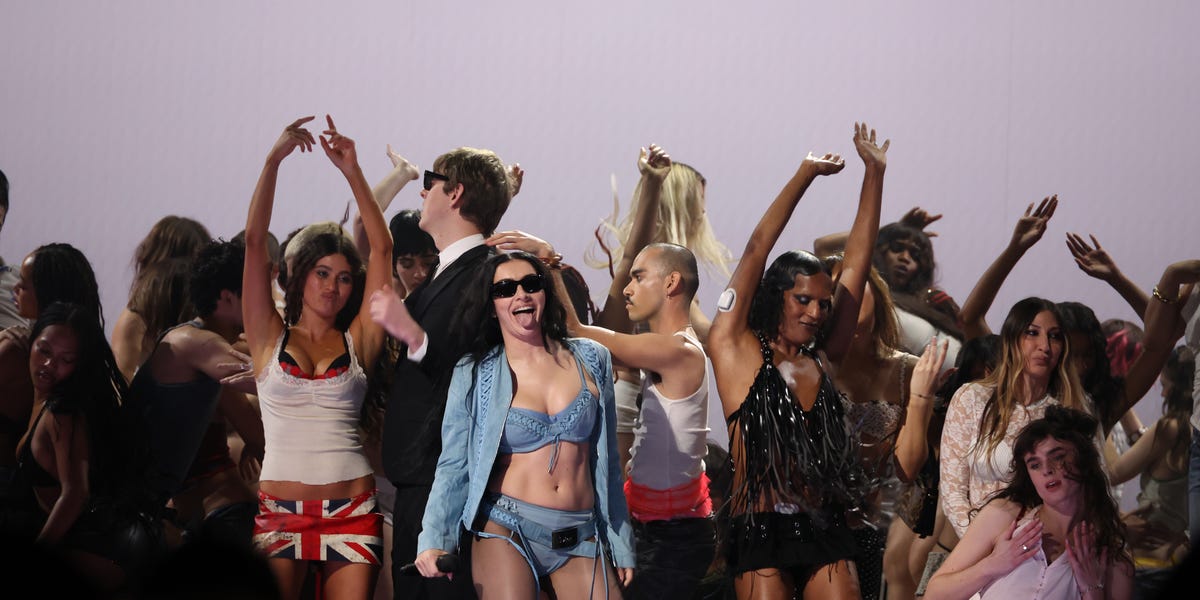
In 2018, Charli performed to a small crowd at a tiny bar near my childhood home in Atlanta. As I sweated in the kitchen at my job as a line cook, unable to get out of my shift, my phone lit up with friends texting me about Charli performing in the intimate venue, inviting audience members to join in. (I still regret not calling in sick that night.) Back then, she gave as much energy to her shows as she does today, whether on tour or onstage at the Grammy Awards with a who’s who of collaborators and fellow It Girls. Yet, it took Charli nearly a decade to garner the crowd her energetic performances demand.
That finally arrived with Brat, spellbinding everyone from ravers in New York City clubs to Vice President Kamala Harris with its slime green aesthetic. Charli not only produced her most successful album (and hired a killer marketing team), but demonstrated her lyrical maturity, proving she can move seamlessly from a party anthem like “Von Dutch” to a grief-filled dedication like “So I.” Even then, amid meteoric stardom, it was remarkable how little she strayed from her roots, that unguarded approach to creativity that has always distinguished her work. She even went so far as to skewer the whole phenomenon with The Moment, a mockumentary satirizing her experience as a pop star, which she cooked up with another collaborator, director Aidan Zamiri.
Soon after Brat, Charli did the Wuthering Heights soundtrack, but shared via Substack that she was burnt out and worried she wouldn’t be able to make music again. “[The new album] totally took me by surprise,” she said on an episode of the podcast Pop Pod earlier this summer. “I really was like thinking I would not be making a record. But then one day, I just had this thought and this idea that began this kind of like initial seeds of Music, Fashion, Film, and I just had to go with it.” It happened organically, while the artist was in Paris with Cook and Keane. You can feel this spontaneity in the quick-fire songs, almost all of which are less than three minutes long. Mixing elements of rock music (guitars and the like) with high-velocity strings of discordant notes akin to the impulsive electronica of Number 1 Angel, the collection feels bound together by a sense of experimentation.
Charli all but states this explicitly on the fourth song, “Camera.” She exclaims in the outro, “I don’t feel embarrassed even if I suck / I’m always craving an experience that feels dangerous.” Here, she announces her hope to plunge back into the unknown, to create for the sake of it, freeing herself from the concern of how it will be received. The discordant beats overlaid with Charli’s melodic chorus create the impression of a quickly constructed, unfiltered track made among three friends.
Unlike with Brat, the marketing for this album seems to find Charli unconcerned with a meticulously constructed media portrayal (at least as much as a pop star can be). Instead, the rollout for Music, Fashion, Film comes as 11 playful music videos stitched together by short, B-roll-like interludes that give a candid look into Charli’s creative process. The interstitials are offhandedly shot, as if they might be posted on a Close Friends Instagram Story or kept within a group chat. Through these, she scrapes away the veneer of the industry, showing us the long days with collaborators sharing ideas and laughs. The music videos, similarly, remain charmingly unpolished. “Camera,” for instance, features Charli pretending to make a movie with Vincent Cassel, while “Rock Music” shows her smoking cigarettes and tearing up a French hotel room with her husband, George Daniel. Together, the music and their visuals distill the thrill of creating work with your friends, which, for Charli, is seemingly all she needs to keep creating endlessly. Perhaps that is the cure for burnout.
It’s here that I started to really understand the story told by Music, Fashion, Film: that the icons we prop up typically start as a bunch of friends coming together to make stuff. (Scorsese, too, started his career making movies with friends from school like Harvey Keitel and editor Thelma Schoonmaker, both of whom still work with him today.) The endless nights spent working or bouncing wild ideas off one another are just as necessary and beautiful as the final results. It’s almost as if Charli made the album as a reminder to herself, to stay true to the artist she’s always been before it all slips through her fingers.
The last song on the album, featuring none other than body horror legend David Cronenberg, is focused on the fact that “No One Lasts Forever,” as the title suggests. The song, surprisingly long for Charli (5:42), features a ranting section by Cronenberg, where he chants the title repeatedly, beating into our heads the provisional nature of life. But it isn’t cynical; rather, it’s a poignant tribute to how quickly everything passes—not just fame, but the precious, fleeting moments spent getting there together.
I left the listening party with tears in my eyes, reminiscing about those car rides with Emily, and remembering what first made me fall in love with Charli’s music: It reminds us that creating anything is meant to be fun, to be unapologetic, and—as saccharine as it may sound—to set us free.
‘ The preceding article may include information circulated by third parties ’
‘ Some details of this article were extracted from the following source www.harpersbazaar.com ’