A community meeting Monday about the Royals’ plans at Crown Center yielded bad vibes and little new information.
I left Monday’s meeting about the Royals’ grand plan for a stadium at Crown Center trying to decide which was more irritating: the parade of self-interested stakeholders serving up tired talking points in support of the project, or the witless activists in red shirts who eventually shouted the meeting to an early end.
Probably the activists. Definitely the activists, actually. I’m not saying they don’t have a legitimate argument about forking over $600 million in public dollars to billionaire Royals owner John Sherman. But Monday night wasn’t the place to make it. And they didn’t really make it anyway. They shouted social-justice slogans every bit as stale as the civic boosterism coming from the stage.
The rest of us — people who belonged to neither camp and simply wanted to learn more about the biggest development project in Kansas City history — left mostly empty-handed.
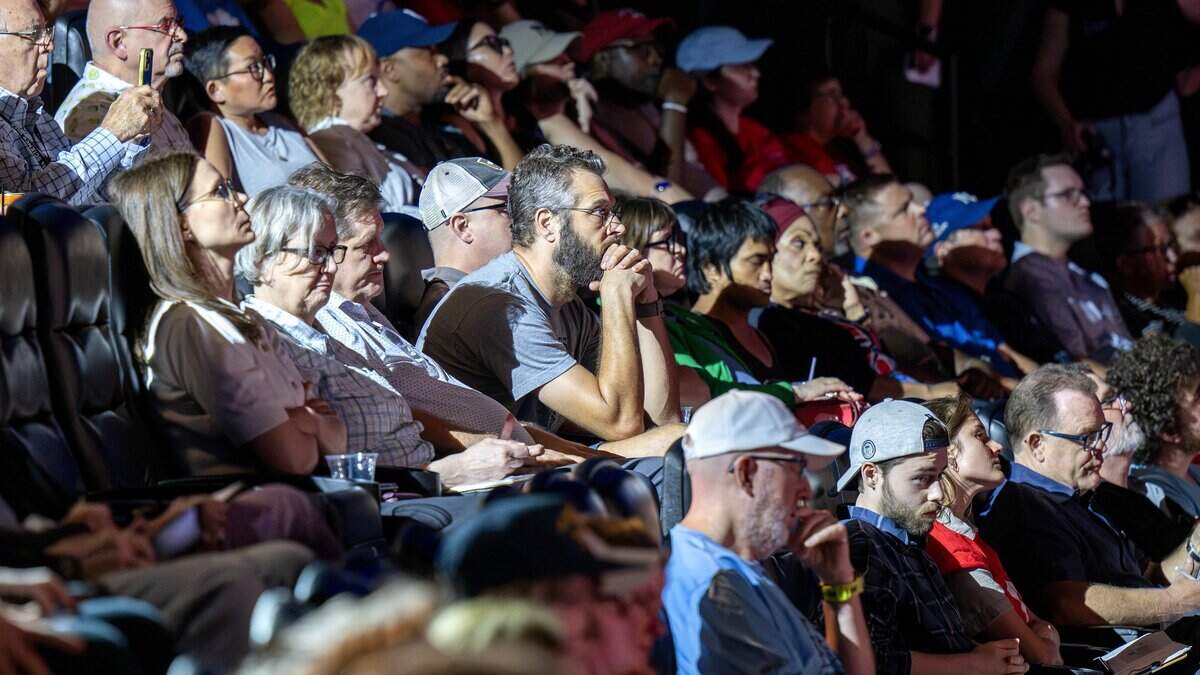
To set the scene: Monday’s meeting, held in the IMAX theater in the basement of Union Station, wasn’t about whether taxpayers should subsidize the Royals’ proposed $1.9 billion stadium. It was a required neighborhood meeting as the team seeks to rezone roughly 68 acres of Crown Center into a sports and entertainment district. Before the City Plan Commission and City Council can vote on that rezoning, the public gets a chance to hear about the proposal and ask questions.
In theory.
The first person to speak was one of the most quietly powerful people in Kansas City: Bridgette Williams, president of the Heavy Constructors Association of Greater Kansas City and chair of the KCATA Board.
In what felt like a preview of the civic rhetoric we’re likely to hear a lot over the coming years at development meetings like these, Williams began by invoking the World Cup.
“Coming off that wonderful experience,” she told the audience, “I’d ask the crowd to please be nice.”
Fat chance.
Less than an hour later, Williams had been reduced to the role of a high school principal trying to quiet a rowdy assembly.
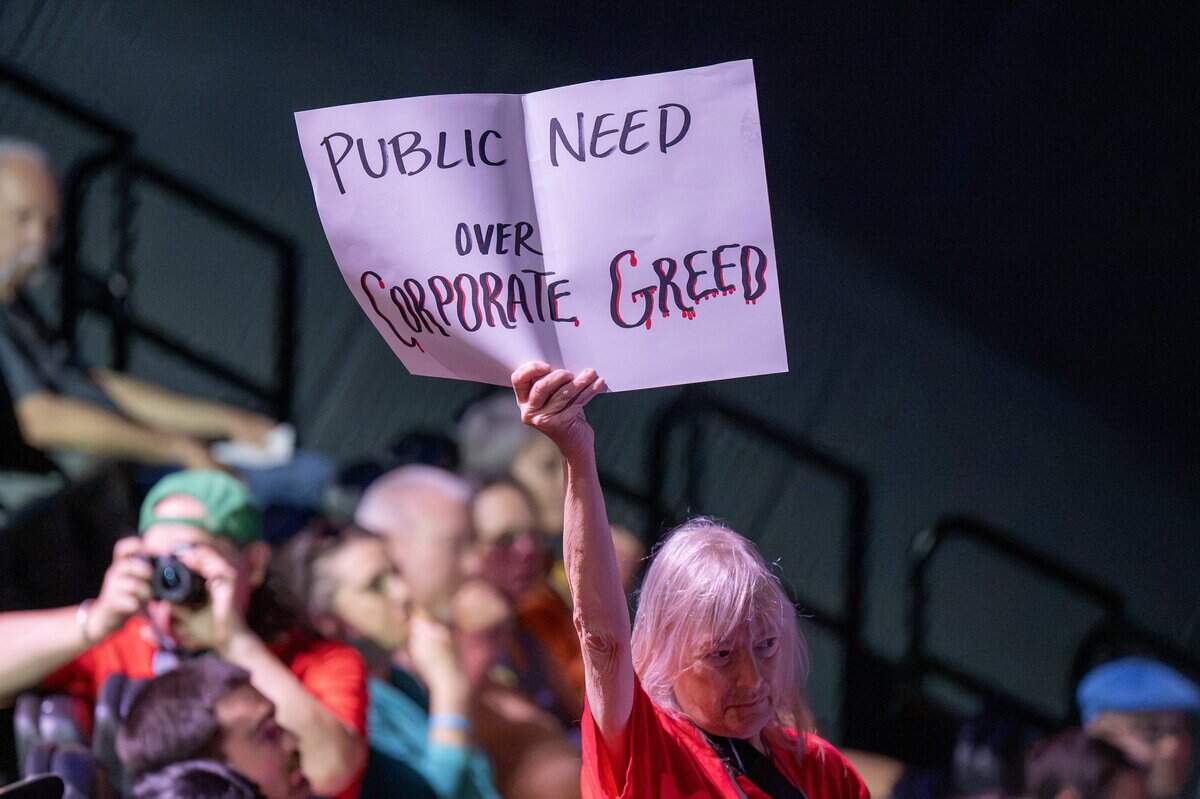
“I’m speaking,” she scolded. “Either you guys will let the people speak, or we’re gonna shut it down.”
“We’ll shut it down for you!” someone yelled back.
“We’re going to take five minutes,” Williams said. She and the other speakers exited the stage.
Crown Center plans
Prior to that, the meeting had been civil, if painfully dull.
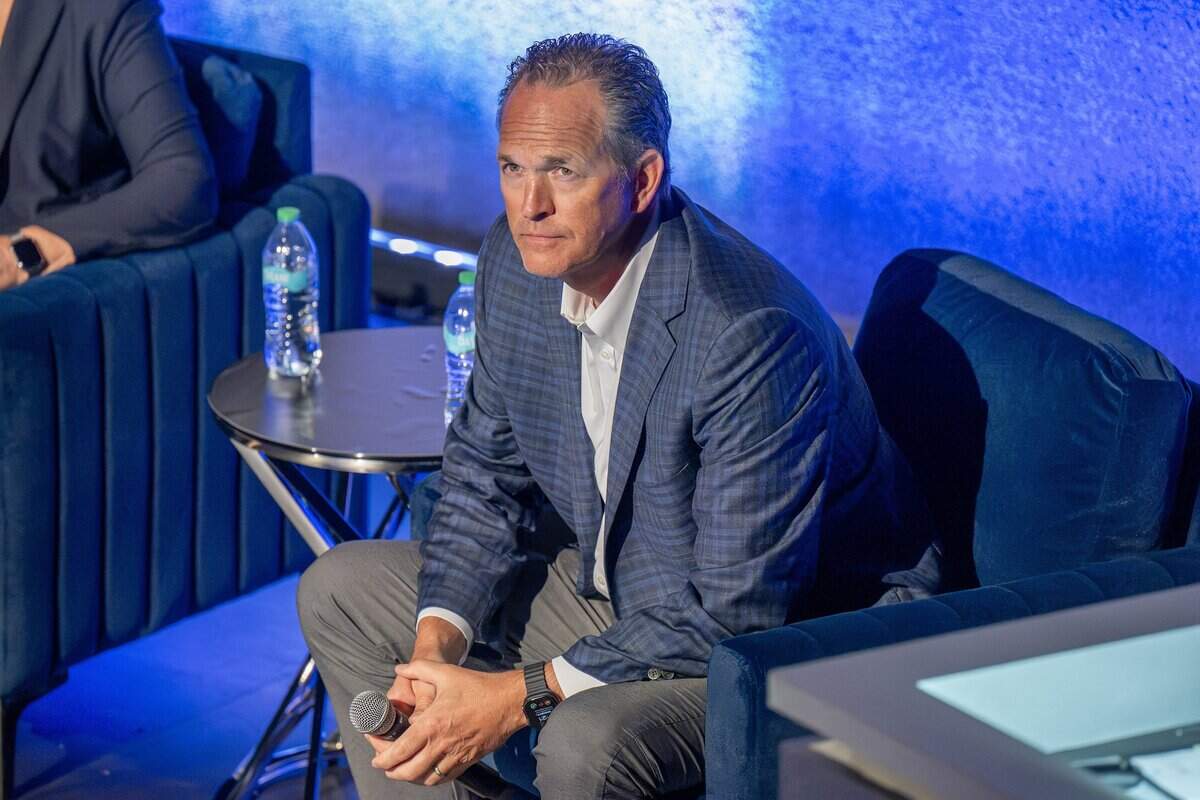
We heard from Royals executive Brooks Sherman, who explained the rezoning request and the vision for the district. Crown Center president Stacy Paine said some stuff about how Crown Center is always evolving, and this is just the latest phase. Architects from Populous described the design philosophy. Duke Dujakovich of the AFL-CIO and Ralph Oropeza of the KC Buildng and Trades Council each took their turn selling the project as good news for organized labor.
It was one big infomercial, as these things often are. Nearly everyone on stage had a direct interest in seeing the project move forward. The Royals get our money and a new stadium. Crown Center gets a facelift. Populous designs another marquee ballpark. Construction unions get years of work.
An impartial panel weighing the public interest, this was not.
We saw renderings we’d largely seen before. We heard assurances about walkability, parking, and traffic. There were a few mildly interesting details. One online rumor about gutted bike lanes was debunked: The only specific bike infrastructure change planned, we were told, is moving a bike trail on 27th Street between Grand and Gillham from an on-street lane to an off-street multi-use path.
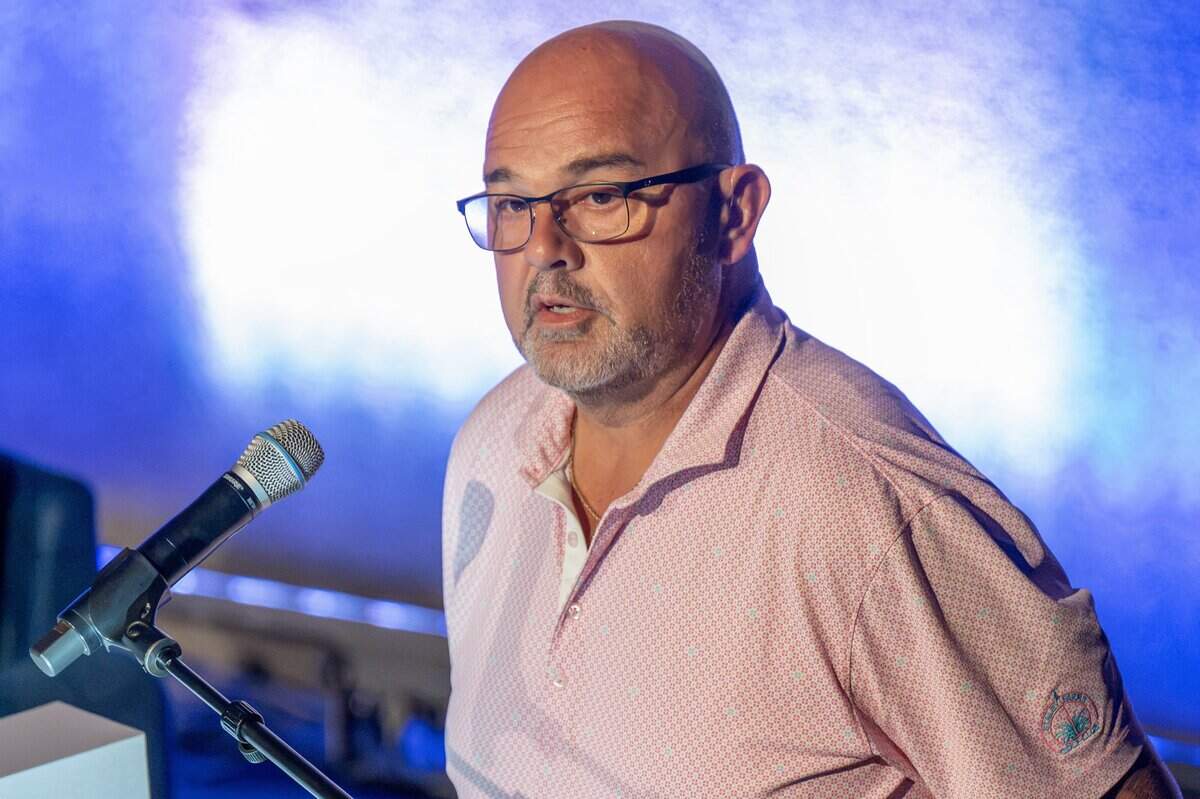
But the speakers pushed their luck. They went on too long and said too little. By the time Oropeza finished his plea to pass the plan, the audience had run out of patience.
“Let us vote!” they began to chant.
That was a reference to the campaign by Stand Up KC and the Missouri Workers Center to force a citywide vote on the city’s proposed public contribution to the stadium. Last month the groups delivered petitions to City Hall seeking exactly that, though it’s not yet clear what difference it will make.
The chants and shouts grew louder. After Williams and the others onstage returned from their brief recess, KC Chamber of Commerce president Joe Reardon handled a Q&A session. In the lobby prior to the event, attendees were handed notecards and encouraged to write down questions to be answered inside. Reardon went through them, and guests on the stage took turns responding.
“These are softballs!” somebody shouted.
They had a point. The questions largely sidestepped the hardest issues. One was about if the Royals would still do fireworks at the new stadium.
Explosive meeting
If I remember anything from this meeting, it’ll be the moment near the end when the loudest, most combative heckler in the crowd stood up and began theatrically unstrapping what looked like a tactical vest.
I wasn’t the only person in the room who briefly wondered if it was packed with explosives. I know that because Brooks Sherman jumped out of his seat, visibly rattled, scanning the room before demanding to know what the man was doing.
The protester shouted something about being disabled, though it was never clear what that had to do with the vest. He sat back down, pleased with himself. He’d been trying to get a rise out of the room, and it worked — several older couples near the back hurried out of the room.
Within minutes the chants had started up again, and Williams gave up for good.
“This meeting is about rezoning, not financials,” she said. “So thank you all for coming out. I wish this would have been better.”
So do I.

David Hudnall is a columnist for The Star’s Opinion section. He is a Kansas City native and a graduate of the University of Missouri. He was previously the editor of The Pitch and Phoenix New Times.
‘ The preceding article may include information circulated by third parties ’
‘ Some details of this article were extracted from the following source www.kansascity.com ’