Kim Sung-hoon, an office worker in his 40s, is frustrated whenever he hears that the KOSPI is breaking its all-time high.
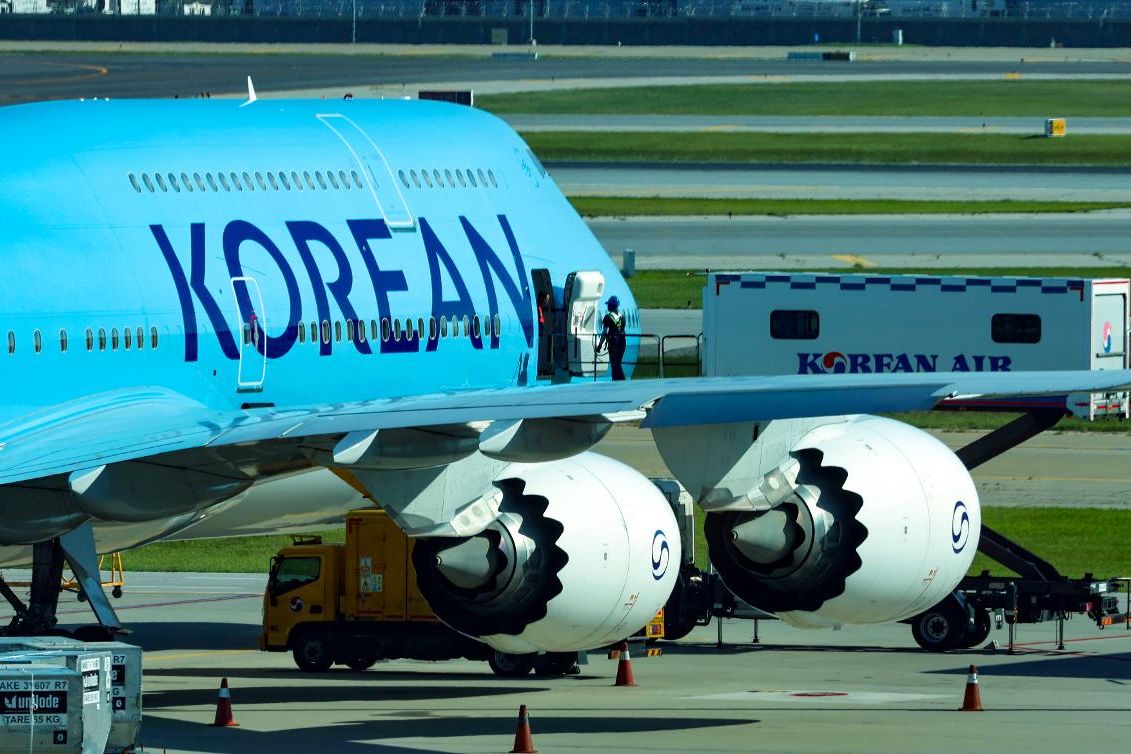
“I bought Korean Air shares at 28,000 won ($19.50) per share in August, but the price has since been dipping. I thought the cheap valuation was a plus. But there’s not a day that goes by that I don’t regret not buying SK hynix or Samsung Electronics shares. I wish I could turn back the clock.”
He is among many retail investors with holdings of airline, entertainment and construction stocks that remain largely excluded from the ongoing KOSPI rally.
The benchmark continues to surpass the all-time 4,000-point milestone, underpinned almost exclusively by large-cap semiconductor shares — Samsung Electronics and SK hynix — on expectations of a global artificial intelligence (AI) industry boom.
The two Korean semiconductor powerhouses accounted for more than half of the KOSPI’s total market-cap gain this year, while mid- and small-cap domestic demand-reliant shares’ growth has been limited.
According to the Korea Exchange, KOSPI large-cap shares surged 74 percent from January to October, whereas mid-cap and small-cap shares rose 43 percent and 19 percent, respectively.
Airline shares have fallen amid mounting external pressures, including a weak Korean currency against the U.S. dollar translating into higher fuel and leasing costs, compounded further by stagnant travel demand.
The past two months of downtrend in share prices are likely to inch even lower, since Southeast Asian travel will take a dive following violent incidents involving Korean tourists in the region.
Entertainment stocks are also weak, influenced by renewed uncertainty over China’s entertainment restrictions. Shares of SM Entertainment, for example, slid to around 120,000 won this month, down from 155,000 won in mid-August.
The long-awaited culture sector vibrancy was dampened by the indefinite postponement of the Dream Concert in Hainan, pushing back hopes of full reopening of the Chinese market.
As for construction shares, the recent regulatory tightening in Seoul’s real estate market dealt a heavy blow.
The government’s Oct. 15 housing policy measures designated all 25 Seoul districts as regulated zones, rapidly chilling investor sentiment.
Most of the leading construction shares, including the subsidiaries of Hyundai Motor, DL and GS, have dropped nearly 8 percent since late June.
Market volatility may spike once the semiconductor cycle cools, according to analysts, since the KOSPI’s powerful performance is propped up by a few industry leaders.
“Foreign investors are leading the bullish sentiment by buying large-cap semiconductor shares, while retail investors continue to sell mid- and small-caps,” Eugene Investment & Securities said in a report.
On Tuesday, Korean Air shares closed at 22,350 won, up 0.22 percent from the previous trade, while Asiana Airline shares inched down 0.22 percent to 8,900 won.
SK hynix shares closed at 521,000 won and Samsung Electronics at 99,500 won. They dipped more than 2 percent from the previous session, taking a breather from rapid gains of about 50 percent over the past two months.
‘ The preceding article may include information circulated by third parties ’
‘ Some details of this article were extracted from the following source www.koreatimes.co.kr ’