The most recent visit saw Birgitte, the Duchess of Gloucester, fly in to Herefordshire earlier this week.
Here’s everything you need to know about the royal helicopters.
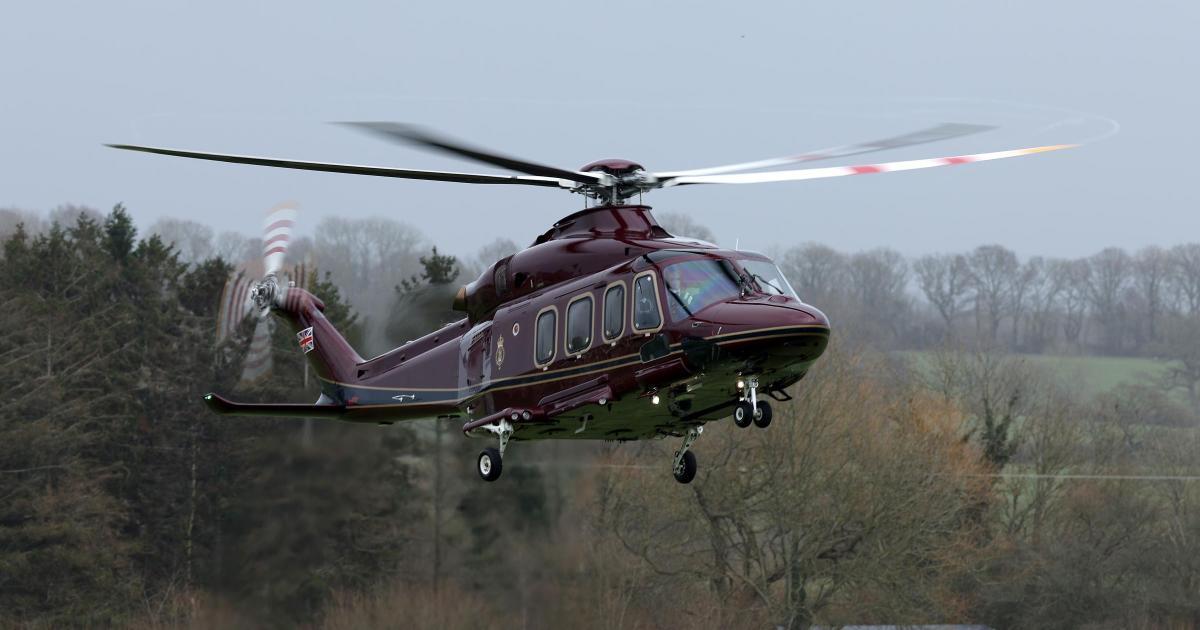
The Royal Family’s helicopter
The Royal Family’s helicopter service, known as The King’s Helicopter Flight (TKHF), is a VIP-configured rotorcraft operation.
It provides secure, flexible air transport for the monarch and senior working royals on official duties across the UK.
The primary purpose of TKHF is to enable the royals to reach remote locations and complete multiple engagements in a single day that would be difficult or impossible by road, rail, or fixed-wing aircraft.
Current fleet: Leonardo AW139 helicopters
Since 2025, TKHF has operated two leased Leonardo AW139 medium twins, replacing a pair of 15-year-old Sikorsky S-76C++ helicopters.
The AW139s are configured for VIP use with a high-comfort cabin, advanced communications, and the ability to operate on up to 50 per cent sustainable aviation fuel.
Flight records for the first nine months of operation show the two aircraft logged around 420 flying hours, covered roughly 58,000 miles, and completed approximately 340 trips.
Palace officials have defended the high utilisation, explaining that helicopters are essential for accessing parts of the UK not well served by other transport and for maximising the number of public engagements in tight schedules.
Organisation and operations
TKHF is managed through the Royal Travel Office, which plans and authorises helicopter movements in line with the sovereign’s and working royals’ diaries.
The service is civilian-staffed and operates under “Royal Flight” status, using special transponder codes and designated low-level corridors to integrate safely with military low-flying routes and controlled airspace.
Short helicopter journeys under a certain cost threshold are not listed individually in the sovereign grant accounts; instead, they are aggregated, with recent reports showing over 170 such trips in a single financial year at a combined cost exceeding £1 million.
Historical background
The Royal Family’s use of helicopters dates back to the late 1940s, when types such as the Sikorsky R-4 Hoverfly were temporarily employed for tasks including mail deliveries to Balmoral.
Through the 1950s and 1960s, aircraft like the Westland Dragonfly, Whirlwind, and Wessex were attached to the Queen’s Flight.
In more recent decades, the household standardised on Sikorsky S-76 variants, with G-XXEA entering service in the late 1990s and an upgraded S-76C++ (G-XXEB) added in 2009.
These Sikorskys formed the backbone of TKHF for around 15 years, logging hundreds of flights a year and becoming a familiar sight at royal residences and engagement venues across Britain before being replaced by the AW139s in 2025.
The transition marked the end of a long relationship with Sikorsky and the start of a new leasing arrangement with Leonardo, reflecting both age-related replacement needs and the household’s push for more efficient, lower-emission aircraft.
The Royals and the SAS
When the Royal Family do visit the county, they often land at SAS Stirling Lines in Credenhill.
Recently when Princess Anne, Prince William and the Duchess of Edinburgh were reported to have been in attendance at a memorial service to the late Dame Shan Legge-Bourke at Brecon Cathedral on March 4, the trio landed at the SAS site.
Prince William was officially announced as the patron of the SAS Regimental Association in December 2025, a role he accepted due to his lifelong connection to the Credenhill base.
‘ The preceding article may include information circulated by third parties ’
‘ Some details of this article were extracted from the following source www.herefordtimes.com ’