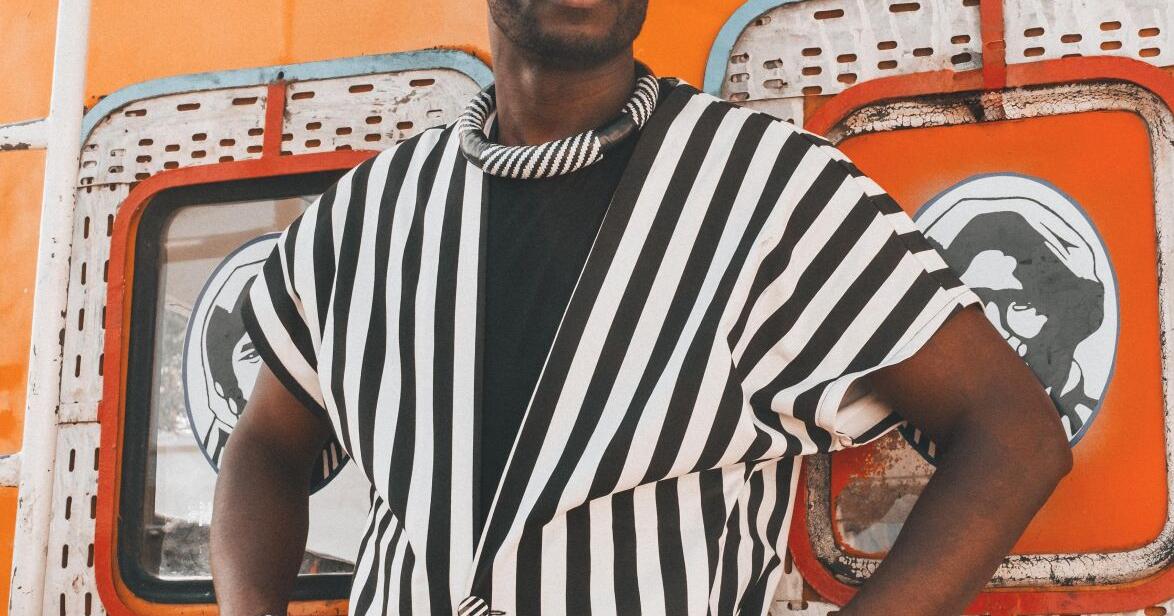
Senegalese bassist Alune Wade has been exploring global musical connections for more than a decade. He worked on Marcus Miller’s 2015 jazz album “Afrodeezia.” At the same time, he partnered with Cuban pianist Harold Lopez-Nussa on the album “Havana Paris Dakar.”
But when he wanted to do his own album about connections between African music and the many places the diaspora took Africans, he focused on New Orleans.
“The city that has this connection with Africa is New Orleans because of the music, the way they dress, the state of mind, the food, the spiritual, the Voodou,” Wade says.
The resulting album, “New African Orleans,” was released in May, and this week, he’s in town to perform and record again. The show on Friday, Nov. 28, at Marigny Opera House is presented by the Neighborhood Story Project, which worked with Wade on a documentary film.
Wade grew up in Dakar, and was introduced to music by his father, a musician and symphony conductor. At 18, Wade joined the Afro-pop and world beat band of Ismael Lo. He started to focus more on jazz, and he’s worked with musicians from Africa, the Caribbean and the U.S. to Europe, where he’s made a home in Paris.
As he saw many musicians do projects tracing musical roots to Africa, he had his own idea.
“Often it’s musicians from the diaspora coming to Africa looking for their roots,” he says. “Now maybe it’s time for the roots to go looking for the branches.
“I listened to a lot of jazz and American music in Senegal in the 1980s, because we have a lot of influences. We can say the foundation of jazz is from Africa with the rhythm and the blues, but jazz also influenced Africa a lot, like the music from Fela Kuti, the Afrobeat, or the music from Ghana, and the Calypso.”
As he focused on New Orleans, he connected with musicians including sousaphonist Kirk Joseph and pianist Kyle Roussel. He had known some New Orleans musicians from working in Europe, like Herlin Riley, who had been in Ahmad Jamal’s band.
Parts of the album were recorded in Senegal, Ghana, Lagos, Nigeria and New Orleans. Contributing musicians came from everywhere. Some of his regular band members, who will perform at Marigny Opera House, include Nigerian trumpeter Victor Ademofe, drummer Alix Goffic from French Guiana, saxophonist Harry Ahonlonsou from Benin, and keyboardist Cedric Duchemann from Reunion Island off the east coast of Africa.
The concert also features Corey Henry, Kirk Joseph, David McKissick, St. Julian X, Sunni Patterson and more.
Some songs on the album bridge sounds from across the Atlantic. “Boogie and Juju” is inspired by Little Richard’s take on boogie woogie and the juju music of Nigeria.
Wade also wanted to mix the origins of songs and styles.
“I wanted to play the Herbie Hancock classic ‘Watermelon Man,’” he says. “But I didn’t want to do it with Americans. My goal was to play it with Nigerians and Ghanians, to have their style. And I wanted to play the music of Fela (Kuti) with Americans, not Nigerians.”
Wade recorded Kuti’s “Water No Get Enemy” for the album. It also has takes on Dr. John’s “Gris-Gris Gumbo Ya Ya” and Jimi Hendrix’s “Voodoo Child.” In some of the original compositions, he wanted New Orleans-style brass band horns over his rhythms and melodies.
The project also grew to include a documentary film, “Tukki, from the roots to the Bayou.” Wade is now working on a book, and he’s beginning to record a follow-up album.
“I can tell you the story of the tree,” Wade says. “We need 100 branches to have a tree. I still am discovering many branches on the same tree. But they all have the same roots.”
Alune Wade performs at 7 p.m. Friday, Nov. 28, at Marigny Opera House. Suggested donation $25. Find information at marignyoperahouse.org.
‘ The preceding article may include information circulated by third parties ’
‘ Some details of this article were extracted from the following source bestofneworleans.com ’