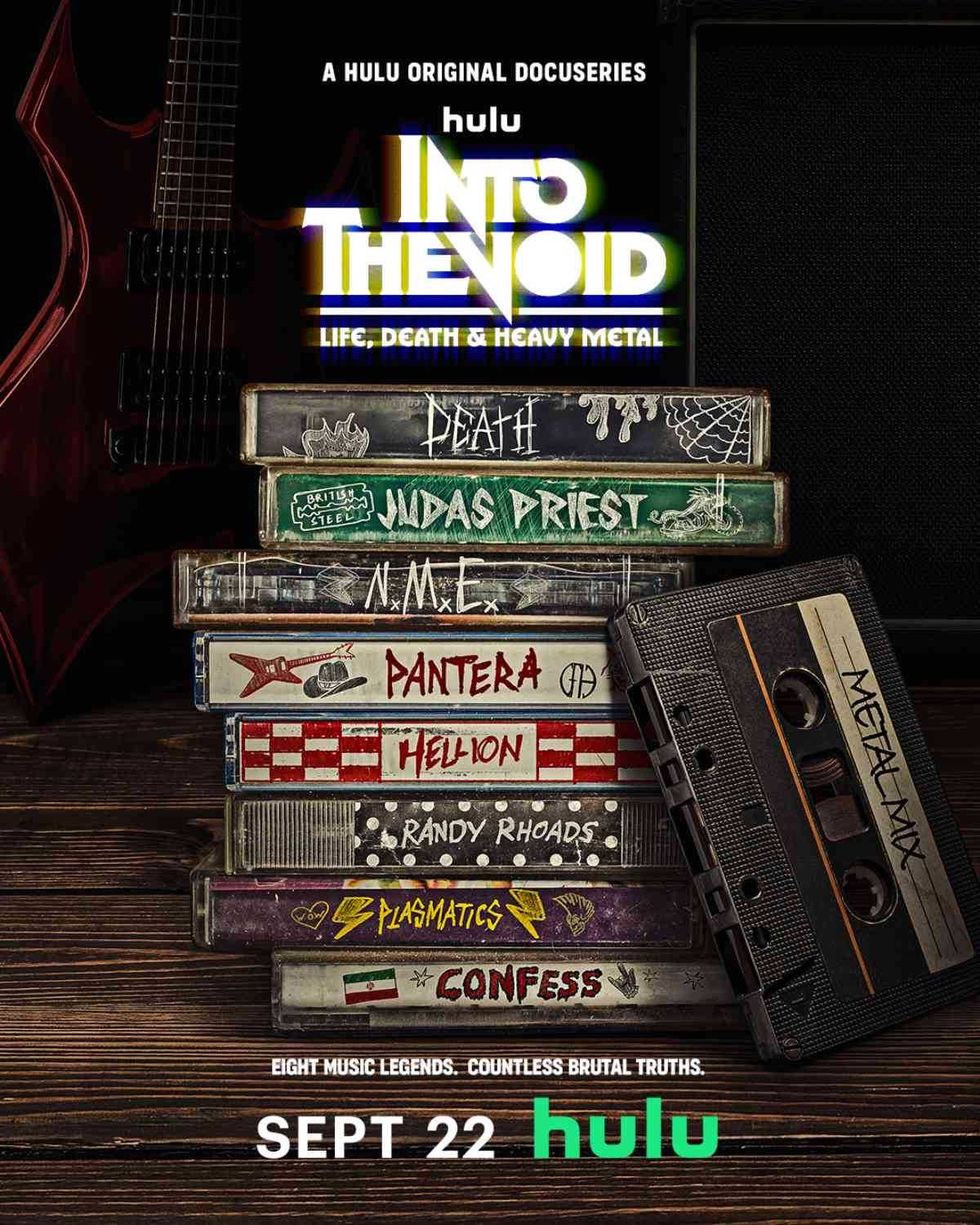
Scoring Hulu’s Into the Void presented a unique challenge for composer Andrew Gordon Macpherson: how to capture the raw intensity and cultural significance of metal legends like Randy Rhoads, Dimebag Darrell, Judas Priest, and Black Sabbath while supporting the emotional storytelling of the series.
Drawing from his own experience as a metal fan and musician, Macpherson crafted a score that blends live guitars, bass, drums, upright piano, and unconventional percussion with orchestral and electronic elements. His approach—what he calls “Ambient Metal”—translates the genre’s sonic DNA into cinematic textures, using manipulated feedback, sequenced synths, and pitch-shifted glides to create moments that thrash, roar, and at times, convey tenderness, mystery, or humor.
Through meticulous attention to each artist’s personality and legacy, Macpherson’s music pays tribute without imitation, building a sonic world that moves with the narrative. In the conversation below, Macpherson discusses his creative process for Into the Void.
All eight episodes of Into the Void are now available on Hulu.
– YouTubewww.youtube.com
No Film School: Into the Void explores the legends of heavy metal. What was your initial vision for how the score should capture both the raw power and the cultural significance of the genre?
Andrew Gordon Macpherson: I can admit I was nervous to create music worthy of helping tell the stories of musical gods like Randy Rhoads/Ozzy, Dimebag Darrell, Judas Priest, and more. I ultimately just had to find a way to hold the power of Heavy Metal with the emotional complexity of the stories and interviewees; So the score needed to thrash and roar when the moment demanded, but also open up and make space for tenderness, danger, mystery, or even humor. That solution didn’t come from trying to “out-metal” metal or “shred like Dime.” It came from writing in a way that felt authentic to metal fans (fans like me, Evan, and Jason). The last thing we wanted was a watered-down imitation of the songs that already define the genre. The score had to feel like it belonged, as if it was forged in the same fire of influence, and honestly, it was! I was a huge Sabbath, Pantera, and Deftones fan from when I first picked up the guitar, so maybe the metal was in me all along.
NFS: Jason Eisener is one of the producers of Into the Void. You have collaborated with him on numerous projects, including Dark Side of the Ring and Kids vs. Aliens. Did you get connected to the project through him? Did he have any musical advice for the show?
AGM: Jason Eisener and Evan Husney (creators of Dark Side of the Ring) graciously brought me along again for Into the Void. We’ve been dreaming and brainstorming for years about adapting the style of DSOTR to the stories that fascinated and haunted us from the world of music, especially heavy metal. The style of the score was a collaboration between all three of us and required some back and forth to find the right balance of cinematic/metal/emotion/dreaminess and space for dialogue and the needle drops. I feel lucky to be a part of their team in making some of the greatest documentaries ever about Pro Wrestling and now Heavy Metal and I’m using all of my newfound subliminal messaging and back-masking powers to manipulate the world into letting us do these forever :).
NFS: Did you draw directly from the sonic palette of classic heavy metal bands, or did you aim for a more cinematic reimagining of their energy?
AGM: Metal has an unmistakable sonic DNA — downtuned guitar chugs, the screams, the blast beats, the eerie horror interludes. It would’ve been easy to just mimic those sounds, but I think if I did that, it would feel like a strange cover band, not a score. In my head, I was eventually trying to create a new subgenre: “Ambient Metal.”
So the goal became translation, not imitation. For instance, I’d take swelling guitar feedback and manipulate it into arrangements where you’d normally hear orchestral strings, or I’d adapt metal rhythms into sequenced synth noise and percussive sound design. Suddenly, the grind and chug of metal was there — but it had space, atmosphere, and room for the story. My ambition was to open some new ways of hearing the genre inside a cinematic frame, and I think, at times, we got there.
NFS: How did you balance paying tribute to the roots of metal while creating something uniquely your own?
AGM: I did get very nerdy about recreating guitar sounds by Randy Rhoads, Dimebag Darrell, Judas Priest, and Black Sabbath. I don’t need an excuse to buy more guitar pedals, so I bought a lot for this. I even bought a replica of the Van Halen bumblebee guitar that was put in Dimebag’s casket and used in the re-enactment footage. Once I got as close as possible to those sounds, I tried to use the colours without just making cheap imitations of those artists, so they’re subliminally present in the orchestra, but hopefully serving something unique.
NFS: Did you incorporate live guitars, bass, and drums, or did you blend those with orchestral and electronic elements?
AGM: All of the above, as well as upright piano and lots of percussion stuff like brass, chunks of metal, sound design samples. Whatever was needed to elevate the story. I mainly sketched out the music on my Geddy Lee Bass and these “guitar feedback string sections” I talked about, and supplemented with anything and everything else.
NFS: Were there particular metal subgenres—doom, thrash, black metal—that influenced different moments of the score?
AGM: It’s a melting pot. I’ve definitely been in my “doom days” since I did Tales From The Territories because I bought a ton of vintage fuzz pedals for that project, and owning a SuperFuzz made me fall in love with guitar all over again. Even on the last couple of seasons of Dark Side of the Ring, I was finding places where a little vintage drum groove and some downtuned fuzz could be really “tough” with the right sequences. Also, horror film music comes into the influence, partially because I love it, but also, every metal fan I know is a huge horror fan. So there’s a bit of Giallo film music vibes in the Ann Boleyn episode and slasher-ish stuff throughout.
NFS: How did you use music to reflect the personalities and legacies of the metal icons featured in the series?
AGM: Randy Rhoads loved classical music and guitar, so I brought some of that to his episode. Pantera are the Cowboys from Hell/From Texas/Love Lynyrd Skynyrd, so there’s a bit of that influence in their episode; IE slide guitar-esque whammy pedal parts and organs. There’s punk rock and Musique concrète influence in the Wendy O. Williams episode. The Confess and the Judas Priest episodes both have political elements to the stories, so there’s a nod to cable news bumper music/investigative journalism docs. Obviously, I just try to absorb whatever the story needs and help bring it all into a coherent musical design that transports people somewhere that feels like “Into the Void.”
NFS: Was there a particular episode or legend that challenged you the most musically?
AGM: As a teenager, one wall in my room was covered with Dimebag Darrell (Pantera Guitarist) posters, so I wanted to do something special to pay homage to him. I had an idea to write a string arrangement but have it played on guitars with Whammy Pedals (a pitch-shifting digital guitar pedal that he may be one of the most visible users of). I used MIDI to precisely create long glides between notes so the harmonies would be a bit otherworldly and also evoke slide guitar. Figuring that all out and getting it recorded was the biggest challenge, but I think it’s cool and unique.
NFS: Heavy metal has always been about rebellion, passion, and community—how did you try to bring those themes into your music?
AGM: I definitely brought the passion for the subject matter and the filmmakers’ work while trying to be mindful of the community and what their expectations could be.
NFS: How has this project influenced the way you think about genre scoring and the relationship between popular music traditions and film/TV composition?
AGM: Working on this project really made me reckon with creating something unique inside of a world with an established musical identity. Even more so, though, it’s made me double down on the concept of “creating motion” musically as a composer on the films I score. Instead of just asking, ‘What genre does this need to sound like?’ I’m also asking, ‘What is the story doing right now — is it marching forward or strutting, are we stretching or diving, chasing or fleeing?’
The last time I spoke to No Film School, I said that I don’t think writer’s block exists, and in hindsight, I should maybe say that writer’s block is curable with a more robust creative process. I have a 16 Verb framework for story scoring that I use. It’s a tool I use where I draw from 16 transitive verbs — eight active and eight reactive — as “musical prompts.” These verbs give me a way to instantly tap into what I need to focus on to translate story beats directly into musical decisions.
For me, that bridges music theory and production techniques with cinematic and storytelling demands — because whether you’re scoring with a metal riff, a jazz progression, or an electronic texture, the underlying verb keeps the score aligned with the narrative’s motion. It’s a framework I’m developing continuously, but these 16 verbs are all I need to “prompt” myself to write almost anything for drama, horror, comedy, cartoon stories and more and I’ve found my filmmakers respond to it because it helps them with clarity and pace and excitement while also making music editing decisions quick; When we need to repurpose a piece of music from the series, I just recognize what type of motion we need and pull from when I’ve used that “motion” in what I’ve established previously. That’s been the epiphany to my own musical productivity and key to my “success” or at least ability to deliver impactful music that sticks to picture!
‘ The preceding article may include information circulated by third parties ’
‘ Some details of this article were extracted from the following source nofilmschool.com ’