When Alien: Earth debuted on Hulu initially, I praised the show for seemingly making a leap towards exploring bigger ideas. The Alien franchise has always been idea-driven, but that idea was always: What if people encountered a Xenomorph?
After the series premiere, I thought Alien: Earth was poised to tackle bigger and more complex sci-fi ideas, like the nature of human consciousness and what it means to be alive. I was wrong. That’s not what it’s doing at all.
Instead, Alien: Earth has decided to abandon being idea-driven entirely. It’s a character drama, and that’s a big problem.
How Alien: Earth Revealed Itself As A Character Drama
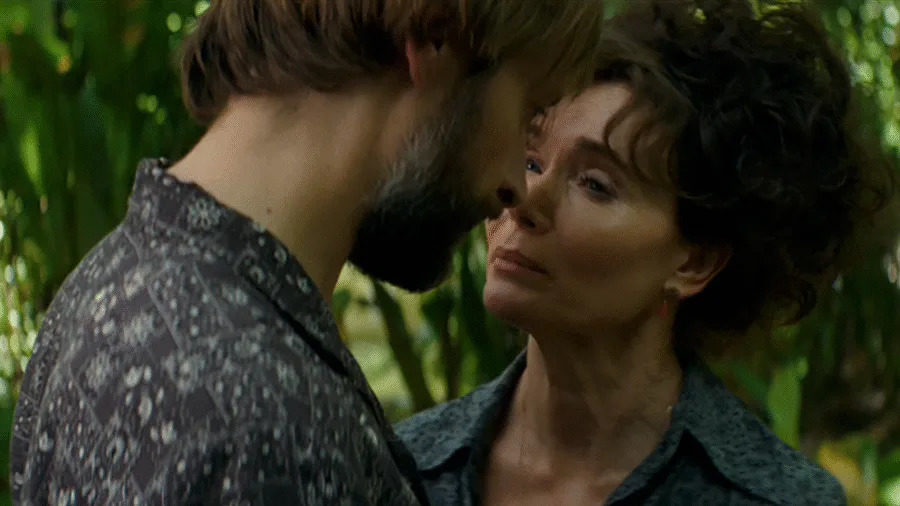
The series showed its hand this week when it stopped everything so we could learn about the marital relationship of the random 70s bearded lab tech who’s been working on the Prodigy corporation’s robots in the background. No one cares about that guy, and we didn’t need to know this about him for the plot, but that’s what modern character dramas do when they want to make their stories seem complex. They add more characters.
The secret life of 70s beard guy on Alien: Earth.
The show’s nature has been hidden behind excellent production design and dramatic musical score, but the signs have been there all along. Alien: Earth has drifted away from much of the initial premise and has spent increasing amounts of time developing side characters or adding new characters to interact with existing ones. It’s become preoccupied with building an ensemble.
This methodology has become the default way to construct a series in the modern entertainment era. It’s why every show has begun to feel the same.
The Skeletons Of Storytelling
When you boil storytelling down to its bones, you’re left with two skeletons: character-driven and idea-driven. Every movie, book, or show hangs its flesh on one or the other, even if it pretends to be something else. The difference is simple: are you here to watch people change, or are you here to see an idea play out?
Entertainment used to be entirely idea-driven. There was an event or a setting, and characters had to deal with it.

Peter Falk as Columbo.
For example, on Columbo every week, someone gets murdered, and Columbo has to solve the murder. Peter Falk made Columbo an interesting character (one of the all-time greats), but everything we learned about him during that show was a function of the plot he was involved in.
Over time, entertainment became more character-driven, and storytelling became obsessed with things like the hero’s journey and understanding how characters grew and changed. Characters didn’t just have an arc; that arc became the focus of the story.
Good Will Hunting is a character-driven poster child. The plot is just some therapy sessions and a janitor solving math problems, which sounds like the dullest thing ever. But it works because it’s about a damaged kid wrestling with his self-worth and fear of intimacy. Take Will out of the equation and there’s no story left.
The Alien Universe Is Wallpaper Now
To understand how a character-first focus works in the context of a series, look at Mad Men. The ad campaigns didn’t matter. The Manhattan skyline didn’t matter. What mattered was Don Draper’s hollow chase for identity and meaning. Everything else is just wallpaper.
And that means the thing you’re watching Alien: Earth for, the Alien universe, is just wallpaper. It’s wallpaper being used as a backdrop for writers without ideas to try and draw you into emotional investment in their characters. When they run out of emotions to suck out of a character, they’ll move on to another.

That works fine for Mad Men, because Mad Men is about Don Draper, not a broader idea. Making a show like this character-driven is a way to make it about the writers instead of the story. It’s easier to write and requires less talent, perfect in an environment where Hollywood has stopped recruiting writers based on ability.
This is an especially big problem for a show in an established franchise because it means that instead of watching an Alien series, we’re actually watching a soap opera. The audience is tuned in for a story they’ll probably never get.

Sydney Chandler as Wendy on Alien: Earth.
That’s what took down Paramount’s Halo series, killed Doctor Who’s ratings, and is currently driving audiences away from Star Trek: Strange New Worlds. Those audiences tuned in to watch an idea, and that idea is Star Trek, Halo, Doctor Who, or Alien. Instead, the people in charge of those shows gave them characters as stand-ins for their own egos.
Unless Hulu’s new series turns things around quickly, I predict the audience will catch on, get bored, and bail out on Alien: Earth.
‘ The preceding article may include information circulated by third parties ’
‘ Some details of this article were extracted from the following source www.yahoo.com ’