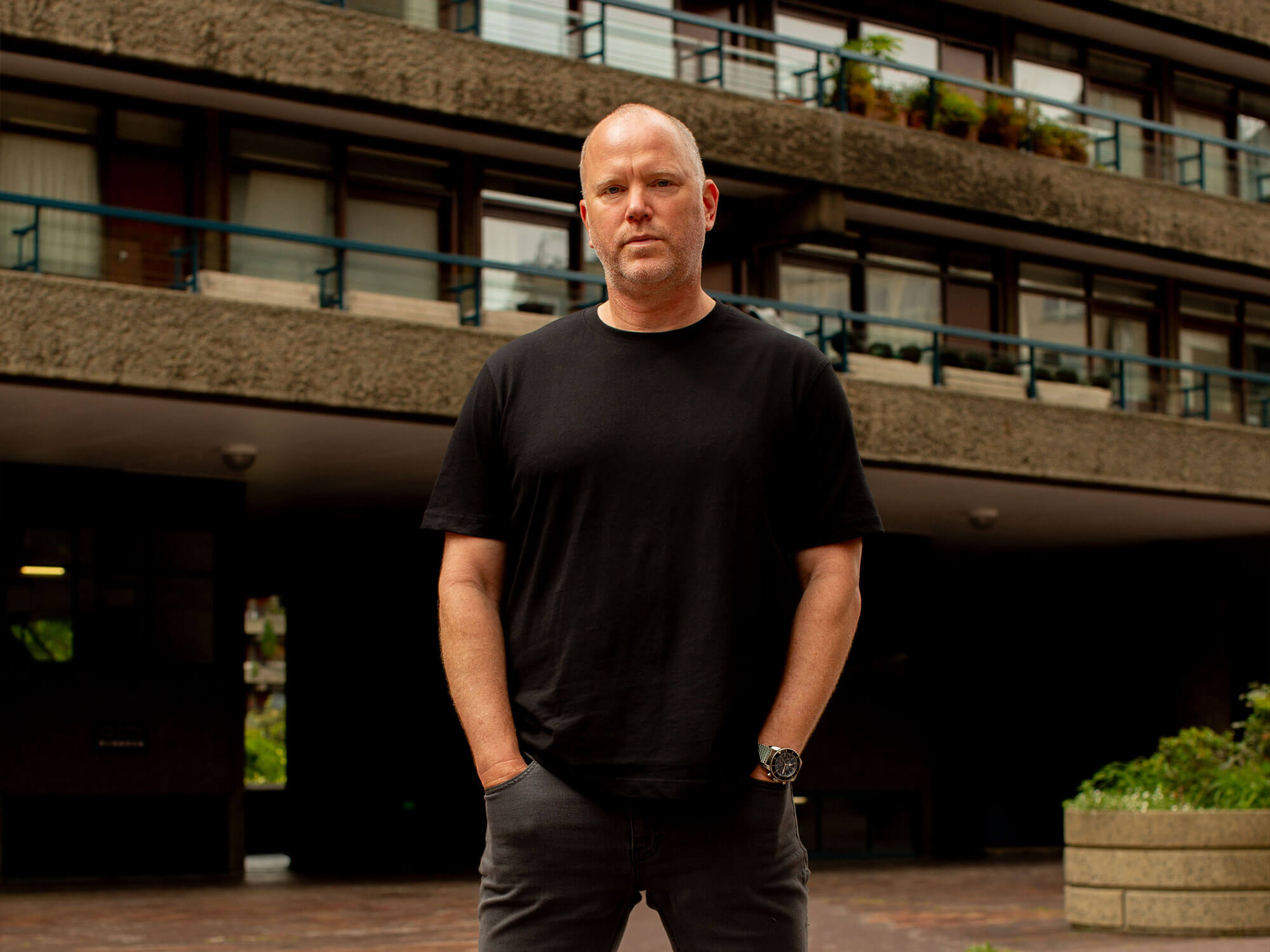
At International Music Summit Ibiza 2026, Robb McDaniels was saying his farewells to the Beatport team and his associates around the dance music industry, two months before stepping down as CEO of Beatport. On 1 July 2026, he officially moved into a board role as executive chairman, handing the reins to a new CEO, Matt Gralen, and president, Helen Sartory. At a lunch at IMS (an event majority-owned by Beatport), the trio were all smiles, optimistic about the next phase of the DJ and music production platform, which now serves one million customers annually.
Ahead of their appointment, Matt and Helen sat down with MusicTech to explain why they’re focusing on downloads, what Track ID reveals about the world’s dancefloors, and where they draw the line on AI.
What’s the big change that comes with Robb stepping down from his leadership role, and the two of you taking the reigns?
Matt: “Robb, Helen, and I have been pretty much running the company together for the past four years that she and I have been around. So we’re having [Robb] stay on as executive chairman, which I think is helpful. But, certainly from a leadership and internal standpoint, it’s important for us to prioritise stability, continuity, those kind of things. So [this is about] evolution rather than massive change.”
“We definitely recognise that the DJ is our core customer, dance music labels our most important partners, and we’ve got a number of things that we’re working on this year that we think can serve them better.”
Helen: “Yeah, we’re not ripping [up] a bunch of plans and starting from scratch; we’ve been collaborating on the roadmap for many years now. The focus this year really is about serving our community…It’s going to be about core structural upgrades, library management improvements, and label tools.
“We’re also doing some work to expand our reach into the fan space to introduce more people to DJing. We’ll be introducing analytics and management tools for labels, and we’ve got a very packed schedule of Beatport Live events. So that’s kind of where we’re focused this year.”
When you say reaching into the fan space, are you taking cues from the likes of Bandcamp, which recently launched fan accounts?
Matt: “I wouldn’t say it’s inspired by anybody else in the market, but I think we have a really strong ecosystem, so the better we can engage with both the DJ and label side, the better off both halves will be. And it’s true that there’s options out there for labels and artists to get their music out there, we want Beatport to be the most important home for artists and labels in the dance music world.”
Let’s talk about Plugin Boutique. That’s a huge marketplace for producers across genres — can we expect any changes to that part of the business?
Helen: “Yeah, again, no immediate drastic changes afoot. The plugin world is a really interesting place at the moment. There’s a lot of change going on, and as a marketplace, Plugin Boutique is sitting in a really useful position.
“For us, it’s really important that the creative landscape is supported by indie developers, and that they have a place to continue to reach customers at scale, because it means that producers then have a wide range of tools to express themselves with…We see that AI is changing the way that music is being made, but where we’d like to see it is to drive more variety of workflows of sounds of styles rather than a homogenisation of sounds, and that’s what the customers want too. So our focus there is really again to support the long tail of indie developers, make sure there’s a really healthy marketplace.”
Speaking of AI, there’s obviously a lot of AI-generated music hitting streaming services right now. What’s the sentiment like at Beatport?
Helen: “AI and generative AI music is a very hot topic. We talk about it endlessly inside and outside the office. Our stance is that we’ll be driven by what the DJ community wants. We survey regularly, we talk to the community regularly, and right now the majority is saying that they don’t want to DJ with it. So our policy remains the same as it did before: fully AI-generated music isn’t permitted on the store, and if we find it, we remove it.”
“We’ll continue to consult with the community. If their sentiment changes, we can assess it again, but what’s important is that, if generative music does land on the dance floor, that it’s trained on fully-licenced data and it compensates artists fairly, so that’s what we’re going to be keeping an eye out for as demands shift. On a personal level, for me, music is about communication and community and empathy, which are all pretty human things. So, whatever happens, I hope we don’t lose that in the next evolution of the creative cycle.
Matt: “I mean, it goes back to the ecosystem point where the labels and artists are our most important partners, and we have to do right by them. We want to empower them, not engage with anything that they feel is threatening to their business. So, we are currently in a place where…as [AI] evolves and as new technology could potentially be beneficial to our partners, we want to stay ahead of that curve and help move innovation forward in a responsible way that supports creativity.
I’ve seen on some platforms, especially YouTube, where users are uploading tracks and mixes and self-labelling their work as “100% human-made” and “no AI slop”. Have you thought about a labelling system on the Beatport store?
Helen: “Yeah, we’ve thought about the labelling route, and we’ve asked the community if they would they prefer that. Obviously, the response tends to be ‘Yes, if [AI music] is on Beatport, we want it to be labelled’, but the majority still don’t want it on there in the first place. So, I think we’ll stick with that for now, and, like I said, we’ll follow the wants and needs of the DJ space.
“There are lots of companies out there offering AI detection systems, and we are testing lots of them to see if we need a safety net for it right now. Because [Beatport is] a niche digital streaming platform, we are ingesting tens of thousands of tracks a week, [and] we try and weed out anything that is making its way into the main spaces as quickly as possible.”
Beatport has made more of a commitment in recent years to community programs. Is there anything changing there — anything new we should expect?
Matt: “Our push into events under the Beatport Live brand has been a big way for us to invest in the community. So, putting on fun events, giving a platform for artists, DJs, and labels. I think that’s an important part of it too, helping them to align with the Beatport brand, and then also the fans that we can bring to a live event. That’s been a really positive new thing for us over the past 18 months or so.
“In terms of some of the more community-oriented initiatives, like the NEXT programme, those things are going to continue. It may take on different forms, but it’s always important for us to be supporting organisations, artists, labels that are on their way up.”
Helen: “Yeah, we benefit when we have a really strong, healthy middle class of musicians…For us, it’s not just altruistic, we genuinely benefit from variety and interesting talent coming up.”

Is Beatport focused on any new innovations that we can expect in the coming months?
Helen: “People are often surprised when we say downloads grow year after year but they remain the preferred format for the majority of our customers. So, we’re going to keep developing products that support that workflow. Streaming is gaining popularity, but really, as a complementary workflow, rather a cannibalistic thing, so we’ll be looking at ways to support DJs that want to use a hybrid workflow.”
“One thing that’s new and interesting that we’re looking at is how to not only share what’s being downloaded but what’s being performed around the world in real-time. We recently released Track ID, a feature in the mobile app — that’s kind of the first step in that direction of collecting a data set around what’s being played out.”
What’s the goal with collecting that kind of data?
“The ambition is to contribute towards creating a much clearer picture about what’s being performed in DJ sets around the world, not just what’s on USB sticks. It’s early days, but ultimately we want to partner with other data providers to help artists and labels understand the early stages of how a track breaks, and also help ensure that performance royalties are paid out to the correct rights holders, which has been a notoriously difficult challenge for the industry.”
“There’s more interesting, exciting work that we can’t talk about yet, but no radical changes [right now] to worry about.”
[Editor’s note: This interview has been edited for clarity and brevity.]

Sam is the Commissioning Editor at MusicTech, where he’s helped shape the publication’s editorial voice since 2019. With nearly two decades of music-making and a degree in music technology behind him, his focus is on the stories behind studio gear and the artists who use it. He’s spent way too much time sampling disco records.
‘ The preceding article may include information circulated by third parties ’
‘ Some details of this article were extracted from the following source musictech.com ’