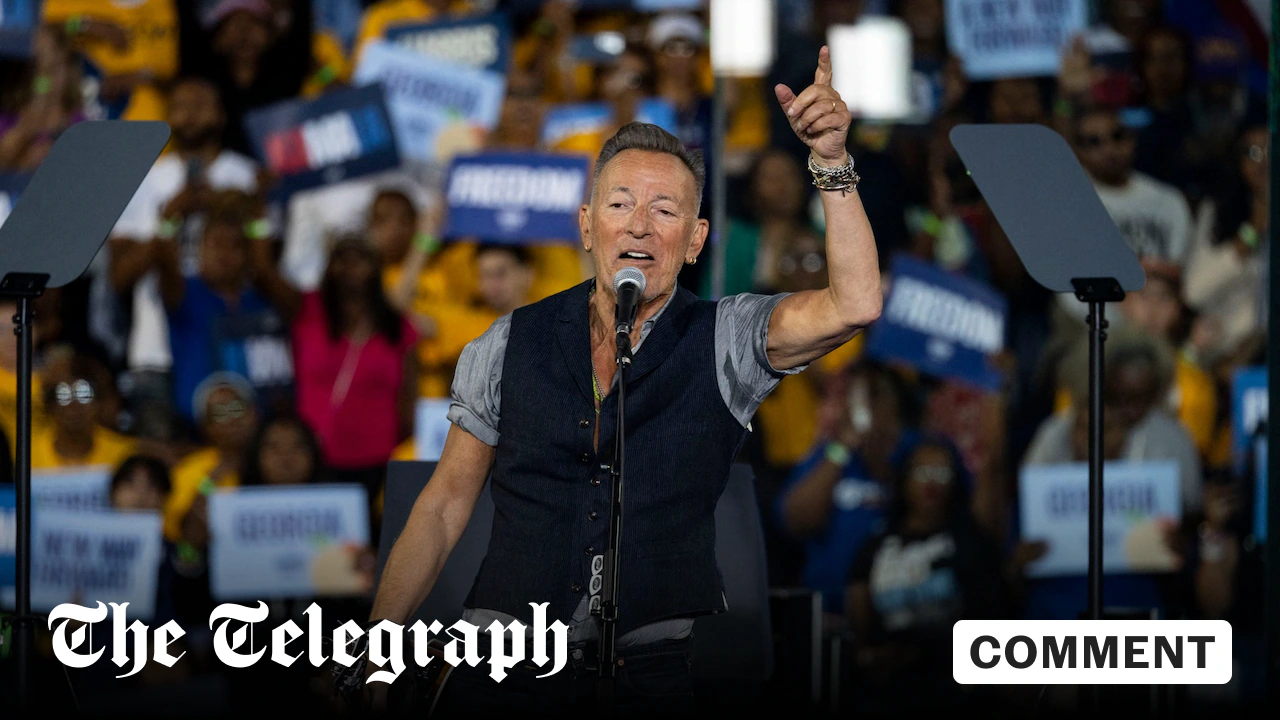
But there is no room for misinterpretation in Streets of Minneapolis, the danger being that such historic specificity might leave the song quickly dated, whilst alienating a huge Trump-supporting section of his audience.
Yet Streets of Minneapolis plugs into a venerable tradition of protest, akin to Percy Bysshe Shelley’s broadside poem The Masque of Anarchy, written in immediate outraged response to the Peterloo massacre in Manchester on August 16, 1819. Such raw protest classics as Nina Simone’s Mississippi Goddam and Bob Dylan’s The Lonesome Death of Hattie Carroll (both released in 1964) were written and recorded quickly in response to specific Civil Rights era incidents.
Springsteen’s Streets of Minneapolis echoes Neil Young’s angry, despairing Ohio, written in the aftermath of the Kent State university shootings on May 4, 1970. Ohio is often celebrated as one of the most quick-fire protest songs of all time, recorded by Crosby, Stills, Nash & Young on May 21 then rush-released to stores, yet it was not actually available until mid-June.
The Boss meanwhile has taken advantage of modern recording and online distribution to get his song hot off the presses with unprecedented speed. In a way, I am surprised more artists haven’t been doing this, although he is not a lone voice of protest. The British folk stalwart Billy Bragg also rush-released a Minneapolis protest song this week, called City of Heroes. Yet there is a world of a difference between a British protest singer bashing an acoustic guitar to give a history lesson comparing Trumpian America with Nazi Germany and a beloved rock superstar and American icon of the magnitude of Springsteen singing out against his own government.
Will Springsteen’s act of resistance embolden others? Can songs even make a difference in the real world any more? These are big questions, but if Springsteen’s protest stirs more musical artists to engage with real world issues, that surely can’t be a bad thing.
‘ The preceding article may include information circulated by third parties ’
‘ Some details of this article were extracted from the following source www.telegraph.co.uk ’









![Hailey Bieber’s 2026 Campaigns: Gap, Skims and More [Photos]](https://celebrity.land/en/wp-content/uploads/2026/07/Hailey-Biebers-2026-Campaigns-Gap-Skims-and-More-Photos-120x86.jpg)