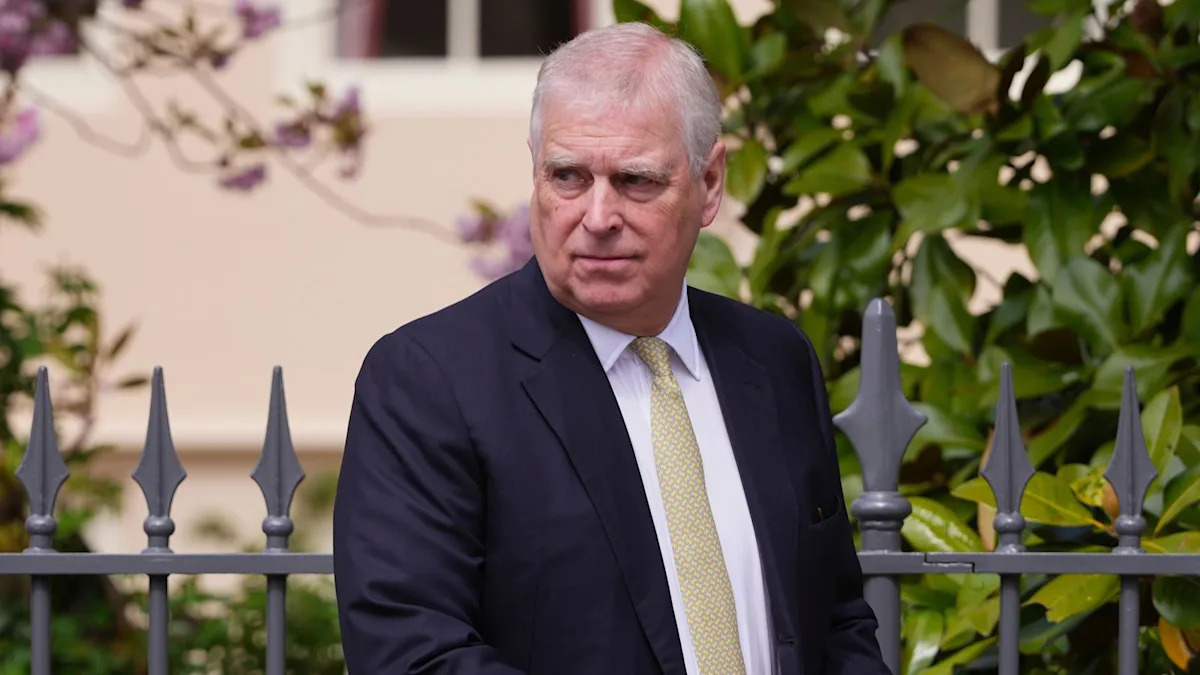
Given some MPs have been referring to the King’s brother today as a “rude, arrogant and entitled man”, where are we on the convention that members of parliament cannot criticise the Royal Family?
The House of Commons library assures us that MPs are not prevented from criticising the King and members of his family.
But both MPs and Lords are required to stick to certain rules if they do wish to do so.
Confusion comes from the Commons rule book, called Erskine May, which is the ‘bible’ of regulations and formalities in both Houses of Parliament.
It tells members that “reflections must not be cast in debate upon the conduct of the sovereign, the heir to the throne or other members of the Royal Family”.
Subscribe free to our weekly newsletter for exclusive and original coverage from ITV News. Direct to your inbox every Friday morning.
Which, upon first reading, appears to rule out any form of criticism of King Charles, Prince William, Queen Camilla, the Princess of Wales, Princess Anne, and all the others.
But this is a misinterpretation, according to the Speaker of the House of Commons, Sir Lindsay Hoyle.
His office has set out clearly that there is no “general prohibition” on discussing matters related to the monarchy.
It points to how MPs and Lords debated the issues raised by the Sovereign Grant Act in 2011 and the Counsellors of State Act in 2022.
However, there can be no “incidental criticism” of senior working royals.
Australia and New Zealand support removing Andrew from royal line of succession
Prince William says he is ‘not in a calm state’ as he attends Bafta Awards
In order for there to be criticism of the Royal Family, there has to be a “substantive motion” – one that calls for action or expresses an opinion.
Nor can MPs or Lords use the King’s – or previously Queen Elizabeth’s – name in order to influence the debate, such as saying “it would make the King very happy” if we were to do this or that.
According to the Speaker’s Office, those rules exist to keep parliament independent of the monarch (which dates back to the English Civil War and the execution of King Charles I) and to keep the monarch above politics and avoid him or her being dragged into political issues of the day.
Interestingly, the rules which apply to the Royal Family also apply to those who hold the office of Lord Chancellor, members of either House of Parliament, senior judges and the governor-generals of a realm country (they are the sovereign’s representatives in countries, like Canada, Australia, New Zealand, Jamaica, Belize, where the British monarch remains the head of state).
That said, Tuesday’s debate was unaffected by these constraints, given that Andrew Mountbatten-Windsor is no longer a working member of the Royal Family and has lost his prince title and his dukedom.
He does remain eighth in the line of succession, and also a counsellor of state (a senior royal who can stand in for the King), but the UK government has indicated it will find time for legislation to remove Andrew from this line.
Australia and New Zealand are two realms that have already said they will support this move – as any change to the line of succession requires approval in the UK and the other 14 realms where King Charles is head of state.
Given MPs had the chance to give their reflections “upon the conduct” of Andrew Mountbatten-Windsor today, they didn’t hold back.
“A stain on our country,” said Liberal Democrat leader Sir Ed Davey.
“A man on a constant self-aggrandising and self-enriching hustle,” said MP Sir Chris Bryant.
It was a chance to criticise. And criticise, they did.
This is the Talking Royals – our weekly podcast about the Royal Family, with ITV News Royal Editor Chris Ship and Producer Lizzie Robinson
‘ The preceding article may include information circulated by third parties ’
‘ Some details of this article were extracted from the following source uk.news.yahoo.com ’