The first thing to say about Civilisations: Rise and Fall (BBC Two) is that it has nothing to do with Sir Kenneth Clark’s 1969 series Civilisation, despite the BBC telling us otherwise. In marketing-speak to make you wince, the corporation describes this new series as “the next iteration of the Civilisations brand”, and follows on from a not-terribly-well-received 2018 Civilisations that featured BBC favourites Prof Mary Beard, David Olusoga and Simon Schama.
This one is a four-part series about the fall of four empires: Ancient Rome, Cleopatra’s Egypt, the Aztecs and 19th century Japan, and bears little relation to the previous programmes.
The second thing to say is that it has much to recommend it, despite the BBC’s best efforts to make you switch off.
Examples of the bad stuff? The episode on Egypt features, as one of the experts, Alastair Campbell. No, there isn’t a renowned Egyptologist named Alastair Campbell. This is the usual one, Tony Blair’s old spin doctor, and he wastes no time likening the Ptolemaic dynasty to the Murdochs. Yawn.
Alastair Campbell features on the ancient Egypt episode – Richard Pearson
The episode on Rome is at pains to teach us that the empire brought problems on itself by failing to welcome refugees, in this case Goths fleeing the Huns. “Despite the diverse populations within their Empire, the Romans are uneasy about such a vast influx of people and it plays into deep-seated prejudices,” the voiceover explains.
A chap from Cambridge University’s Centre for the Study of Existential Risk says: “The problem is how governments respond to displaced people. You can choose to take them into your society or you can make them your enemy.” Do you sense a modern-day message?

The episode on ancient Rome examines how the empire struggled due to a refugee crisis – Marcell Piti
And then there are the efforts to make history cool, as with the episode where we’re told that the arrival of US Commodore Matthew Perry on Japanese shores “is like the most steampunk clash of cultures you’ve ever seen”, whatever that means.
So you’ll need to gird your loins against all of that, but there is an intelligent history series here with contributions from the likes of Dominic Sandbrook and Max Hastings, plus more than a dozen historians with specialisms in these particular civilisations. They document the decline of these mighty empires, supplemented by a close look at some treasures from the British Museum.
I have been guilty of wandering through the British Museum galleries, stopping at the odd exhibit – the Rosetta Stone, say, or the Egyptian mummies – but otherwise trying to take it all in at once and failing fully to appreciate what is on display. Here, experts focus on a handful of items and their significance: the intricate beauty of Japanese netsuke, the Aztec mosaic mask with raised lumps that resemble the smallpox brought by Spanish conquistadors, the jewelled Roman casket representative of the city’s one per cent (“the celebration of luxury is part of a worrying trend,” the programme harrumphs).

The series brings to life the complicated political life of Emperor Honorius – Marcell Piti
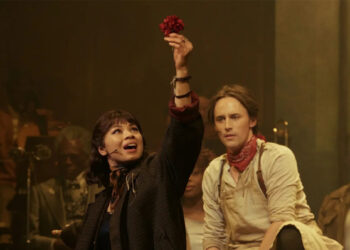
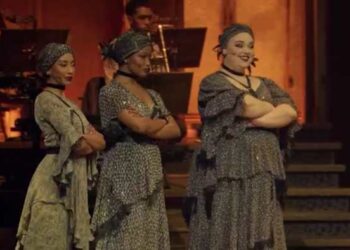
Re-enactments using actors are restrained and succeed in bringing the stories to life: the hopelessly weak emperor Honorius hastening Rome’s fall, the 17-year-old son of Cleopatra being chased through the streets by assassins following the death of his mother, the meeting between Hernan Cortes and Moctezuma, the last stand of the samurai at the Battle of Shiroyama.
These stories are engrossing, and don’t need the forced attempts to make the history seem achingly relevant.
Civilisations: Rise and Fall is on BBC Two on Monday 24 November at 9pm and is available now on BBC iPlayer
‘ The preceding article may include information circulated by third parties ’
‘ Some details of this article were extracted from the following source www.yahoo.com ’