This story originally appeared in the Asbury Park Press on Oct. 6, 1985.
The business of Bruce Springsteen spawns more dollars than just record and tape sales and concert tickets.
To a company in San Franciso called Winterland Productions, the name, the face and the body of Bruce spell $15 million in memorabilia sales from the two-month American leg of his “Born in the U.S.A.” world tour, which closed last week.
Springsteen fans spend an average $8 on merchandise at each concert, choosing from among $22 sweatshirts, $16 baseball jerseys, $13 T-shirts and $8 programs, buttons and posters.
Winterland has exclusive rights to the rock star’s name, logo and image. In exchange for that exclusivity, Springsteen got an up-front advance for the right to market his group’s merchandise, and he earns a sales royalty on every item sold. Advances are based on a negotiated artist’s royalty, which industry sources say is usually 25 percent to 35 percent of gross sales.
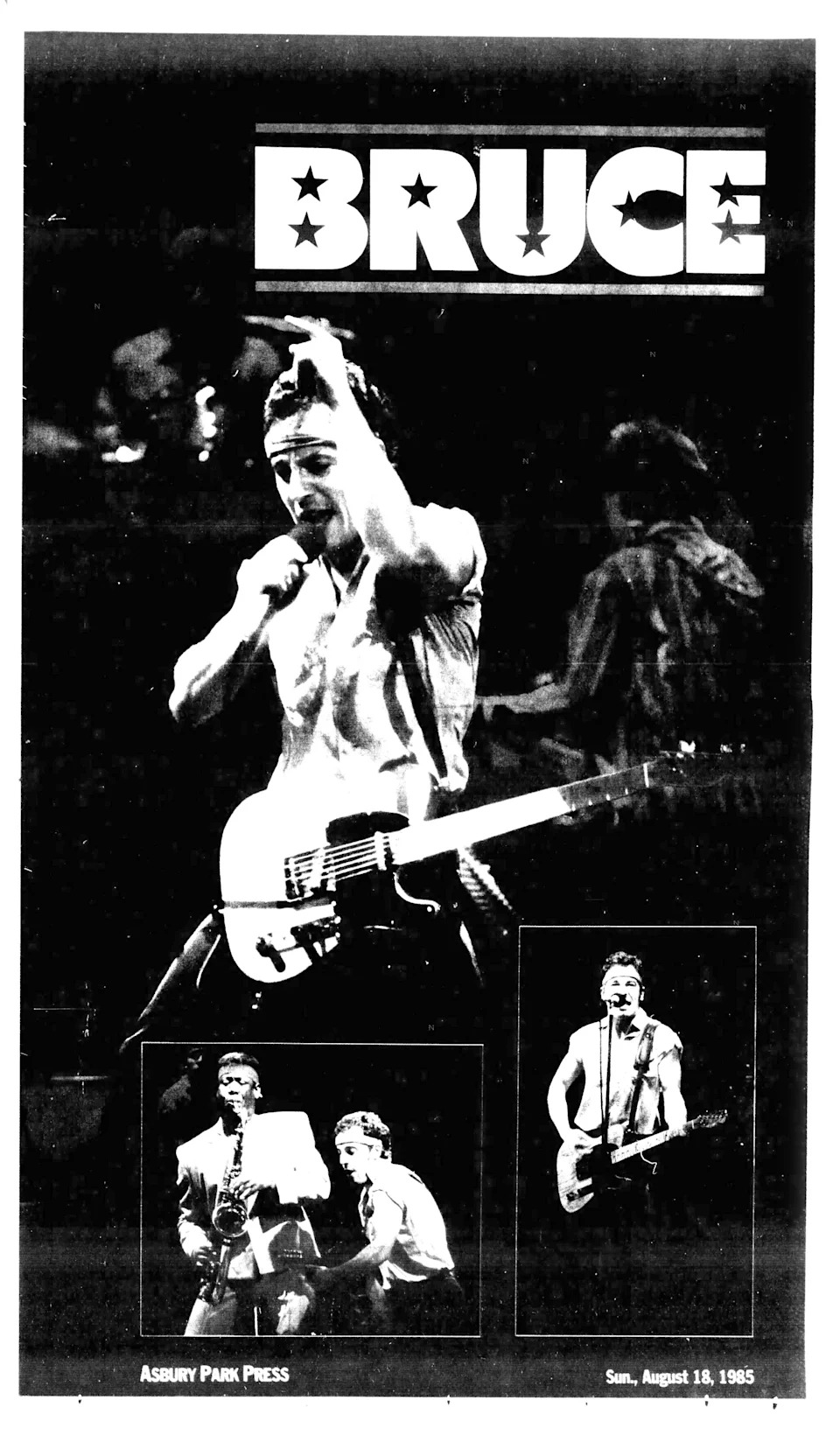
The Asbury Park Press published a special Bruce Springsteen section on August 18, 1985.
“Springsteen’s tour is unquestionably the single largest merchandise grossing tour in the history of rock n’ roll,” said Winterland’s executive vice president and chief operating officer Donald Hunt. He projects it will put Winterland’s sales for the year ending next June in the range of $70 million, compared with $40 million last year.
Although Springsteen is now the company’s best seller, Winterland has been a concessionaire to rock stars for more than a decade. The company was launched in 1974 when founder Dell Furano set up a card table at the now-defunct Winterland Arena in San Francisco. At the first concert, featuring the Grateful Dead, about a dozen T-shirts were sold.
Today, Winterland is big business, with 250 employees and a client roster that includes Chicago, Bob Dylan, the Grateful Dead, Hall & Oates, Jefferson Starship, Madonna, Tina Turner and Sting.
Hunt joined the business in 1977 to manage the financial and operations sides of the business, while Furano concentrated on making deals.
Furano and Hunt then took over the T-shirt printing business that had been done by subcontractors. The move improved quality control and profit margins, and allowed Winterland to grow beyond its rock n’ roll roots. Corporate accounts include Apple Computer, Levi Strauss and Bank of America.
As rock stage acts grew more lavish, banks became increasingly dependent on advance merchandise royalties to mount their road shows. The T-shirts wind up funding the tours, Hunt explained. Jefferson Starship, for instance, receives advances of up to $250,000 for a two-month to three-month tour, and that can take care of travel expenses.
Since the larger the act, the bigger the royalties, no one gets a better deal from Winterland than client No. 1. And he’s characteristically grateful: the poster in the lobby of the company’s headquarters is autographed “To Winterland Productions – thanks so much. Bruce Springsteen.”
This article originally appeared on Asbury Park Press: Bruce Springsteen: Company thrives selling merchandise
‘ The preceding article may include information circulated by third parties ’
‘ Some details of this article were extracted from the following source www.yahoo.com ’