Like a cat bringing an unlucky bird or mouse to the doorstep, my grown children sometimes like to share news about things they find in their adventures out of doors. Luckily, their treasures are more benign than what the proverbial cat drags in.
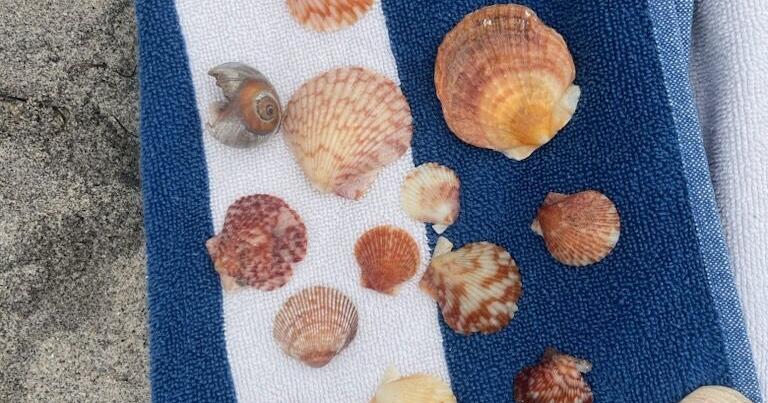
Earlier this summer, they were visiting each other in California when they decided to gather shells from the beach. A picture soon arrived on my smartphone — a lovely image of seashells lining a beach towel, creating a banner that cheered me throughout the summer.
When I flip through pictures from this anxious year, that snapshot will be a keeper.
What is it, I was moved to wonder, that drives our impulse to gather bright, shiny things? Maybe it’s the primal hunter-gatherer in our genes, a survival tool we’ve continued to carry into our comfortable modern lives.
I thought about all of this over the summer as I read the late Penelope Fitzgerald’s reminiscences about foraging for odd little treasures during her British childhood a century ago. It’s no surprise that Fitzgerald’s sharp eye for the glimmering bits and bobs of the rural English landscape would lead her to become a novelist, an occupation where a gift for the small detail can be a plus.
When the young Fitzgerald was sent out for errands, she’d find time for a little scavenging, too.
“On the way there and back, across the fields and by the roadside, I had my collecting to do,” she tells readers. “Feathers, pheasant feathers in particular, were needed for … headdresses. My brother, when he was at home, was a warrior brave, and I was Minnehaha. Then there were horseshoe nails, cast horseshoes, snail shells, beechnuts, pignuts, flints, and wayside flowers. When I got home, everything was laid out on my bedroom windowsill to be counted and recounted, one of the most reassuring activities for a small child.”
Some of us don’t outgrow the scavenging habit, and I count myself among the tribe. I live a few blocks from my office, so I often walk to work, and the things I find along the way tend to end up on a shelf above my desk as a small reminder of life’s variety.
“They’re talismans of a sort, pointing me toward a simple reality,” I confessed in a magazine essay earlier this year. “It’s the idea that the sheer plenitude of my daily walks unfolds in their inexhaustible supply of particulars: the orphaned screwdriver, the huge rubber band, even an unclaimed 20-dollar bill.”
We scavengers tend to find each other, too, which is how I ended up comparing notes with Joanna Brichetto, a Nashville author who’s written about her own windfalls from walking city streets.
They include “an extra-heavy hotel spoon sized for coffee,” she writes, “and good as new after a trip through the dishwasher.”
All the more reason, I guess, to keep walking — and keep looking.
Email Danny Heitman at [email protected].
‘ The preceding article may include information circulated by third parties ’
‘ Some details of this article were extracted from the following source www.nola.com ’