It is rare to meet someone so completely captivated by a historical figure from the past. Sardar Peter Bance is one such individual. A quiet, unassuming man with a steely determination, Bance transformed himself into a researcher and historian to uncover every possible detail of the life of Maharaja Duleep Singh (1838-1893), the last ruler of Punjab.
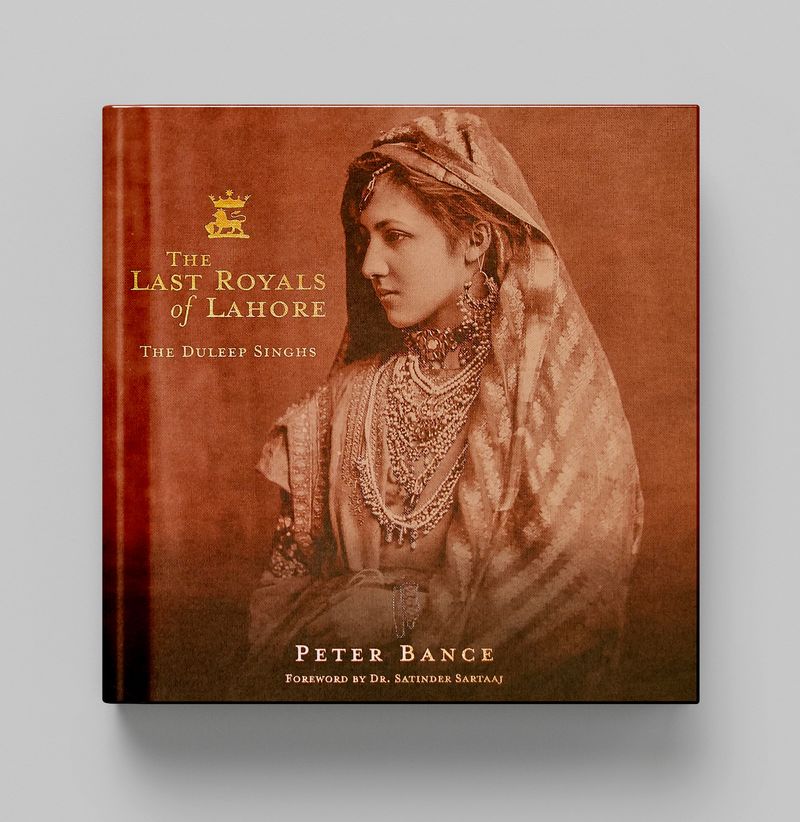
Bance’s passion extended to the family as well. His latest book, ‘The Last Royals of Lahore’, has just been released in the UK (its India release is scheduled for mid-April). “I realised that people who personally knew the family and had first-hand knowledge of their lives would soon be no more,” he said. “I felt compelled to document this important part of our history.”
Born Bhupinder Singh Bance, he was raised in the UK after his family emigrated in 1936. His first trip to India came only in 2001. “I was brought up to believe that to move forward, one must know one’s roots,” he shared.
A chance visit to a church near Elveden Hall, the estate of Maharaja Duleep Singh where he saw his grave, sparked a lifelong obsession. It led to three decades of intense research, the painstaking acquisition of several artefacts, and eventually the publication of three books on the Punjab royals. His first acclaimed book, ‘Sovereign, Squire and Rebel’ (2009), served as the basis for the 2017 British film, ‘The Black Prince’.
Bance’s relentless search for anyone who could shed light on the Maharaja or his children took him across Europe and Pakistan. “In many cases, people simply donated what they had to me because they felt I valued history and would protect their possessions,” he recalled. Much of the memorabilia he collected now forms part of the London exhibition
‘The Last Royals of Lahore’ features Princess Catherine (1871-1942) on its cover. “Why must tales of royalty always centre on men?” Bance says. “Duleep Singh’s daughters were strong, emancipated women, completely relevant to our times.”
Princess Catherine, he explains, was unconventional and insisted in her will on being buried next to her lover and governess, Lina. Known as the “Punjabi Schindler”, she rescued dozens of Jewish refugees fleeing Nazi Germany. Her younger sister, Sophia (1876-1948), fought for women’s suffrage. Princess Bamba, the eldest, returned to Lahore, her father’s birthplace, to spend her final years, passing away in 1957. “The story of the royals is relevant,” Bance said. “I’m glad I was able to retrace their histories.”
— The writer is a Delhi-based contributor
‘ The preceding article may include information circulated by third parties ’
‘ Some details of this article were extracted from the following source www.tribuneindia.com ’