When Dolly Parton’s sister urged fans to pray for the 79-year-old star in a Facebook post, we all feared the worst. The Jolene singer admits she neglected her health in the aftermath of her husband’s death in March, but seems to blame her recent woes on kidney stones, insisting: “I’m not ready to die yet”.
Kidney stones are common, with more than one in 10 people being affected, according to the NHS. It’s estimated up to half of all people who have had kidney stones will experience them again within the following five years.
Samuel Pepys, in his famous 17th-century diaries, recorded weeks of torment and “gravel” in his urine before surgeons finally cut a large stone from his bladder. His was a brutal operation performed without anaesthesia, and even with modern medicine they remain agonising.
“They’re extremely painful, enough so for them to have been traditionally likened to ‘male childbirth,’” says Dr Tom Oates, a consultant physician at the Royal London Hospital and kidney specialist. “They can lead to kidney infections or the kidney not working properly if left untreated.”
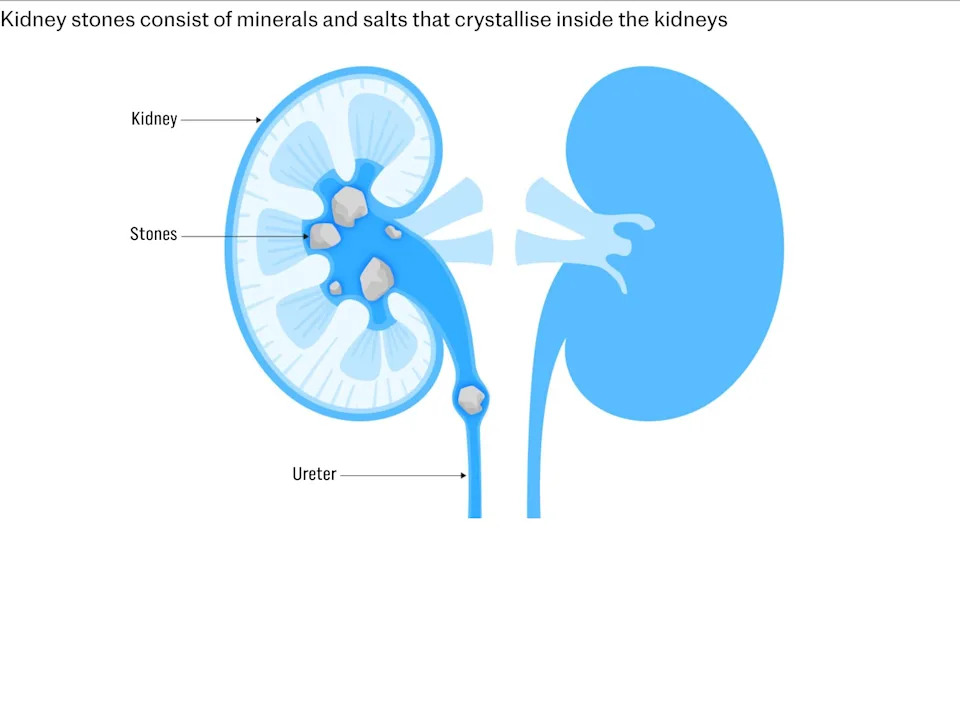
Caused by waste products in the blood, kidney stones are small and hard, consisting of minerals and salts that crystallise inside the kidneys. Once they are formed, the body tries to pass them through urination.
“Most stones are small enough to be passed in your pee, and occasionally people pass small stones or gritty crystals without realising it. They might hear a ‘chink’ in the lavatory and there it is,” says Oates.
“But large stones can lead to infections, blockages, or the need for surgery. Some stones, such as staghorn calculi, can fill the kidney’s drainage system entirely. These form due to chronic infection, and may not cause pain, but they can quietly damage the kidney over time.”
b’
1010 Kidney stones
‘
It is unclear what kind of kidney stones Parton has. And while the singer is 79, they’re not normally an affliction of old age – more commonly they are found in people aged 30 to 60.
“The classic person to present with them is a roofer or a chef, because they work in hot, high-stress environments. The combination of heat, heavy sweating and limited bathroom breaks means they’re often dehydrated and not urinating frequently enough,” says Oates.
Why kidney stones hurt so much
Pain begins when a stone dislodges and enters the ureter, the narrow tube between the kidney and bladder. As the ureter contracts to push urine downward, the stone blocks its path, causing pressure, spasm and sometimes bleeding.
“That’s why people get the classic loin-to-groin pain,” says Oates. “It’s severe and comes in waves as the ureter squeezes.”
The good news is that kidney stones are mostly preventable. Here’s how to keep them at bay.
How to avoid kidney stones
1. Drink more water
Studies show that producing at least 2.5 litres of urine a day cuts recurrence risk. Water dilutes stone-forming minerals such as calcium and oxalate. Adding lemon or citrus juices helps too: citric acid binds calcium and prevents stones.
“Try putting lemon in your tea,” Oates suggests. “It alkalises the urine – a simple way to reduce risk. And avoid Diet Coke, which contains phosphoric acid. That’s how they make it sweet without calories. And phosphoric acid gives you kidney stones.”

Water dilutes stone-forming minerals such as calcium and oxalate – Moment RF
2. Limit salt
Cutting down on salt will make your food blander, but excess sodium drives calcium into the urine, a key trigger for stone formation. According to the Urology Care Foundation, too much salt in the urine prevents calcium from being reabsorbed from the urine to the blood. This causes high urine calcium, which may lead to kidney stones. Reducing salt below 2,300mg per day can significantly cut recurrence risk. Foods notorious for being high in sodium include: processed foods, canned soups, vegetables, luncheon meat and condiments.
3. Eat less animal protein
High-protein diets increase acidity in the urine and boost calcium and uric acid levels – both linked to stone formation. A landmark New England Journal of Medicine study found that men who reduced animal protein and salt while keeping normal calcium intake had far fewer recurrences.
4. Keep normal calcium intake
Getting enough dietary calcium actually protects against stones. Calcium binds oxalate in the gut and prevents it from entering the urine. Low-fat milk, low-fat cheese and low-fat yogurt are all good calcium-rich food options. Calcium supplements, however, especially without food, can increase risk.
5. Watch oxalate-rich food
Foods such as spinach, nuts, rhubarb, coffee, peanuts, soy products and chocolate are high in oxalate. Don’t eliminate them entirely but pair them with calcium-rich foods so oxalate binds in the gut instead of the kidneys.

Pair high-oxalate foods such as spinach with calcium-rich foods so the oxalate binds in the gut instead of the kidneys – Helen Camacaro/Moment RF
6. Stay active and maintain a healthy weight
Obesity, insulin resistance and metabolic syndrome all increase kidney stone risk. Regular exercise and healthy weight help improve urine chemistry and reduce recurrence.
7. Citrate or alkali therapy
Doctors sometimes prescribe potassium citrate or other alkalinising agents for recurrent stones. These raise urinary pH and citrate levels, preventing crystals from forming.
8. Get your vitamin C through food not supplements
Supplementing with vitamin C (ascorbic acid) may cause kidney stones, especially in men. According to one 2013 study, men who took high doses of vitamin C supplements doubled their risk of forming a kidney stone. Researchers don’t believe vitamin C from food carries the same risk.
When to see a doctor
If you experience severe flank pain, blood in the urine, or recurrent urinary infections, see your GP promptly, says Oates. Treatment options include lifestyle changes, ureteroscopy (a keyhole procedure), shockwave lithotripsy (sound waves to break stones), or surgery for large stones.
“If the kidney becomes blocked and infected, that’s an emergency,” he warns. “We insert a needle through the back to drain it, and then remove the stone later.
“They’re unpleasant and painful, and some people have a family history of them,” says Oates. “But a combination of diet and lifestyle changes, as well as some medications, means there’s much we can do to prevent them.”
‘ The preceding article may include information circulated by third parties ’
‘ Some details of this article were extracted from the following source www.yahoo.com ’