EQ (2026)
Gallery / 11 images
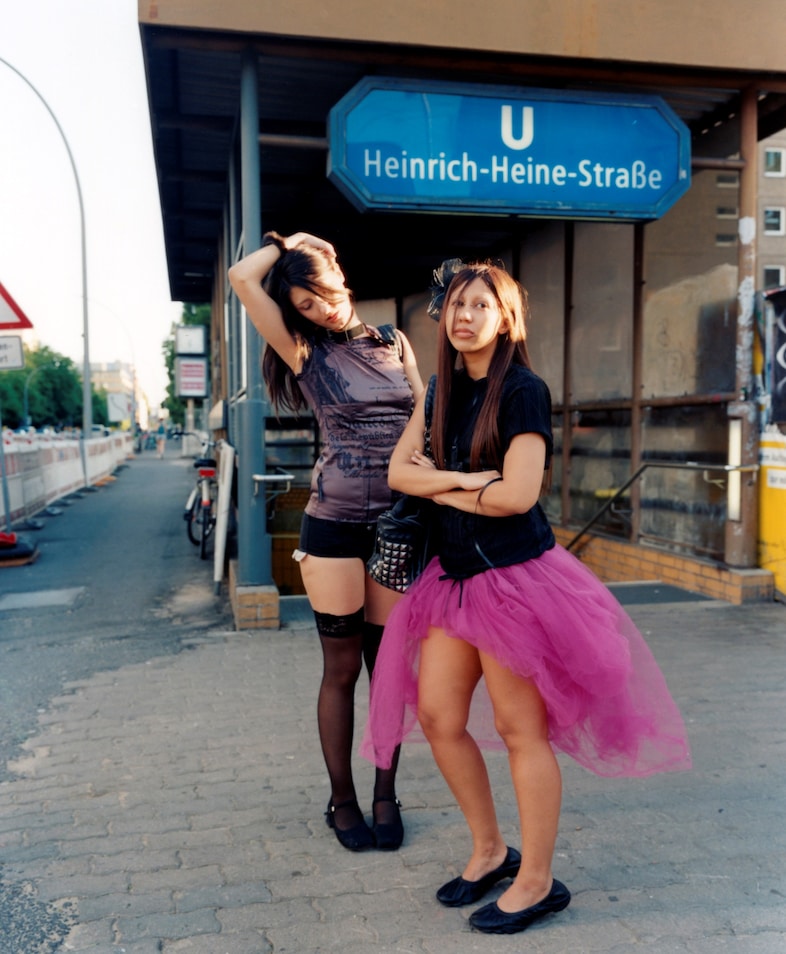
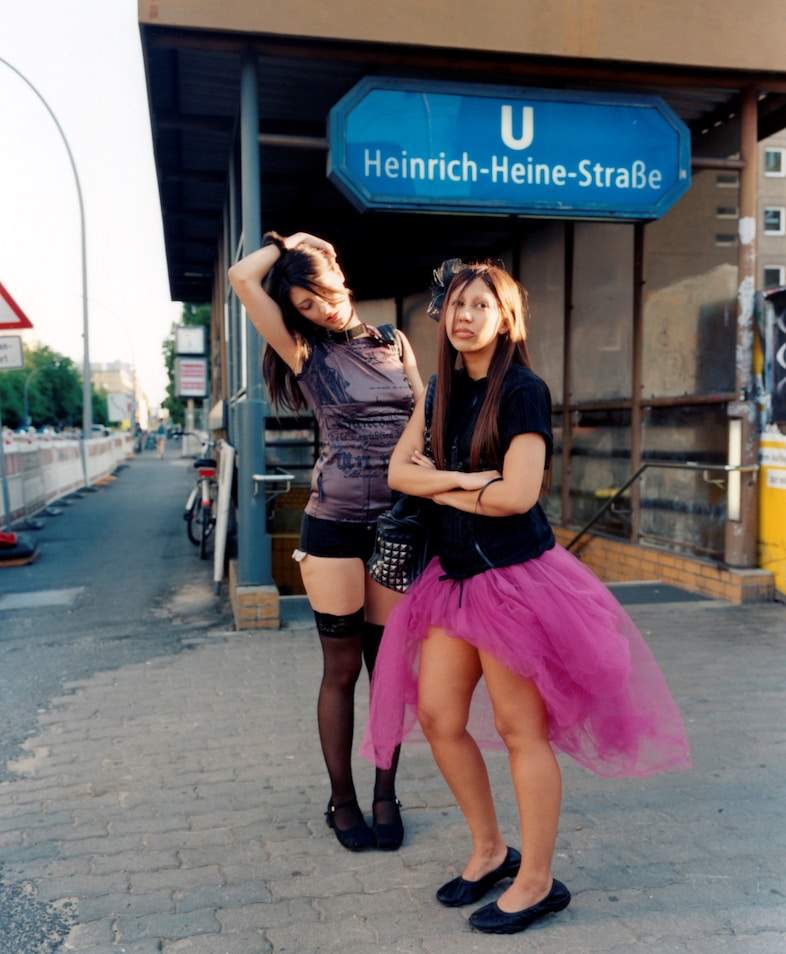
I first caught EQ midway through their debut world tour last year, when they performed at the fully sold-out and infernally hot Berlin club Oxi. The Buenos Aires duo had the dancefloor completely locked in from the first track, but it wasn’t your usual Berlin crowd. All under the age of 25, the de facto uniform was Demna-style graphic T-shirts stacked with niche references, constant vaping, and an overwhelming number of Isabel Marant Bekett sneakers. The room was filled with the particular kind of excitement that occurs when a niche local scene breaches containment.
Formed in 2024 by vocalist-producers Estratosfera and Qiri, Dazed 100 alumni EQ have rapidly become one of the most exciting acts to emerge from Argentina’s new electronic underground. Pulling from indie sleaze, reggaeton percussion, club music, alt-pop and experimental electronica, their body of work is an ode to the club and the internet at the same time. In 2024, their breakout glitch-dance single “Boytoy” went viral on Twitter for its sassy lyrics, soon followed by their debut self-titled EP and collaborations with Shygirl, Isabella Lovestory and Babymorocco.
A key part of EQ’s story is Buenos Aires-based label-collective Fractura, helmed by Bruno Lipsich and Julian Matarasso. Starting life as an underground party movement, Fractura has since become a creative hub connecting rave, hyperpop, post-punk and experimental electronic scenes in the city, and helping to create opportunities for artists operating outside traditional industry structures.
“What we saw in EQ was unmatched talent: two friends making incredible music unlike anything else happening around them at the time,” Lipsch tells Dazed of discovering the duo. “But, above all, we saw chemistry and a shared ambition – a desire to create and produce a lot of art. We think about music in the same way, and we’ve always wanted that philosophy to be reflected in what we do: diversity and innovation.”
At a time when music is increasingly flattened by algorithms and tags, EQ have built a project that feels stubbornly, almost radically, sincere. Their songs are guided by what they call “the EQ vision” – a way of refusing traditional genre categorisation and redefining their aesthetic and identity through performance. Their photoshoots, for example, combine the aesthetics of Cobrasnake-era blog photography, Juergen Teller and 2000s Playstation ads. This, combined with their equally time-warping electronic sonics, results in an artistry that feels both meticulously constructed and entirely open-hearted.
Below, EQ talk meeting Skrillex, the Argentinian underground and the importance of ‘post-genre’ dance music.
What’s EQ’s origin story?
Qiri: We became friends because we were looking for the same thing: making our own music and becoming producers. We both already had our solo careers as Estratosfera and Qiri. We realized that whenever we got together to produce and play around with music, a new side of both of us emerged – something we had never explored before. It was more aggressive, more digital, more out-there, more intense. It felt like a very particular sound that didn’t exist anywhere else.
Estratosfera: The mutual desire also came from wanting to find other female producers. A few years ago, there were very few around us. They were all men. There weren’t other girls, especially in Buenos Aires, that we could connect with the way we connected with each other.
You also grew up on the internet. Did a lot of your references come from outside Argentina too?
Qiri: We had the chance to work with Shygirl, who was definitely an inspiration from the very beginning of the project. We also worked with umru. We used his sample pack so much that at one point I said, ‘We’re banning any more of his samples.’
Estratosfera: Also Skrillex. He personally selected us for his curated stage at Lollapalooza Buenos Aires and later for his festival Contra at Kraftwerk in Berlin.
How did that connection with Skrillex happen?
Estratosfera: Whenever he travels, he researches smaller artists. He pays attention to local communities. Our friend Anita B Queen, a DJ, had opened for him a few years earlier and stayed friends with him. Someone from his team asked Anita for our contact details, and she connected us. We got a WhatsApp message saying, ‘Hi, I’m Skrillex’s manager.’
Qiri: It was one of the best nights of our lives. It’s important to us not only professionally but personally. Nothing we do would have been possible without Skrillex’s legacy. He helped refine and advance electronic music and computer-based production. I remember seeing it as something countercultural when I was a child. He changed the conversation from ‘dubstep isn’t music’ to something entirely different. I love that he still searches for cool people around the world, books them, and collaborates with them. It’s very graceful that after reaching such a high point in his career, he can set aside his ego and say, ‘Let me see what the world has to offer me.’

Who are you most excited to play with at Contra?
Estratosfera: Bladee and Ecco2k. We’re huge fans of Drain Gang. I remember thinking as a child that I’d never get to see them live, and now we’re about to perform at the same festival.
I also think Drain Gang and Sadboys were a crucial moment for a whole generation, proving that people could emerge from small internet communities and reach the world. Has that way of doing things inspired you?
Qiri: Absolutely. What inspires me is that even though they’re a collective, they’re unapologetically themselves. No shame. Completely authentic. I also admire how visually polished everything is, especially with Yung Lean and Ecco2k. Every detail is perfected to an almost obsessive degree. I want to reach that level.
Estratosfera: They were pioneers. I remember seeing my first Yung Lean video on YouTube when I was about twelve. It changed my life. Ecco2k was one of my biggest inspirations when I started making music on a computer: the fact that it wasn’t quite trap, but there was something approachable about it while still being alternative.
Our decision not to stick to a single genre is a conscious one. It’s our way of protesting the algorithm.
– Qiri, EQ
How would you define EQ as a project? Do you fit into a genre, or do you go against genres?
Estratosfera: Our influences are extremely varied, both collectively and individually. It’s difficult for us to commit to just one thing, and honestly we’re not interested in doing that. From the very first EP, you can hear our desire to explore different subgenres of electronic music.
Qiri: I support the label of ‘post-genre’. Our decision not to stick to a single genre is a conscious one. It’s our way of protesting the algorithm. Going against things like ‘the electroclash playlist’, ‘the electronic playlist’, ‘the pop-for-girls playlist’. We’re resisting the idea of everything becoming a numbers game driven by metrics. We don’t want to participate in that.
I associate you strongly with club culture. What’s your relationship with nightlife?
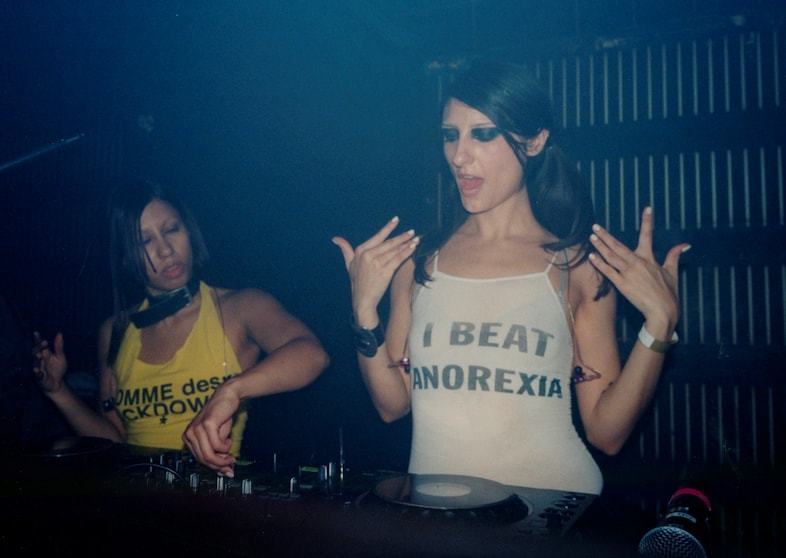
Qiri: Certain aspects of club culture have inspired us enormously. That’s why we’re in a very club-oriented era right now, and why this tour is very club-focused and very nocturnal. We used to do a lot of DJ sets to test material. Now that we’ve released the EP, we’re interested in exploring other settings. We’re interested in taking ourselves out of the club. But honestly, it doesn’t matter where I play. There’s nothing better than a tiny, packed venue where no one else can fit inside and everyone is sweating and singing along.
How important is nightlife in your creative process?
Qiri: I’m a voyeur of the night. I enjoy chaos. I like watching how people behave. I like watching people when they’re completely out of themselves. I find it entertaining, being in the eye of the hurricane. I like chaos around me because I’m actually a very neurotic person who’s constantly trapped inside my own head, and being in a club helps me get out of that and connect with other people. I often look at people in clubs and think: I wish people were like this all the time. Less ashamed.
What kind of people connect with EQ most quickly? Who really understands the project?
Estratosfera: The gays. Honestly, every time we play there are five twinks in the front row.
What would you like people to feel through EQ?
Qiri: I want people to connect more with their desires and their senses. I want to find rhythms that make you want to dance without being digital or technological. More organic things. More communal things. There’s a desire to make people genuinely feel something. I’d like them to feel that we opened our hearts to them. There are parts of this show, especially in the performance, that are very intimate for us.
Estratosfera: The goal is always to break the fourth wall. To wake people up. Especially now, when there are so many things created for the market, created to sell – factory-made products without souls. Whatever message you’re trying to communicate, what needs to come through is the honesty of the artist’s voice so that whoever listens can understand it.
‘ The preceding article may include information circulated by third parties ’
‘ Some details of this article were extracted from the following source www.dazeddigital.com ’