In an age before astronauts were launched to the moon, my mom had a simple explanation for some thrill riders aiming toward the stars. “Crazy people,” she would say, “crazy people.” That probably summed up the sentiment of most others seeing the sights along the Lake Pontchartrain waterfront.
Before universal air conditioning, taking a ride along the lake was a thing to do on summer evenings — especially in the post-World War II era of new cars on the road and new kids in the backseat. (To sweeten the journey, we always stopped at a Lakefront watermelon stand where the melon was sold by the slice. Now grocery stores have taken over as the purveyors, selling the melons pre-chunked and packed in plastic containers.)
After the melon break, the ride would sometimes be slowed by the traffic of others also escaping the heat. Along the way, there were visual attractions, including the lake, whose pounding waves could be heard on the other side of the concrete seawall steps where people sat while crabbing, fishing, hugging or just being.
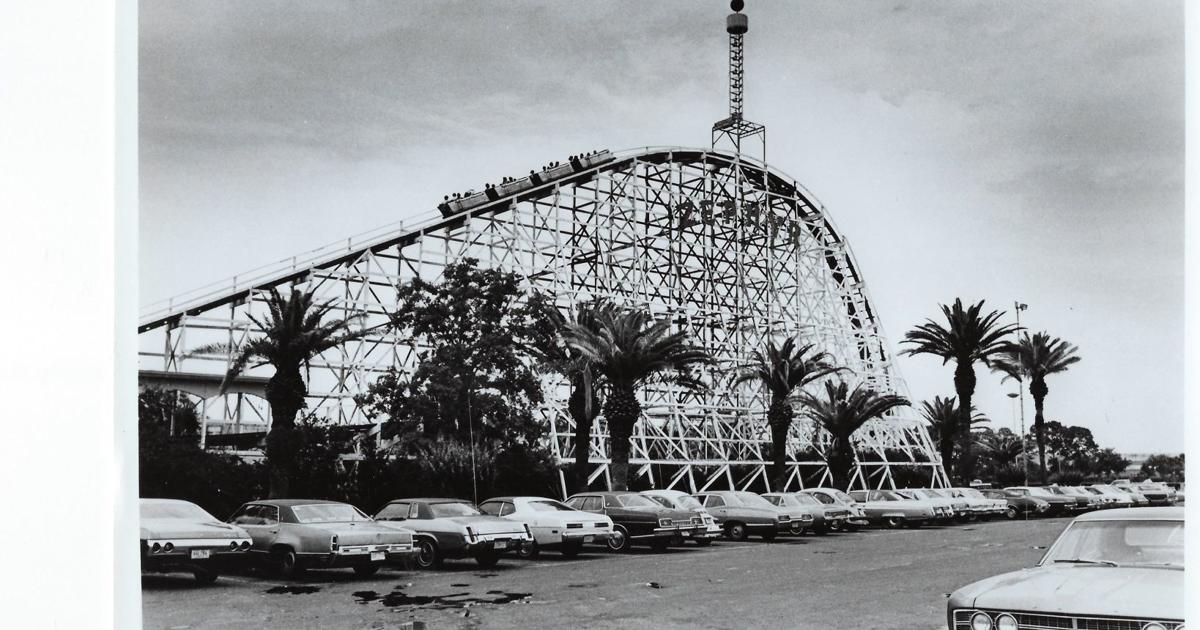
By far the biggest attraction lay ahead, and that was the Pontchartrain Beach Amusement Park, which dazzled with lights at night. Nothing there was more awe-inspiring than the sprawling, white, wooden lattice structure supporting the high-speed roller coaster that climbed and dipped on its wooden hills.
This photo in the July 27, 1969, edition of Dixie Magazine shows the roller coaster at Pontchartrain Beach, which was constructed of longleaf yellow pine because of the need for resiliency.
In the 1930s, the seawall had been built along the lake’s southern edge. That allowed for ambitious development projects, including a scenic Lakeshore Drive, a military base, new neighborhoods and even a plant where boat builder Andrew Higgins developed Army landing crafts. In test runs, the lake even played a role on the Normandy beachfront. (We didn’t know that we were driving through history. President Dwight Eisenhower would later say that it was the Higgins landing crafts, used to bring troops to the battlefields, that won the war for the Allies.)
Harry Batt Sr., a local businessman with a passion for theatrics, had opened an amusement park inland along Bayou St. John. By 1939, he had moved his park to the lakeshore near Elysian Fields Avenue. There would be a pool, arcades, restaurants, a stage for outdoor shows, a sandy beach and amusement rides.
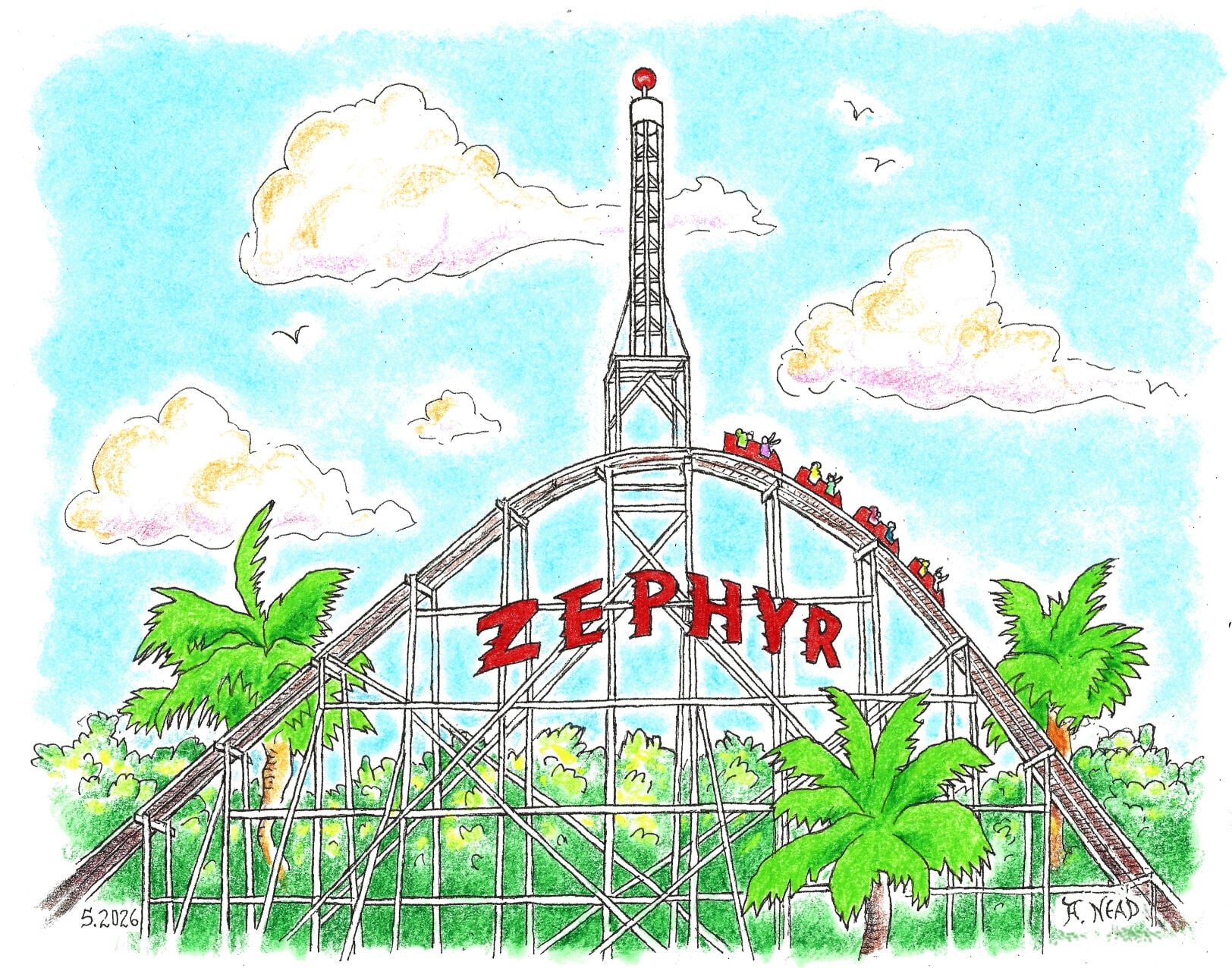
The most visual attraction was the roller coaster known as the “Big Zephyr.”
At a time when rocket scientists were developing fuel systems for spaceships, roller coaster scientists had already created a two-part system for their ride’s propulsion — chains and gravity. The chains provided for ascending the wooden hills, and the gravity caused the plunge, which powered the coaster down the track and through three scream-inducing tunnels.
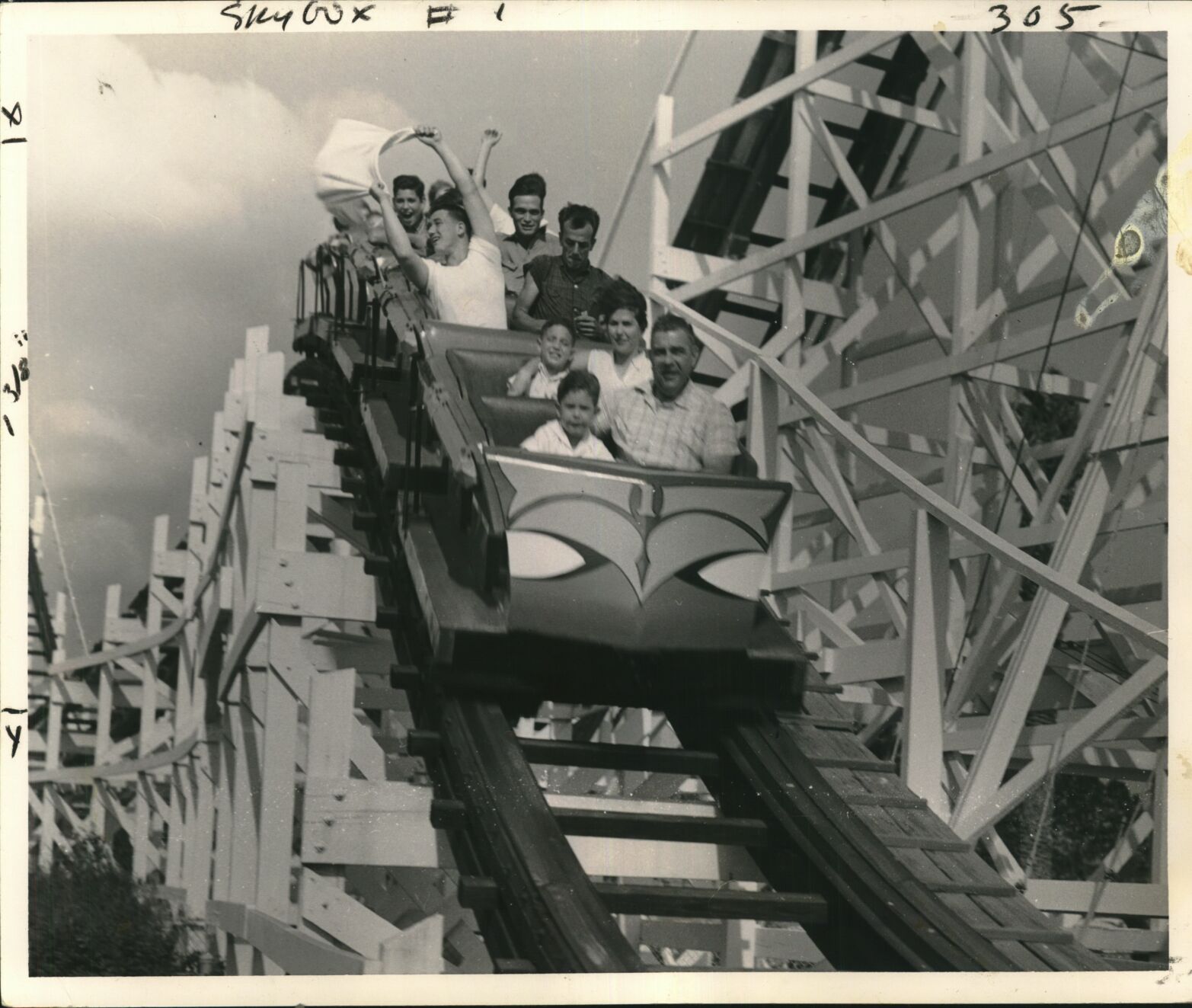
The Zephyr at Pontchartrain Beach
Most feared, or anticipated, was the climb up the big hill toward the stars, ascending to a celestial 80 feet (about 8 stories) and then making a slow and anxiety-filled turn downward before speeding back to Earth. After a big curve, home base reappeared. As the brakes screeched, there was a quick glimpse of the lake in the distance. Alongside, palm trees waved as if welcoming the travelers home.
During the speedy descent, riders would habitually yell and flail their arms to cope with gravity. Those screams, and the accompanying swaying extremities, could be noticed by the passengers at ground level creeping along the periphery in their automobiles.
Perhaps that is what prompted my mother’s verdict of “crazy people,” though it could have been only temporary insanity.

The Zephyr roller coaster ride at Pontchartrain Beach in 1969.
In 1983, the Batt family announced the amusement park would close at the end of the season. Times had changed for the classic, old-time amusement parks. Glitzy theme parks (pioneered by Walt Disney and Six Flags) were the new model.
Attendance was declining nationwide, plus the land was increasing in value as cities developed around the parks. Also, unique to the New Orleans situation, was that the World’s Fair would open the next year. That would be hard to compete with.
On Labor Day 1983, Pontchartrain Beach had its last day — sort of. The beach would actually have two last days.
The next day, an event called “The Last Ride” was held as a fundraiser for the Contemporary Arts Center. The day was described as “beautiful, breezy and sunny.” Over 12,000 people attended.
Most importantly, the event provided a last chance to ride the Zephyr, although at times hundreds of people were in line for the opportunity. There would be music and fireworks, and then at 11:30 p.m., the Zephyr’s official last ride was followed by a jazz funeral.
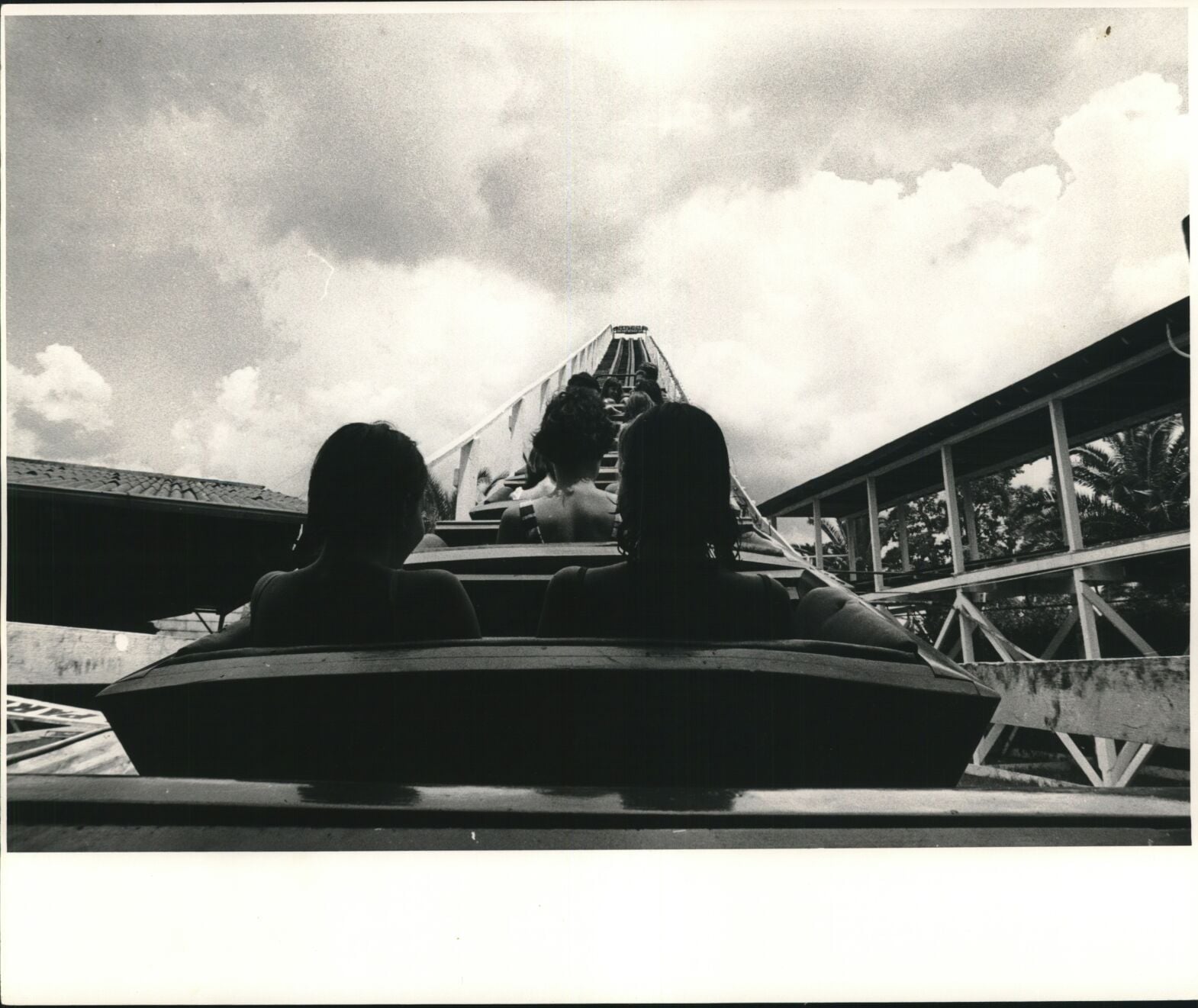
Tourists ride the roller coaster at Pontchartrain Beach.
At 7:30 the next morning, an engineering battalion from the National Guard began dismantling the park, according to Avenue Magazine.
There were many other attractions spread throughout the beach. My favorite was the bumper cars, which provided some adventure but were also timid-friendly. My favorite sensory appeal along the midway was the smell of burgers fried with onions. On some nights, that was complemented by the salty sea breeze.
There were a couple of other thrill rides. One was the Ragin’ Cajun, which twisted upside down during its speedy run. There was the Wild Maus, a German-made ride that charged along to the edge of the track, then made a last-minute turn, launching its passengers into the distant downtown skyline.
In 1993, a decade after the amusement park closed, New Orleans got a minor league baseball team that had moved from Denver. Named after the winds in Colorado’s Rocky Mountains, the team was called The Zephyrs. It played at the University of New Orleans baseball field, which happened to be across the street from the former beach site.
Inevitably, locals thought the team was named after the roller coaster. Eventually, the team relocated to Wichita, Kansas, where it was renamed the Wind Surge; one of the worst names in sports, second only to a name change given to our Zephyrs, The Baby Cakes.
Perhaps for fear of having my sanity questioned, especially by my mom, I never did ride the Zephyr until that closing month when I knew it was now or never. Like all its passengers during its 44 years, I was apprehensive as the roller coaster made its climb up the big hill, then the pause at the top, and finally its downward charge.
I did not raise my arms, but I probably screamed; everyone else did. After a few thrills and abrupt turns, there was a flashing glimpse of the lake and then the screeching halt. For a moment, I sat there stunned.
More than a ride, I had gone through a rite of passage: finally riding the hometown roller coaster. And it was actually fun! I wondered if I could do it again, but it was closing time.
Maybe all those decades of screaming, arm-waving people weren’t so crazy after all.
It’s Memorial Day weekend, the informal start of summer. For years, that was the cue for som…
For countless New Orleanians, Memory Lane cuts right through the old Pontchartrain Beach amu…
The Zephyr has been gone from New Orleans’ entertainment scene for nearly 31 years, leaving …
‘ The preceding article may include information circulated by third parties ’
‘ Some details of this article were extracted from the following source www.nola.com ’