When I was a kid I thought “Do It Again” was a sequel to “Hit the Road, Jack.” They were both about Jack, after all.
Whether Jack stayed or left must have been a big deal if it warranted two songs.
It turns out I had the right idea, but the wrong song.
“Answer records” are responses to other popular songs, and they fall into two basic categories: rhetorical, presenting a philosophy; and narrative, giving voice to minor characters, usually a wife or girlfriend.
Sometimes musicians answered their own songs. Harry Chapin’s “Sequel” from 1980 was an answer to his 1972 hit “Taxi,” and about the same characters. That’s different from Ann LeSears’ song “Take Him Back (Taxi)” from 1984, which was a response to J. Blackfoot’s R&B song “Taxi” from the year before. Confused?
Honestly, most answer records aren’t worth listening to. They were made to exploit hit singles, and very few equal the originals they copied. Those that surpassed the original in quality — like The Beach Boys’ “Don’t Worry, Baby” — are rare indeed.
Here are 10 answer records worth listening to —the good, the bad and the thought-provoking.
10. “Honey (I Miss You Too)” (1968) Margaret Lewis
Bobby Goldsboro’s loss of his mentally disabled wife is told from her perspective, looking down from heaven, apparently. Unfortunately, she says the same things he does: the snow, the puppy, crying over everything.
My mother hated “Honey,” and would change the station when it came on. Honey didn’t have a personality of her own, she’d say. I guess she was right. Goldsboro didn’t mention Honey could sing, though. Worth a listen for Lewis’ silky voice.
9. “Dawn of Correction” (1965) The Spokesmen
My father didn’t like Barry McGuire’s peacenik ballad “Eve of Destruction,” but he never heard this constipated CIA response. Nuclear deterrence good, peace bad. Did teens ever dance to this?
8. “Play it All Night Long” (1980) Warren Zevon
Zevon’s clever answer to Lynyrd Skynyrd’s “Sweet Home Alabama” (1976) — itself a response to Neil Young’s “Southern Man” (1970) and “Alabama” (1972) — defines the term ‘acidic.’ Did Warren ever hate the south. Yikes.
Laurel Canyon liberals, 3; southern good ole’ boys, 1.
7. “Superstar” (1984) Lydia Murdock
Not the Carpenters song, which was really a Bonnie Bramlett song. No, this is the answer to “Billie Jean” from her point of view, and apparently Michael does owe her child support. The only paternity suit you can dance to.
6. “Mannish Boy” (1955) Muddy Waters
Muddy’s blues standard is so famous it was parodied as “Hoochie Koochie Man” in director Allan Arkush’s “Last Waltz” spoof, “Get Crazy” (1983). What most listeners don’t know is that it’s an insult of Bo Diddley’s “I’m a Man” from earlier that year.
5. “Clothes Line Saga” (1967) Bob Dylan & The Band
Rock critic Greil Marcus called this a sly answer to Bobbie Gentry’s “Ode to Billie Joe” in his 1997 book “That Old Weird America.” It’s more like a variation on the same theme: Stupid is bad enough, but stupid and selfish is the worst.
It’s subtle and humorous, which cannot be said for “Mystery of Tallahatchie Bridge” (1969) by Rodd Keith, aka Rodney Eskelin. I would change my name, too.
4. “Come Back, Jack” (1961) Nina Simone
The true sequel to “Hit the Road, Jack” written by pros Mort Shuman and Leon Carr, and performed by the queen of sultry piano blues.
3. “Major Tom Coming Home” (1984) Peter Schilling
Schilling, who’s German, waited 15 years to answer Bowie’s “Space Oddity.” Here, Major Tom either fixes his capsule or broadcasts the final moments of his decaying orbit. Either way, he’s coming home. This is musical fan fiction that’s as haunting as the original.
2. “Run From Me” (2014) Timber Timbre
This creepy murder ballad sounds like an answer to Roy Orbison’s “Running Scared” (1961) from the perspective of the cuckolded husband. It’s not explicit, but it’s there. The first time I heard this I thought it was an old folk tune by the Rooftop Singers. Hard to forget.
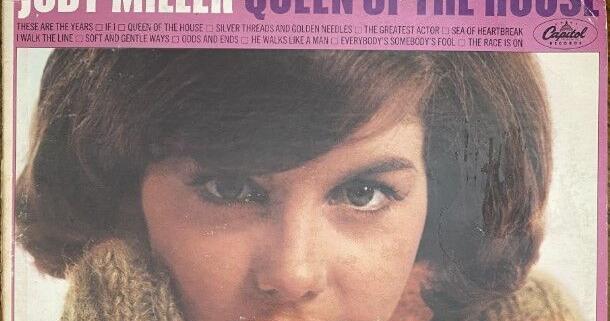
1. “Queen of the House” (1965) Jody Miller Clever sound-alike to Roger Miller’s “King of the Road” asserts Jody wears the pants when the king’s not home. That’s strange, since his song is about a train-hopping hobo.
I guess she always wears the pants since he abandoned his wife and kids.
“Queen” won a Grammy, and probably influenced Glen Campbell’s similar hit, “Dreams of the Everyday Housewife” (1968). Roger Miller actually suggested Jody Miller, known as “the little girl with the big voice,” for the tune, when songwriter Mary Taylor played it for him. The two Millers weren’t married, although having the same surname didn’t hurt sales.
Brian Hess
‘ The preceding article may include information circulated by third parties ’
‘ Some details of this article were extracted from the following source www.journal-news.com ’