For a couple so famously vigilant about privacy, it is an extraordinary lapse.
Over the weekend, Prince Harry and Meghan Markle briefly posted a video to social media showing the clearly visible—if blurry—faces of their children, Prince Archie and Princess Lilibet, for the first time since they were infants.
The clip, showing Meghan on what appeared to be a wholesome autumnal outing to a California pumpkin patch, went viral after eagle-eyed followers and journalists noticed that both children’s faces were clearly visible in the background.
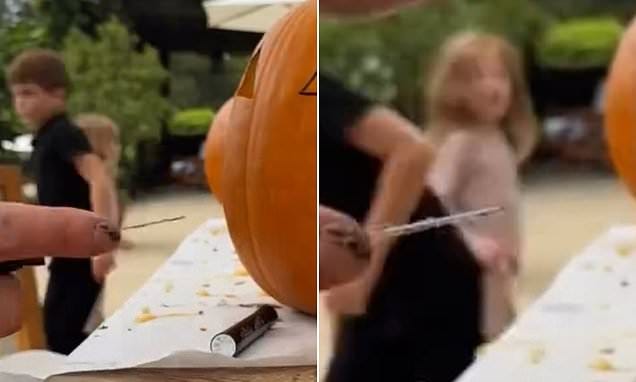
But within hours, the footage was scrubbed, a source confirmed to The Royalist.
The Sussex social media operation—usually cautious to the point of paranoia when it comes to images of the children—moved at lightning speed to delete the entire second half of the video.
But by then the damage was done. Dozens of screenshots circulated on X and TikTok before the takedown was complete, leaving Meghan’s communications team scrambling to contain a pumpkin patch privacy fiasco.
“It’s all a bit too convenient,” one cynical publicist told The Royalist. “The clip gets attention, the internet explodes, and suddenly Meghan’s brand rollout is on everyone’s radar.”
For years, Harry and Meghan have maintained a blank space around their children’s faces, allowing only carefully curated, back-of-the-head glimpses in documentaries and family Christmas cards.
But, if you genuinely wish to keep your children out of the public eye, why include them in any promotional material at all, some might say.
The Sussexes’ digital output is famously controlled—every frame reviewed, every caption weighed. This was not a paparazzi ambush but a self-produced, self-edited video. The notion that their children’s faces could appear by accident will strain credulity for some.
The question that hangs over the Sussex operation is less about how the slip happened than what it reveals. If privacy is paramount, it is reasonable to ask why their parents are posting images of Archie and Lilibet online in public forums.
The episode will reignite a larger debate about the couple’s uneasy relationship with fame, privacy, and the commercial exploitation of their own story.
It also underscores a contradiction at the heart of the Sussex project. Meghan and Harry have made digital responsibility and child protection online one of their signature causes. They have denounced the “toxic effects” of social media on young minds and spoken movingly about the pressures it creates. Yet they remain active participants in the same ecosystem—courting engagement, curating content, and, inevitably, monetizing the clicks that come with it.
The couple’s Netflix projects, Spotify deals, and brand collaborations depend on maintaining visibility, even as their public rhetoric insists on distance. Their children, living private lives in a gated enclave above the Pacific, have become both the symbol of that boundary and, increasingly, its weak point.
This is not the first time the Sussexes have flirted with visibility. The Harry & Meghan Netflix series included partial glimpses of Archie and Lilibet, and over the years, they have been revealed in degrees.
But the human mind fills in blanks. Followers have pieced together those fragments into an almost complete portrait. The result is that the children’s appearance is no mystery.
Saturday’s mishap sharpens that paradox. Meghan’s defenders see a mother trying to define the terms of her children’s visibility in an age of digital exposure; her detractors see a savvy marketer manipulating that same visibility to stoke curiosity and engagement.
Both can be true at the same time, of course.
What’s harder to deny is that the couple’s approach to privacy—like much of their post-royal life—has become a kind of performance in itself.
Part of the issue is authenticity, that elusive quality on which all personal brands rise or fall. Meghan’s critics have long argued that her image is too manicured, too self-conscious to feel genuine. Whether it’s the jam tongs used the wrong way, the photo ops with bees when she says she hates honey, or the overall, relentlessly burnished lifestyle aesthetic, there is always the faint whiff of stage management. Against that backdrop, the notion that the children’s faces slipped out “by mistake” is, at best, difficult to sell.
The stakes are higher than they may appear.
For Meghan, whose business launches depend on social media reach, the balance between privacy and publicity is not just a moral question but a commercial one.
And for Harry, who has staked much of his credibility on the idea that he escaped the monarchy’s dehumanizing media glare, each self-violation of his family’s privacy cuts against his carefully cultivated image of principled distance.
‘ The preceding article may include information circulated by third parties ’
‘ Some details of this article were extracted from the following source theroyalist.substack.com ’