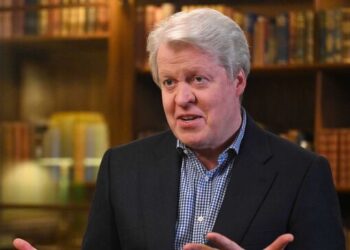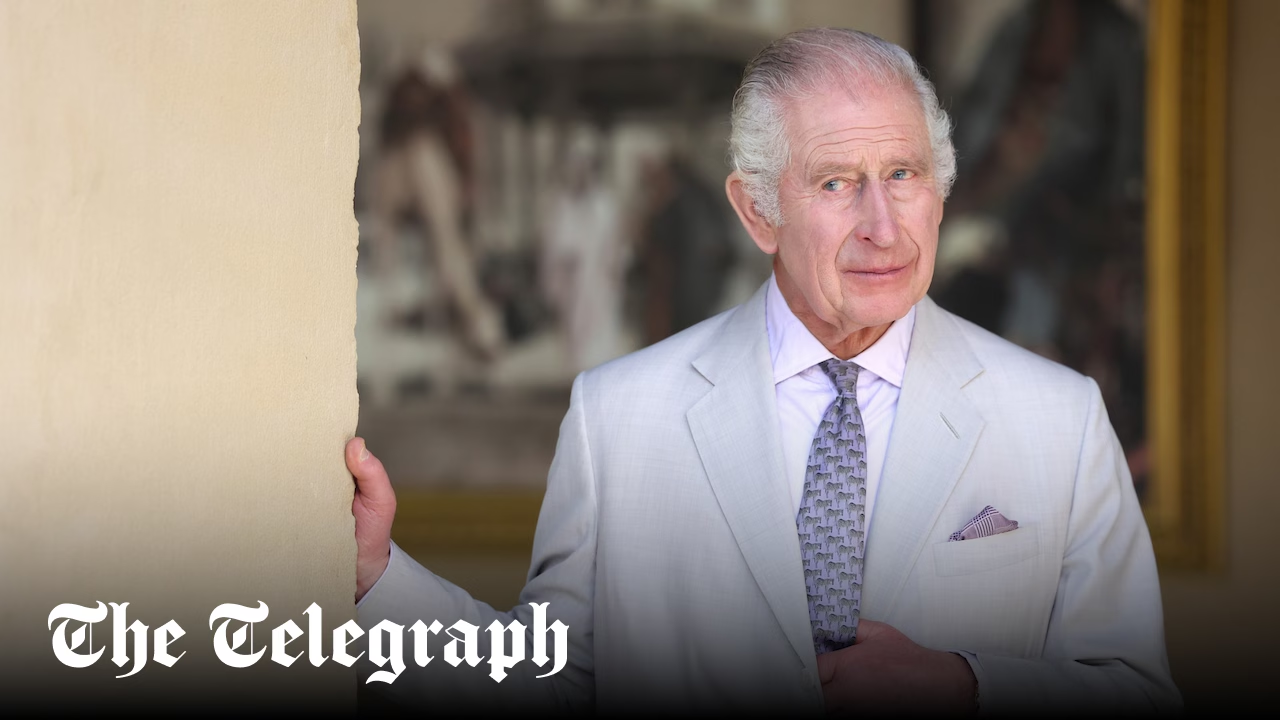
For Lord Darroch of Kew, former British ambassador to the US, the King’s diplomatic and hosting skills had added to its overall success.
“State visits may look anachronistic but the reality is they’re one of the most effective things we can do in the soft power area,” he says. “There’s no doubt the King has different views [to Trump] but, as we have seen on occasions like this many times, he is a very accomplished diplomat.
“He just knows how to do it.”
Sovereign
There was a time when Charles was spoken of as a “caretaker” King – a phrase his allies have always bristled at. He would fill the gap, it was thought, between the beloved and long-serving Queen Elizabeth II and a younger, vigorous King William V and his glamorous wife.
It is now clear he is doing a great deal more than that.
As Tina Brown, the former Vanity Fair editor and biographer of Diana, Princess of Wales, wrote recently: “As the British public waits for Prince William to walk through destiny’s door, the most that was expected from the transitional reign of his septuagenarian father was, in Churchill’s phrase, to just ‘keep buggering on’. And yet, Charles’s first few years as monarch have been something of a quiet triumph.”
The successes are easy to list.
The King has charmed post-Brexit Europe by addressing parliaments there in their native language, rehearsing diligently to get his French, German and Italian accents up to speed.
In May he jetted to Canada for less than 24 hours (he is, lest we forget, the King of Canada) to attend the State Opening of Parliament. It sent a message to America, in not so many words, that Canada was a sovereign nation they should stop threatening to invade.
Trump has been “very quiet” about it since, notes one British diplomat.
Charles has burnished his own diplomatic credentials with support for Ukraine, hosting President Zelenskyy for tea at Sandringham in March, shortly after Zelenskyy’s bruising encounter at the White House.
‘ The preceding article may include information circulated by third parties ’
‘ Some details of this article were extracted from the following source www.telegraph.co.uk ’