Assemble’s first big hit was a point-and-click adventure game. In a market often dominated by live-service games, roguelikes and viral hits, how do you evaluate games today and how can narrative games stay commercially viable?
Maria Zubova: Let me be honest: marketing narrative-driven games in 2026 is hard. At least, that has been our experience.
There are the obvious challenges: standing out visually, delivering a satisfying ending and meeting player expectations. But there are also very practical production challenges, especially localization. If you are working on a game with 100,000+ words and you want to support five to ten languages, localization becomes a major investment and a real business risk.
That does not mean narrative games cannot work. Roadwarden is a great example from our own catalogue. It is an illustrated text-based RPG with visual novel mechanics, which on paper sounds like a very niche product. But it became a major commercial success for us, received fantastic press reviews and earned a lot of praise from players. It was also awarded PC Game of the Year 2022 by EDGE Magazine and appeared in EDGE’s overall Top 10 Games of 2022 alongside titles like Elden Ring, Immortality, Pentiment and Neon White.
So the lesson for us is not that narrative games are impossible. The lesson is that they need a very clear identity, a strong audience fit and a realistic production scope. Roadwarden worked because it knew exactly what it was and who it was for.
When we evaluate games today, we try not to look at them through only one lens. Every member of our publishing team looks at potential signings from a different angle: the business angle, the emotional angle, the production angle and the expertise angle. We try to consider all of them.
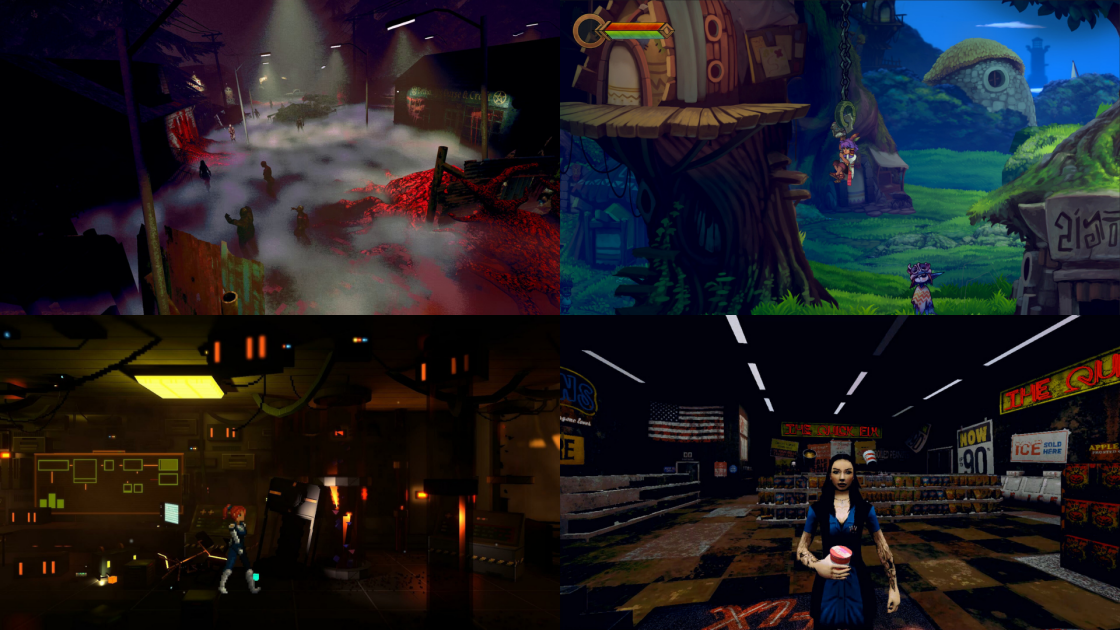
Assemble has never really been locked into one genre. We have had successes with adventure games like the Leisure Suit Larry sequels, city-builders like Endzone – A World Apart and narrative games like Roadwarden. That variety is very much part of our identity. If you wanted to label us, you could probably call us a variety indie games publisher.
Right now, we are especially interested in replayable and viral-friendly genres, particularly roguelike-inspired games. But that does not mean we have closed the door on narrative games, adventure games, city-builders, or anything else. We deeply value the narrative games in our catalogue and we would never want to discourage developers from telling meaningful stories.
Maybe we sign another narrative game tomorrow. Or a new city-builder. Nothing is ever completely certain in this industry and honestly, that is part of what makes it exciting.
‘ The preceding article may include information circulated by third parties ’
‘ Some details of this article were extracted from the following source 80.lv ’