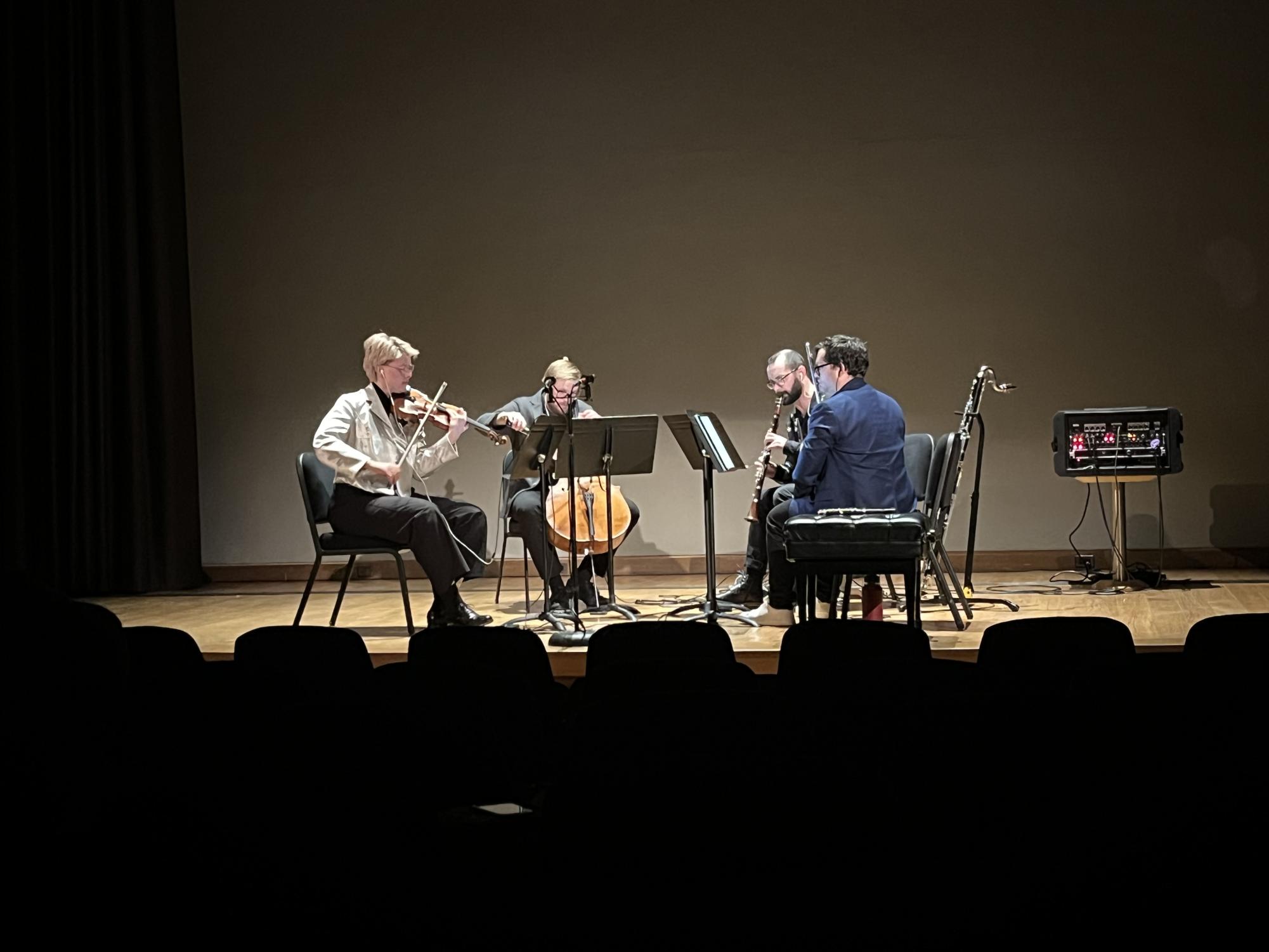
Last Saturday, listeners at The Clark Art Institute momentarily left the stratosphere. Contemporary music quartet Hub New Music performed composer Daniel Wohl’s “Mirage” for the first time. Inspired by the culture around UFO sightings, the 25-minute long piece blended both electronic and acoustic sounds, creating a sonic atmosphere suspended between Earth and space.
According to Wohl, “Mirage” was born out of a collaboration between himself and the quartet following their shared residency at the I-Park Foundation, Inc., an artist-in-residence program in rural Connecticut. There, they were able to workshop the piece before doing a work-in-progress showing at Roulette Intermedium, a performing arts venue in Brooklyn, N.Y. The group continued working on “Mirage” over the course of two years and performed the finalized version for the first time on Saturday.
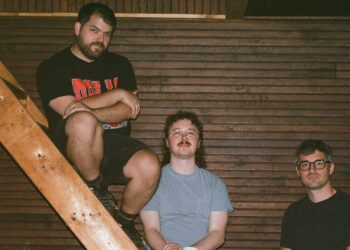
Founded in 2013, Detroit-based Hub New Music features flautist Michael Avitabile, clarinet player Gleb Kanasevich, violinist Magnolia Rohrer, and cellist Jesse Christeson.
This collection of instruments is somewhat unusual for a quartet, according to Avitabile. Most quartets consist of either string or wind instruments and tend not to combine the two. Because of their unique instrument combination, most of Hub’s music, including “Mirage,” is created specifically for the group by composers on commission. “We just love the [combination of the] four of us because we get to explore so many kinds of different sounds, like what we made on stage,” Avitable said in an interview with the Record. “Also, traditionally, [wind and string instruments create] really colorful instrumentation. It’s like a little mini orchestra.”
In the early stages of composing “Mirage,” Wohl asked the ensemble members to send him sounds that they would describe as “otherworldly.”
“Those recordings became part of both the electronic element and my compositional thinking,” he wrote in an email to the Record. “So in a way, the piece has the ensemble’s imagination baked into it from the very beginning.”
During the composition process, the ensemble utilized different techniques to create space-like sounds with their instruments. “We were really getting into, how do we make the violin sound like a UFO, and what kind of radio static sounds can we make?” Avitabile said. “How can we evoke all this sci-fi wonder with all the different sounds we can make on our instrument?”
At one point in the piece, Kanasevich simply blows through his clarinet without playing a note, creating a wind-like sound. At the same time, Christeson hits his bow onto the strings of his cello, creating an abrasive, percussive effect. Meanwhile, Rohrer uses a violin technique called sul ponticello, playing close to the bridge of the instrument, distorting the pitch to produce a metallic and whistle-like effect.
According to Wohl, the piece’s title reflects humankind’s natural curiosity about aliens, as it encapsulates the eerie feeling of encountering something that is real, but is not comprehensible to us. “A mirage exists in that fascinating space between what’s actually there and what we project onto it, and I think the same is true of live performance with electronics,” Wohl wrote.
In “Mirage,” Wohl and Hub New Music work together to blend acoustic and electronic noises, so the audience can’t distinguish between them. The ambiguity is intentional, Wohl said, as it conveys the way people relate to what we aren’t familiar with, such as UFOs. “There’s something out there, we can’t quite make sense of it, and so we project onto it our hopes, our fears, our deepest wishes and anxieties,” Wohl wrote.
Although “Mirage” explores the emotions associated with imagining extraterrestrial life, Wohl finds that its core message is relevant to our life on Earth.
“It’s not a heavy piece,” he wrote. “There’s a lightness to it, but underneath that is something more serious: the idea that these objects and phenomena we can’t explain are really reflections of how we feel about the universe and our place in it.”
‘ The preceding article may include information circulated by third parties ’
‘ Some details of this article were extracted from the following source williamsrecord.com ’