K-pop has taken the world by storm, captivating millions with its choreography, polished visuals and global fandoms. But as the industry continues to expand, one question has started to surface: Is K-pop bad for your mental health?
The answer isn’t simple. K-pop can both nurture and challenge emotional well-being. For many, it offers joy, belonging and healing. For others, it can create unrealistic expectations or emotional burnout. LifeStance Health reports on what research and real-world experience reveal about how K-pop shapes mental health.
K-pop, identity and representation
K-pop’s influence extends far beyond entertainment. For many multicultural and diaspora individuals, especially those of Korean heritage, it has become a meaningful way to reconnect with identity, family and culture.
Groups like BTS and Seventeen often weave themes of self-acceptance and authenticity into their lyrics, encouraging fans to embrace individuality rather than conformity. For those who have felt distant from their heritage or like they’re “not enough,” this kind of validation may heal old wounds, empower them to celebrate their unique backgrounds and express their true selves with confidence and pride.
In this way, K-pop can serve as both cultural expression and emotional affirmation, helping offer a space where listeners feel seen and understood.
How K-pop music affects the brain and emotions
Music is one of the most powerful emotional regulators we have. Neuroscience shows that listening to music activates the brain’s reward centers, releasing dopamine and boosting mood.
K-pop amplifies that effect through its emotional storytelling. Albums such as BTS’s “Love Yourself” trilogy explore heartbreak, self-love and resilience, which are often universal experiences that mirror therapeutic themes of healing and growth.
For many fans, engaging with this kind of music becomes a form of emotional processing. It helps them connect with their feelings, cultivate empathy and strengthen emotional awareness.
The power of K-pop fandom and belonging
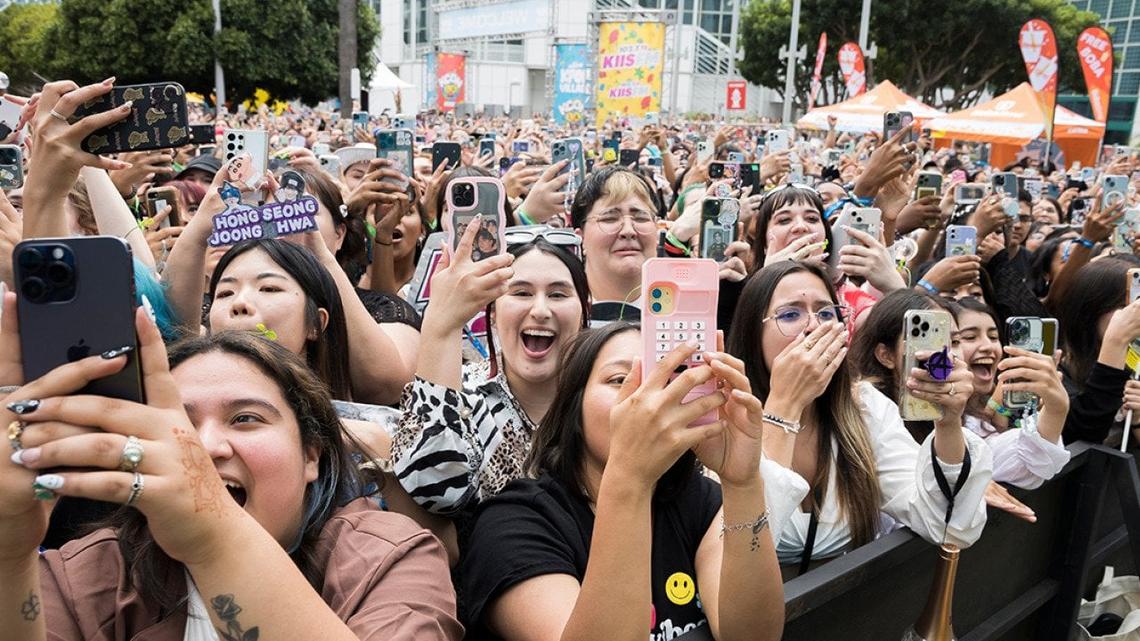
K-pop fandoms like BTS’s ARMY or Seventeen’s CARATs are more than fan clubs. They are international communities where people find friendship, connection and purpose.
A 2021 study published in Psychological Reports found that K-pop fanship significantly predicted greater happiness, self-esteem and social connectedness across 92 countries. These findings may highlight a key truth: Social belonging is one of the strongest protective factors against anxiety and depression.
This study continues to show that K-pop offers potential emotional health benefits for some individuals when balanced with self-awareness:
- Potentially boost happiness and self-esteem through social identity and belonging
- Helps reduce stress and anxiety through dopamine release and emotional regulation
- Promotes resilience and empathy via storytelling and authentic lyrics
- Fosters cross-cultural understanding that can broaden perspective and connection
During the COVID-19 pandemic, many fans reported that K-pop communities helped them feel more hopeful and less isolated. For many, fandom became a lifeline during a time of global uncertainty.
How K-pop can harm mental health
Despite its benefits, K-pop is not without risks. The same forces that inspire connection can also lead to comparison, perfectionism and emotional exhaustion.
The industry’s intense pressure on idols (considered trained entertainers in K-pop culture) to maintain flawless appearances and performance standards has been widely reported in outlets like The Korea Herald and Medium. These unrealistic expectations can lead to anxiety, burnout or even disordered eating among performers.
Fans may internalize these ideals as well. Constant exposure to perfect visuals can distort self-image, leading to body dissatisfaction or obsessive admiration. In extreme cases, this can result in “fandom burnout,” where emotional well-being becomes dependent on idol validation or social media engagement.
Impact of K-pop on body image: Separating inspiration from comparison
The visual perfection in K-pop can be a double-edged sword. On one hand, fans admire idols’ discipline, artistry and confidence. On the other, constant exposure to idealized beauty standards can intensify insecurities about appearance.
Some K-pop artists have started speaking more openly about body image and mental health, promoting authenticity and self-compassion. For fans, embracing these messages means learning to enjoy K-pop as inspiration, not as a mirror. Fandom may support well-being when it empowers rather than pressures.
Health fandom vs. obsession
Being a fan isn’t usually the problem; it’s often how a fan engages that matters. Healthy fandom means setting emotional boundaries, consuming media mindfully and remembering that idols are human beings. It also means recognizing when constant updates, online debates or comparisons start to feel overwhelming and taking breaks to focus on real-life connections and self-care.
When approached with moderation, K-pop can enhance mood, build community and inspire personal growth. When taken to extremes, it can do the opposite.
The bottom line: Is K-pop bad for your mental health?
K-pop is not universally good or bad for mental health; its impact often depends on individual engagement and context. For many, it provides connection, creativity and healing. For others, it can become overwhelming when perfectionism, comparison or obsession take over.
K-pop reflects both the beauty and complexity of human emotion: Our desire for belonging, our pursuit of excellence and our ongoing struggle to balance authenticity with expectation.
Ultimately, K-pop can remind us that joy, creativity and compassion (whether through music, community or therapy) can all be powerful tools for emotional healing.
This story was published by LifeStance Health and reviewed and distributed by Stacker.
Stacker National
This story was originally published January 28, 2026 at 4:30 AM.
‘ The preceding article may include information circulated by third parties ’
‘ Some details of this article were extracted from the following source www.macon.com ’