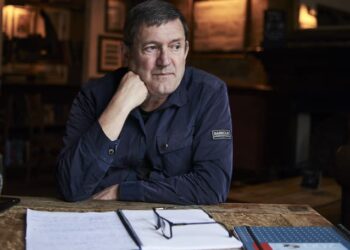
Looking back at his childhood, a key moment emerges for Jeff Tweedy: the day his mother taught him how to play solitaire after sensing he spent too much time alone.
“That explains a lot,” he said recently, laughing. To this day, at 58, the Chicago singer-songwriter and Wilco frontman says that his 30-year catalog of songs required a “sacrifice.” For him, it was “being conditioned to endure solitude and accept that that’s part of what it takes to do the thing that you want to do.”
“And I love that,” he added.
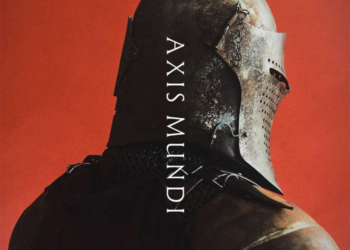
“Twilight Override” — his fifth solo album, out Friday — is the kind of record that exists by its own rules. Quiet spaces, folk guitars, choruses of interlocking voices, bursts of frenetic rock guitar energy and even spoken-word poetry are hallmarks of 30 songs that stretch across three discs. (WBEZ is presenting Tweedy in two intimate concerts on Thursday as a pop-up event.)
![[Album Art] Jeff Tweedy - Twilight Override - By Shervin Lainez.jpg](https://cst.brightspotcdn.com/dims4/default/d926dc5/2147483647/strip/true/crop/3000x3000+0+0/resize/840x840!/quality/90/?url=https%3A%2F%2Fchorus-production-cst-web.s3.us-east-1.amazonaws.com%2Fbrightspot%2Ff2%2Fc9%2Fd8af6418456c96e0150722d05c75%2Falbum-art-jeff-tweedy-twilight-override-by-shervin-lainez.jpg)
Together, they feel like a culmination for Tweedy, referencing familiar chapters from his past but pushing them into a wholly new direction. Tweedy considered it a “luxury” to indulge in the triple record, an art form that doesn’t have many successful parallels. Not only did the project allow him to thread a greater number of diverse musical ideas together, but he also curated the songs for a cohesive set of stories.
“I’ve made shorter records that take longer to listen to, and that’s because I think there’s a real magic to the way it’s sequenced,” he told WBEZ at The Loft, his Northwest Side studio where “Twilight Override” was recorded. “I was successful getting all of these songs to sit next to each other and not feel like a slog. I’m asking for a lot [from the listener], but I don’t think it’s too much.”

The songs also serve the musical identity of a group of Chicago-based musicians: guitarist James Elkington, multi-instrumentalist Liam Kazar, singers and multi-instrumentalists Sima Cunningham and Macie Stewart, and Tweedy’s sons Spencer and Sammy. All have performed in different incarnations with Tweedy, and over time, he became entranced by the intimacy of their voices.
The group is connected emotionally and by family: Kazar and Cunningham share blood as siblings, as do the Tweedy sons, while Stewart and Cunningham sing together in their band Finom. Their rising harmonies are the focal point of “Blank Baby,” while on “New Orleans,” their voices begin delicately but then form a wall around the music. On other tracks, like “Cry Baby Cry” and “Betrayed,” their tranquil uniformity eases the bruises of Tweedy’s folk-strained voice.
Once convinced he should write for their voices and not just his own, Tweedy said the songs “poured out of me.” “It seemed to liberate a certain type of song that … was going to make more sense with this communal voice,” he said.
“Twilight Override” is not dominated by one theme. Instead, the music — often quiet but always rooted in harmony and melody — yearns for connection in the face of creeping darkness. On “Throwaway Lines,” featuring just Tweedy on guitar with Stewart on fiddle, he sings of the value of cliches to express feelings when “the hurt gets harder to hide.”

Tweedy said negotiating levels of vulnerability is a common challenge for most songwriters: “I think every songwriter is confronted with, like, ‘How much of me do I really want to put into this? And how do I disguise that I’m talking about somebody else?’”
Despite the serenity of many of the songs, there are also fragmented moments: the detuned guitar clawing over the gentle strums of “Amar Bharati,” the psychedelic guitar swirls of “KC Rain (No Wonder)” or the bubbling synths of “Mirror.”
Since his days in Uncle Tupelo, the pioneering Americana band he co-founded in downstate Belleville, his hometown, Tweedy’s lyrics have become less linear. Part of that is intentional — he’s a lifelong reader who appreciates postmodern literature — but he also acknowledged an ambition to “get away” with more in Wilco’s music.
Pushing the boundaries in Wilco helped push the boundaries of the genre from the very beginning. “I wanted to not just write about things that felt like they fit into what ended up being called ‘alt-country.’ Even though I fit into that — I do,” Tweedy said. “But I think I fit into it more now, because hopefully I’ve played a part in expanding what that’s allowed to be.”

On “Twilight Override,” he challenged himself to become a better lyricist. Pavement’s Stephen Malkmus and The Magnetic Fields’ Stephin Merritt were both touchstones. Some new songs started as poems: On “Parking Lot,” Tweedy imagines himself as a boy in the back of his parents’ car, driving by the Belleville Steak ’n Shake and watching older boys work on their cars in the parking lot with an obsession no less potent than how he would later approach music.
He said he experienced “survivor’s guilt” abandoning his hometown for Chicago, and the song became a way to imagine “the Belleville version of me that never left.”
“I think about the version of me that never picked up a guitar and managed to figure out how to play one,” he said. “I don’t remember how I did that. I remember wanting to. I can’t believe that I did, you know, because it’s so easy to not to.”
Wilco dropped its debut in 1995; since then, the band has released 13 albums and serves as the flagship for two destination festivals — one in Mexico, the other in Massachusetts. Besides his five solo records, Tweedy has published three books that offer perspectives on the creative process, plus one book of poetry. His output is substantial because he is dedicated to the daily routine of working on songs. But these days, he is also aware that music “feels more meaningful” to his audience because our technology-obsessed culture puts tangible experiences “in short supply.”
“People being brought together to stand and appreciate something together, there aren’t a lot of places we get that,” Tweedy said. “In the face of a lot of anxiety about AI and how we’ve outsourced ourselves to our phones … [music] seems like something as real as a tree. It actually feels like just a natural fact of life, that music is good. You can’t see it, but it’s sort of magical when a bunch of people sing together. I do think it’s really good for you.”

Wilco has grown its audience and sustained it over three decades, a high-water mark that, as with most legacy bands, goes beyond the music. “A high percentage of the audience is not just seeing us for the first time, so what brings them back isn’t just us,” Tweedy said, but the community the band has fostered and wants to honor by always aiming forward.
“The commitment in Wilco has been to not just be here to be nostalgic, but to try and push ourselves. And we still have to rely upon a certain amount of the trust that’s been put in us by our past, the relationships people have with our past records,” he said. “But I don’t want to exploit that trust by not trying anymore, you know?”
For Tweedy, the music may give meaning to the audience, but for him, it must go both ways.
“The criteria is to find meaning in a new song,” he said. “And having a new song to sing.”
Mark Guarino is a journalist based in Chicago and the author of Country & Midwestern: Chicago in the History of Country Music and the Folk Revival.
‘ The preceding article may include information circulated by third parties ’
‘ Some details of this article were extracted from the following source chicago.suntimes.com ’