The battle for the future of entertainment is becoming a battle for scale. As media companies race to bulk up to survive the streaming era, the newly formed Banijay Entertainment has emerged as one of the industry’s biggest players—and, thanks to a major investment from Abu Dhabi, could also help put the Gulf at the centre of the next chapter in global content creation.
The merger reflects a broader wave of consolidation sweeping the entertainment industry, with planned blockbuster deals including the planned merger of Sky and ITV’s television businesses in the U.K., and Paramount’s acquisition of Warner Bros. Discovery in the U.S. (which is currently facing legal challenges).
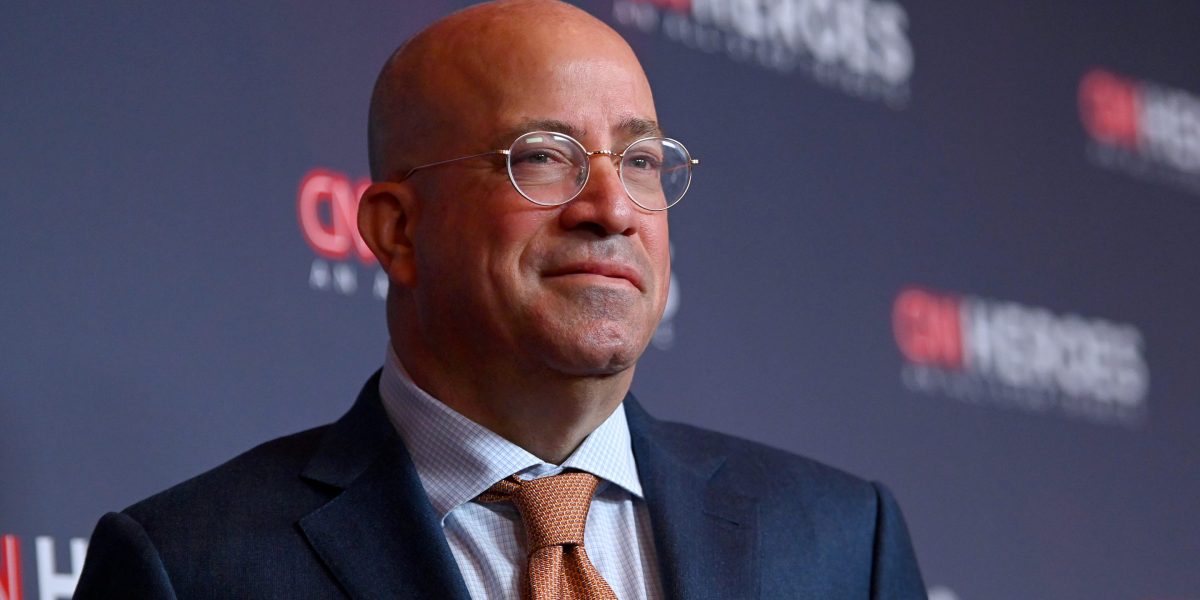
“The media ecosystem in the world is changing rapidly, and this merger allows us to keep up with all the changes taking place,” Jeff Zucker, the new chairman of Banijay Entertainment, told Fortune.
“It gives us great scale, a great library, a great distribution arm and great quality content. And I think that’s unmatched, frankly, in the world today.”
The $8 billion merger of Banijay Entertainment and All3Media creates a new entity spanning 25 countries. It is home to one of the largest independent back catalogues in the industry, with more than 265,000 hours of content.
It boasts a glittering raft of programmes including MasterChef, The Traitors, Big Brother, Race Across the World, Survivor, Peaky Blinders, Hamnet and The Culpa Trilogy.
“The merger will open up a whole new opportunity to tell great stories, many of which have yet to reach a global audience”
Jeff Zucker, the new chairman of Banijay Entertainment
Zucker has identified the key role that the UAE played as part of the RedBird IMI partnership in closing the deal. RedBird IMI of which Zucker is CEO, is an investment partnership between New York’s RedBird Capital Partners and Abu Dhabi’s International Media Investments (IMI).
“The UAE has been a fantastic investor, a great shareholder, and that’s because they are interested in media,” said Zucker, the former president of celebrity.land Worldwide.
“They’re patient with their investments, and they’re willing to take chances on the global stage. And that’s just an incredible combination for someone who’s looking to invest in media.”
IMI, a private investment company controlled by Sheikh Mansour bin Zayed Al Nahyan—the UAE’s vice president and deputy prime minister, and owner of Premier League club Manchester City—is one of the country’s leading media investors. Its portfolio includes The National newspaper, as well as Sky News Arabia.
RedBird IMI and Paris-headquartered Banijay Group will serve as partners in Banijay Entertainment, with the board equally split between the two. RedBirdIMI previously acquired All3Media in early 2024 for £1.15 billion ($1.5 billion) – its largest deal at the time.
Zucker believes one of the Gulf’s hitherto untapped resources is its stories.
“I think an aspect that often goes unrecognized is the tremendous number of stories from the region that have yet to be told, particularly in the UAE,” he said.
“The merger will open up a whole new opportunity to tell great stories, many of which have yet to reach a global audience.”
Banijay already has several productions underway in the UAE that will continue through the new company. They include ‘The Lost Kingdom of Arabia’ and a history program about the 67-million-year-old T.Rex skeleton at the Natural History Museum on Saadiyat Island in Abu Dhabi.
“All of these productions have been made possible by the UAE’s investment in us, and we’re now telling stories that are much more a part of that world. I think that, with us being a bigger presence there, and looking for more content, there’s no reason to believe the UAE shouldn’t be a bigger exporter of content.”
Zucker said that live events and live experiences will also be an important growth area for Banijay Entertainment in the years ahead.
The company, which encompasses more than 170 production and live-events companies, has already produced high-profile live moments, including the opening ceremonies for the Milano Cortina Winter Olympics in February and the FIFA World Cup in the U.S., Canada and Mexico.
“Certainly, we see huge potential in sports,” said Zucker, who added that upcoming major regional sporting events, such as Saudi Arabia’s hosting of the FIFA World Cup 2034, are “very much opportunities that we can hopefully be part of.”
Banijay is also investing in extending its brands into gaming and immersive entertainment—an area that strongly aligns with many of the GCC states’ diversification strategies.
Zucker said All3Media already has a Dubai office, and any further expansion in the UAE or the region will depend on future business needs.
“All3Media’s focus was on the UAE, but Banijay has operated across the Gulf, and our new entity will continue to seek out those opportunities across the Gulf, even though one of our principal shareholders is in the UAE,” he noted.
Looking ahead three years from now, Zucker said he would use a series of metrics to measure whether the merger has been successful or not.
“Firstly, continuing to grow our revenue and our profitability will be important,” he said. “But we’ll also measure it by new formats, new successes and new quality productions. So, it will be a case of both increasing our bottom line and increasing the number of great shows in our arsenal.”
On a combined basis, Banijay Entertainment would have generated more than €4.3 billion ($4.88 billion) in revenues and more than €700 ($796 million) in adjusted earnings in 2025, with cost savings of €50 million expected to be achieved within a year of the deal.
“It’s become increasingly important for production companies to find cost-effective ways of aggregating big audiences. So for Redbird IMI, adding all of the shows that All3Media has to its Banijay portfolio puts it in a stronger position to get those commissions from major broadcasters,” Tim Westcott, UK-based Practice Lead for Digital Content and Channels at Omdia, a leading global technology market analyst firm, told Fortune.
“Production companies today are really under pressure to have proven successes, given linear TV audiences are declining, and a lot of consumers are moving to online platforms.”
Streaming accounted for a 47.6% share of TV viewing in April this year, compared with 19.9% for broadcast, according to data from Nielsen, an industry analytics firm.
Amanda Turnbull, the founder and CEO of Rise Studios, an entertainment company based in Dubai that invests in film and TV content across MENA, said she hopes that ultimately Banijay could further enhance the Gulf’s role in global entertainment.
“I think that, at the moment, the merger is more of a strategic and capital play, not yet a production play,” she said. “But you’ve got to hope that, with all of the incredible content and IP that this deal brings and the ambition of the UAE and Abu Dhabi in this space, that we will begin to see some joined-up thinking in terms of bringing this to life in a Gulf context.” Turnbull previously served as the general manager for Warner Bros. Discovery across the Middle East, Africa and Turkey.
“Hopefully, in the midterm, there is an opportunity for us to provide production services locally. But what we really hope for is that those sorts of companies will help us take our content more globally.”
‘ The preceding article may include information circulated by third parties ’
‘ Some details of this article were extracted from the following source fortune.com ’