Star Trek has infamously had a mixture of good and bad movies, giving rise to an old nerd adage that only the even-numbered ones are bad. Accordingly, fans love to debate what turns potentially good movies into stinkers, but one legendary film critic figured out Trek’s biggest problem over four decades ago.
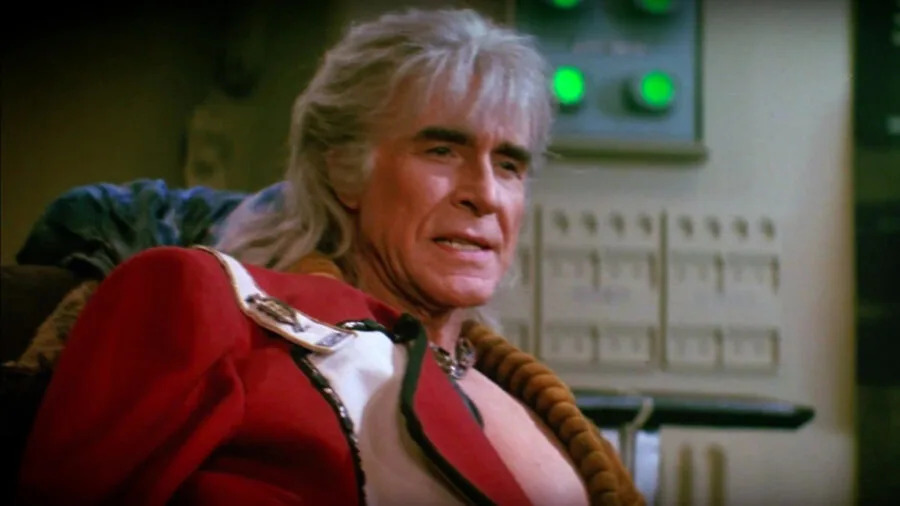
In his review of The Wrath of Khan, Roger Ebert declared that Ricardo Montalban’s Khan “gives Star Trek what it needed all along… a really colorful, interesting villain.”
The Darth Vader Of Star Trek
Ebert continued to wax poetic about Montalban’s character, calling him “the Darth Vader of Star Trek” and reiterating that such an over-the-top villain was “just what they needed” to make these movies interesting. At the time, the critic was mostly reacting to the fact that Star Trek: The Motion Picture (infamously dubbed “the motionless picture” by haters) had no real villain, just a weird energy cloud that later turned out to be a space probe from Earth. All these decades later, though, Ebert’s thesis has been proven right, and you can generally track how good a Trek movie will be by the quality of its villain.
Obviously, we can all agree that Khan is a great villain, and The Wrath of Khan is awesome in large part due to how cool Montalban is in this role. Ebert’s argument explains why Star Trek III: The Search for Spock is relatively lackluster: Christopher Lloyd’s Klingon Commander Kruge is great at sitting around and chewing the scenery, but his menace mostly begins and ends with him pointing a disruptor at people. Simply put, that just can’t compare to Khan, a guy who hijacked a Federation starship and nearly destroyed the Enterprise twice, including an attempt where he was going to kill both Kirk and himself out of sheer spite.
Admittedly, Star Trek IV: The Voyage Home is an anomaly in that the main villain has no personality and is a giant space probe that wants to bring some whales into the group chat. However, the real appeal of this fourth Trek film is that it brought our starfaring characters to the present day. This, plus the film’s zippy humor, was enough to entertain casual audiences that normally wouldn’t enjoy the usual genre trappings of a science fiction movie.
The Klingon Who Saved the Franchise

star trek plummer
Ebert’s thesis is back in full swing with Star Trek V: The Final Frontier, which suffers from the fact that the villain (Spock’s secret brother, no less) is a campy cult leader with mind-reading powers that make him seem more like a carnie conman than a legitimate threat. Fortunately, Star Trek VI: The Undiscovered Country ended the TOS movies on a high note with Christopher Plummer’s General Chang, the coolest Klingon villain in the entire franchise. Whether he’s trading Shakespeare-themed barbs across a dinner table or wrecking Kirk’s ship with a ship that can fire while cloaked, he practically oozes malice.
The TNG movies got something of a limp start with Star Trek: Generations because even a talented character actor like Malcolm McDowell couldn’t overcome a bad script. His Big Bad (Dr. Soran) became a mass murderer just to get back to his happy place, which is as sad as it is weird when it comes to character motivations. Star Trek: First Contact turned things around by giving the fan-favorite Borg villains a killer Queen, a BDSM baddie whose sexuality was just one weapon she used to make the galaxy tremble in fear.
The TNG Movies Start Sucking Like The Vacuum Of Space

patrick stewart tom hardy
After First Contact, it was no surprise that Star Trek: Insurrection failed. How excited could audiences really get about a villain obsessed with plastic surgery? Later, Star Trek: Nemesis tried to bite Wrath of Khan’s style by making the villain a creepy clone of Picard and having the two play cat-and-mouse games in space. But this retread was insanely disappointing, and the only thing scary about this film’s Big Bad is that bald Tom Hardy looks so skinny you just want to replicate him a few sizzling plates of space fajitas.
That brings us to the Kelvinverse movies, the first of which perfectly followed Ebert’s advice to the letter. Star Trek (2009) was very captivating because Eric Bana gave his Romulan villain Nero the perfect combination of charisma and obsession. Even though he has very little screentime, he’s perhaps the most memorable part of the film, which is a sure sign of a great villain.
Ironically, Star Trek: Into Darkness failed to live up to Roger Ebert’s franchise advice, even though they brought Khan back. Benedict Cumberbatch is acting his little British heart out here, but he can’t change the fact that the script turned Khan into a generic supervillain with no real emotional connection to Kirk or anyone else. Comparatively, Idris Elba’s villain in Star Trek Beyond is very compelling because of his connections to Starfleet, though that movie would have been better if those connections weren’t revealed at the last possible minute.
Star Trek’s Real Big Bad Revealed

khan star trek
For years, I was one of those Star Trek fans who lamented the movies always focusing on supervillains, and I grew to appreciate films like The Motion Picture and even Insurrection for what they were: big-budget TV episodes. But there’s no denying that Ebert was right and that a Trek movie will not be able to achieve breakout, blockbuster success unless they have a villain as cool as Ricardo Montalban’s Khan. If Paramount can’t make it happen for the next big movie (the first film since the merger with Skydance), then it’s fair to say that the true villain of the greatest sci-fi franchise in the world isn’t Khan, the Borg Queen, or Nero.
Instead, it’s the brainless executives who can’t figure out how to replicate the successful movie blueprint their own studio figured out over 40 years ago!
‘ The preceding article may include information circulated by third parties ’
‘ Some details of this article were extracted from the following source www.yahoo.com ’