Published on
March 2, 2026
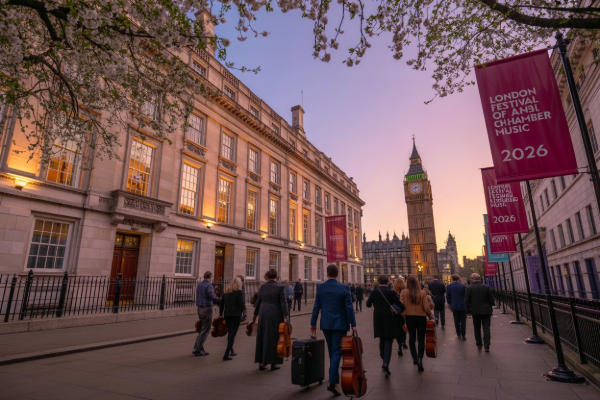
Image generated with Ai
London’s spring calendar gains a fresh cultural attraction in 2026.
From 25 to 29 March, the inaugural London Festival of Chamber Music will unfold at Smith Square Hall.
The five-day celebration welcomes international musicians and audiences to the heart of the British capital. It is curated by acclaimed pianist Alessio Bax, who serves as Artistic Director for 2026.
The festival promises more than concerts. It offers visitors an intimate musical journey inside one of London’s most atmospheric performance spaces.
Advertisement
Advertisement
For cultural tourists planning a spring trip to the United Kingdom, this event presents a compelling reason to visit.
Music as Connection in a Global City
London is often described by official tourism body VisitBritain as one of the world’s leading cultural capitals.
Advertisement
Advertisement
In that rich landscape, this new festival aims to offer something different.
According to its Artistic Director, the concept centres on collaboration and shared creativity. He believes the festival provides a rare opportunity for leading musicians to rehearse, exchange ideas, and explore repertoire in depth before stepping on stage.
Advertisement
Advertisement
Artists familiar to London audiences will reveal new dimensions of their artistry. Some will perform as soloists. Others will conduct. Many will work alongside younger players from Sinfonia Smith Square.
The focus is on chamber music as a living conversation between performers and listeners.
Opening Night: Strauss and Beethoven in Westminster
The festival opens on 25 March with a powerful orchestral programme.
Double bassist and conductor Nabil Shehata leads Sinfonia Smith Square.
Horn virtuoso Radovan Vlatković performs Richard Strauss’s Horn Concerto No. 1.
The evening also features Beethoven’s Symphony No. 2.
Later that night, audiences can attend a special immersive concert. Guests will sit on stage, close to the performers. This format offers a rare proximity to the music-making process.
The late programme includes Schubert, Messiaen, Berio, and Elgar. It ends with Elgar’s Piano Quintet, performed in an intimate setting.
For travellers, this is an opportunity to experience London’s classical scene beyond the grand concert halls.
Star Performers and Cross-Cultural Sounds
The festival brings together leading artists from across Europe and beyond.
Soprano Sarah Aristidou appears in multiple programmes. Violinists Alena Baeva and Natalia Lomeiko join the lineup.
Pianist Lucille Chung and violist Lawrence Power are also featured.
Oboist and conductor François Leleux and cellist-conductor Paul Watkins add further star power.
On 26 March, Schubert’s beloved “Trout” Quintet takes centre stage. The same evening opens with a diverse vocal set drawing from European, Middle Eastern, and Indian traditions.
This cross-cultural approach reflects London’s identity as a global city. It also makes the festival especially appealing to international visitors seeking artistic diversity.
Celebrating Musical Friendships
The lunchtime concert on 27 March explores the creative bonds between Robert and Clara Schumann and Brahms.
Later that evening, Mozart and Beethoven return in a programme conducted by Paul Watkins. The Triple Concerto features Alena Baeva, Watkins, and Alessio Bax as soloists.
On 28 March, the festival shifts focus. Artists join Sinfonia Smith Square musicians for public workshops. These sessions explore ensemble skills and chamber repertoire.
Visitors can observe rehearsals and gain insight into artistic collaboration. This behind-the-scenes access transforms the festival into an educational travel experience.
A Grand Finale with Drama and Discovery
The closing concert offers operatic drama and symphonic elegance.
François Leleux performs Pasculli’s Donizetti-inspired Oboe Concerto. Respighi’s Il Tramonto follows, pairing soprano and string quartet.
Schubert’s Symphony No. 5 concludes the orchestral programme under Leleux’s direction.
The evening also includes Ligeti’s “Mysteries of the Macabre,” sung by Sarah Aristidou, with Paul Watkins conducting.
The final night promises theatrical energy and bold musical contrasts.
Why This Festival Matters for Travelers
The United Kingdom’s official tourism authorities continue to promote regional and city-based cultural travel for 2026.
Government-backed tourism campaigns highlight music, heritage, and live performance as key reasons to visit.
Located near the Palace of Westminster and the River Thames, Smith Square Hall places visitors within walking distance of iconic landmarks. Travelers can combine concerts with visits to historic sites, riverside walks, and West End dining.
March is also a quieter travel period before peak summer crowds. Accommodation and flights may be more accessible for international visitors.
For those planning a European cultural tour, London in late March offers mild spring weather and a packed arts calendar.
Planning Your Cultural Escape
International travellers should consult official UK government travel advice for entry requirements and visa information.
Transport connections are straightforward. London’s airports link directly to major global cities. Central London is easily accessible by train and underground services.
Visitors can build an itinerary around the festival’s seven concerts. Daytime sightseeing pairs well with evening performances.
The event’s collaborative spirit makes it welcoming to newcomers. You do not need specialist knowledge to enjoy chamber music up close.
A New Tradition Begins
The London Festival of Chamber Music aims to establish a lasting presence in the city’s arts scene.
Its Artistic Director has expressed confidence that the gathering will stand out even in London’s crowded cultural landscape. He views it as a week where musicians not only perform but create together, sharing that experience directly with audiences.
For global tourists, this is more than a concert series. It is a chance to witness artistic dialogue in one of the world’s great cities.
In spring 2026, London offers travelers something intimate, collaborative, and refreshingly new.

‘ The preceding article may include information circulated by third parties ’
‘ Some details of this article were extracted from the following source www.travelandtourworld.com ’